

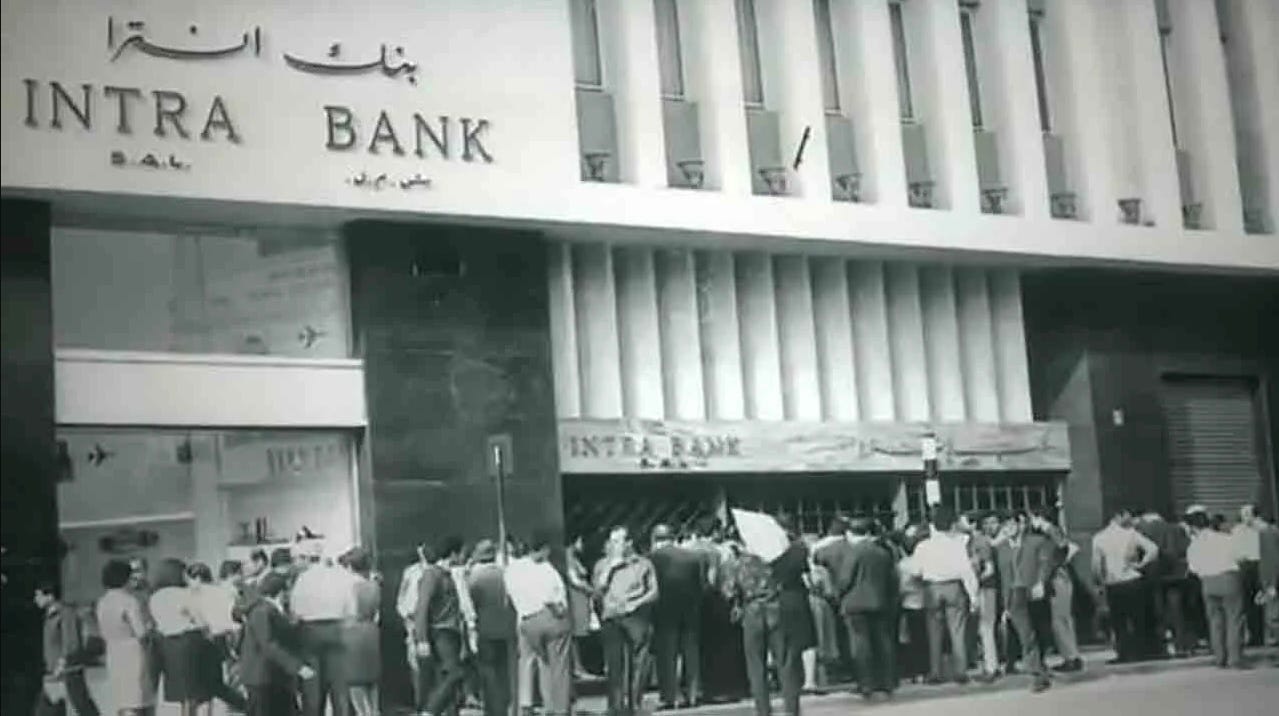
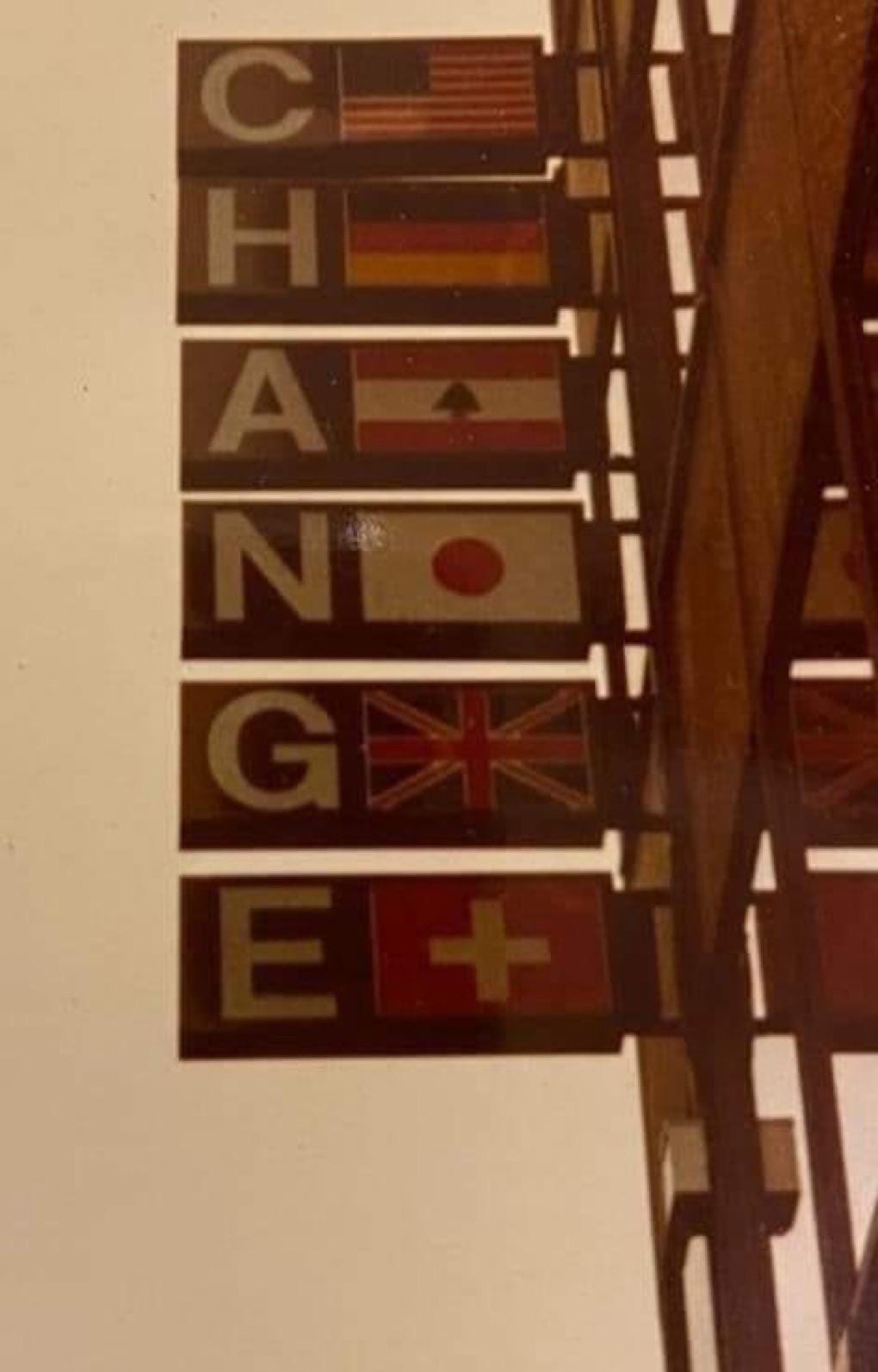
It’s 1963, and you’re walking along the Champs-Élysées with Lebanese pounds in your pocket. Your friend wants to see the Eiffel Tower later, but first you need to exchange money. You look up at the board outside the currency shop: the dollar, the pound sterling, the franc — and there, among the world’s major currencies, the cedar tree of Lebanon. For a country as small as Lebanon, it feels improbable. But by the early 1960s, Beirut had become the financial center of the Arab world, and much of that rise was tied to one institution: Intra Bank.

Founded by Youssef Beidas in 1951, Intra connected Gulf capital, regional commerce, and international finance through Lebanon, helping turn Beirut into a banking hub with influence far beyond its size. It controlled prestigious real estate on New York’s Fifth Avenue near Rockefeller Center, along Champs-Élysées in Paris, as well as in London, Geneva, and other major global financial hubs — offering exclusive services unavailable anywhere else. When the bank collapsed in 1966, it was more than a financial failure. For many, it exposed deeper tensions inside the Lebanese system — tensions over power, identity, and who the state was ultimately willing to protect.

The Rise of Intra Bank
At its peak, Intra Bank was among the most influential financial institutions in the region. Its influence extended far beyond deposits and lending into the commanding heights of the Lebanese economy. It held controlling or decisive stakes in sectors that shaped both economic life and cultural projection abroad: Middle East Airlines, which connected Lebanon to global markets; Casino du Liban, a centerpiece of tourism and elite social life; and Studio Baalbek, which helped define Lebanon’s cultural golden age. Its reach extended into the Port of Beirut, real estate, and international ventures across multiple continents.

Through this network, Intra integrated finance, infrastructure, culture, and capital flows into a system centered on Beirut. Intra became deeply embedded in the Lebanese economy, with influence across multiple sectors. Yet not all observers saw this dominance as a strength. Even at its height, some observers pointed to structural vulnerabilities — particularly its rapid expansion, cross-sector exposure, and reliance on confidence-sensitive deposits — raising questions about how it would perform under stress.
However in Lebanon’s political economy, that level of concentration rarely goes uncontested.
An Outsider
Lebanon’s post-independence order was shaped by a Francophone elite whose authority rested on political office, inherited networks, and control of key institutions. Cultural alignment with France functioned as a marker of legitimacy within this structure. Beidas stood outside it.
Born into a Palestinian Christian family in 1912, his ties to Lebanon were nonetheless deep: his mother was Lebanese, his wife was Lebanese, and his life and work were rooted in Beirut. Yet at the decisive moment, his position within Lebanon’s political and financial order remained ambiguous, particularly in moments when institutional backing became critical.
His early life unfolded in a multilingual environment linking Eastern Mediterranean trade and finance. He entered banking through Arab Bank, rising quickly through technical skill and operational discipline. The decisive shift in his trajectory came after the 1948 upheaval, which disrupted the region’s economic geography and displaced much of its commercial class.
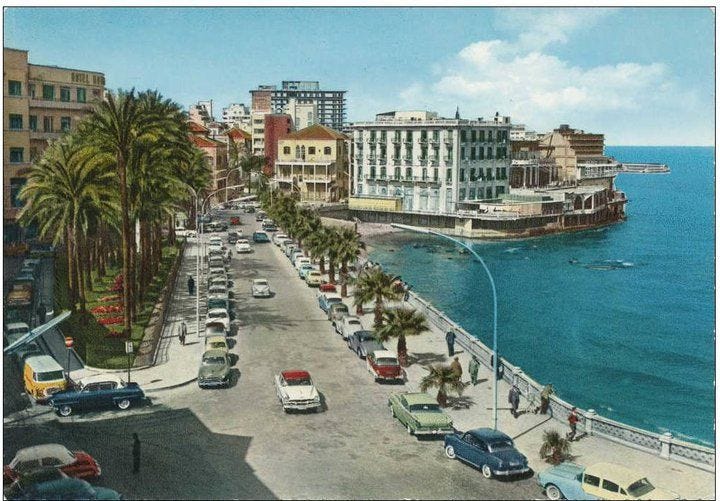
He was also distinctly Anglophone in orientation. His financial practices and partnerships aligned more closely with Anglo-American capitalism than with the Francophone traditions of Lebanon’s established elite, reinforcing his exclusion.
As Intra expanded, it came to represent an alternative center of power — one operating outside sectarian, familial, and cultural control. By the early 1960s, his growing influence generated increasing discomfort among segments of the political and financial establishment.
The Unraveling
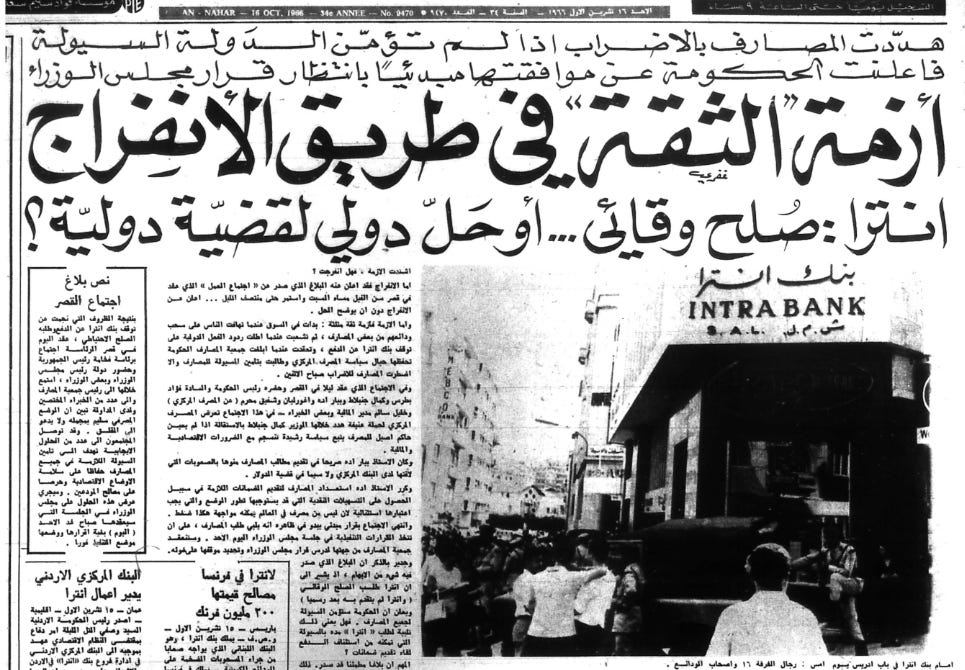
The collapse of Intra Bank in October 1966 is often framed as a financial crisis, but its progression has led some contemporaries and later observers to question whether factors beyond pure market dynamics were at play.
In the days leading up to the collapse, rumors targeting Intra’s solvency spread rapidly through Beirut’s financial networks, reaching major depositors and triggering a sharp loss of confidence. Withdrawals escalated, draining tens of millions of dollars and placing the bank under severe liquidity pressure.
Some contemporaries argue that Intra could have been stabilized through emergency liquidity support. Others disputed this, pointing to rapid expansion and reliance on short-term deposits as signs of deeper structural vulnerability. From this perspective, intervention carried risks of amplifying instability across Lebanon’s banking system.
Beidas sought emergency support from the central bank. The liquidity required was within the state’s capacity, particularly given the strength of Intra’s underlying assets. The request for emergency support was ultimately denied. Whether that decision reflected political considerations, institutional caution, or uncertainty about the bank’s underlying exposure remains debated — but it proved consequential, as liquidity pressures quickly escalated into collapse.
The decision accelerated the bank’s transition from liquidity stress to collapse. Other banks facing similar stress were assisted and survived; Intra did not. Contemporary accounts point to political hostility and elite opposition as important factors. The reported dismissal of Beidas on the grounds that he was not Lebanese reflects how identity and power shaped an economic decision with national consequences.
External Pressure and the Withdrawal of Capital
As internal pressure mounted, external forces intensified the crisis. Intra depended heavily on Gulf deposits, and during the critical days of October 1966, large volumes were withdrawn.
The timing and scale of these withdrawals significantly intensified the crisis, removing critical liquidity at a moment of declining confidence. They unfolded amid strained relations between Beidas and Gulf political figures, and during a broader regional shift as oil-producing states began redirecting financial strategy.
The withdrawal of Gulf capital did more than bring down a bank. It weakened Beirut’s position as the center of Arab finance and accelerated a redistribution of financial power across the region.
Collapse and Redistribution
When Intra fell, its system was dismantled and redistributed. Its holdings — from aviation to culture to infrastructure — were absorbed by the Lebanese state and other actors.
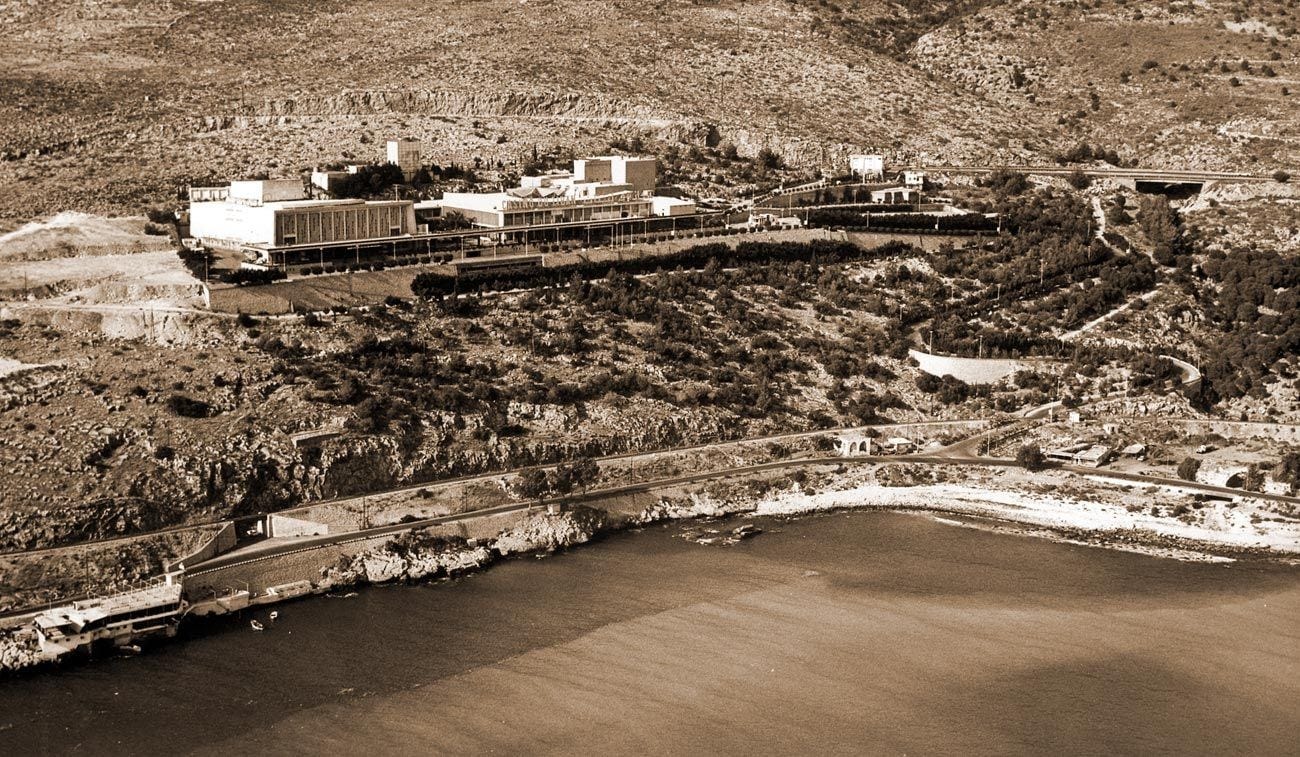
What had been a relatively concentrated structure was broken up into multiple components, redistributing control across state and private actors. For some policymakers, this fragmentation was not entirely negative but a necessary correction to a system seen as overly concentrated in a single institution. The state reasserted control, but without the integrative vision that had defined Beidas’ model.
A Foundational Fracture
The fall of Youssef Beidas marked one of the first major fractures in the modern Lebanese state.
It highlighted tensions between economic decision-making, elite interests, and identity politics, revealed institutions unwilling to defend systemic stability, and shattered the confidence on which Lebanon’s financial model depended.
Beirut’s role as a regional financial center rested on trust — in its banks, its institutions, and its neutrality. The collapse of Intra broke that trust.
From 1966 to the Present
While 1966 did not determine Lebanon’s future on its own, it exposed structural tensions that would reappear in later periods. The entanglement of finance and politics, the selective use of state power, and the prioritization of elite interests over systemic stability became recurring features of Lebanon’s economic life.
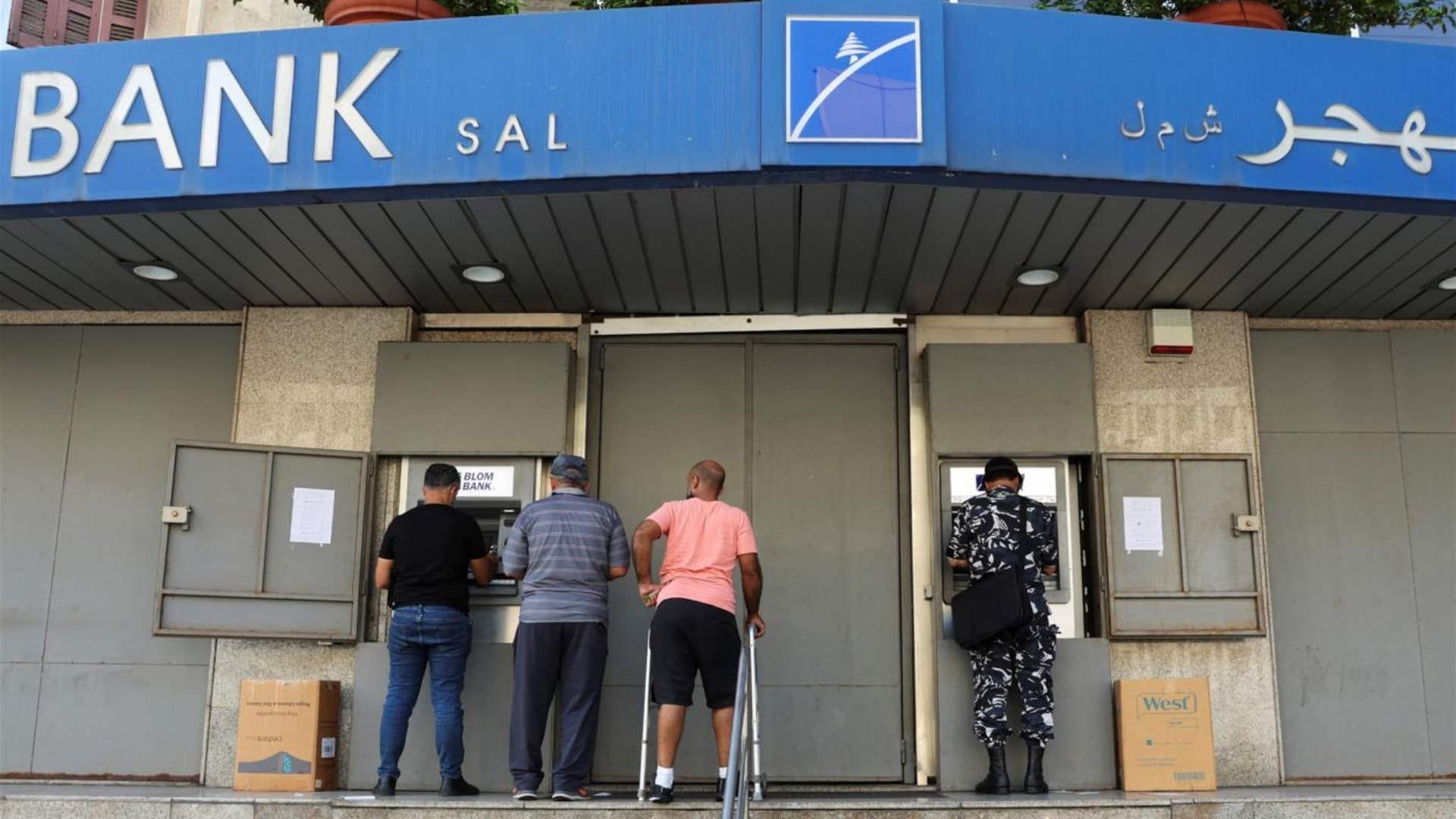
Over time, these dynamics eroded institutional credibility and resilience. The financial collapse of modern Lebanon follows a trajectory that can be traced, in part, to this earlier rupture.
The Point of No Return
The case of Youssef Beidas can be interpreted not just as the marginalization of an outsider, but as a reaction to a figure who had become highly central without being fully integrated into existing structures of power.
Despite his Lebanese family members, his roots in Beirut, and his role in building the country’s economic power, he did not receive the level of institutional backing that might have been expected at a critical moment. That denial was not symbolic; it was operational. It shaped decisions that dismantled the system he built.

The fall of Intra Bank wasn’t only the collapse of a financial institution. It was a decision about who is allowed to hold power in Lebanon — and under what conditions. In choosing to let Intra fall, the Lebanese system preserved its internal hierarchy over its own economic future.
That choice did not end in 1966. It helped shape much of what followed.