
When the British Invasion Came to Lebanon — Kinks Bassist John Dalton Tells Melkart Magazine About the Band’s 1969 Beirut Concert
By Ralph I. Hage, Editor

She’s bought a hat like Princess Marina’s
To wear at all her social affairs
She wears it when she’s cleaning the windows
She wears it when she’s scrubbing the stairs
But you will never see her at Ascot
She can’t afford the time or the fare
But she’s bought a hat like Princess Marina’s
So she don’t care
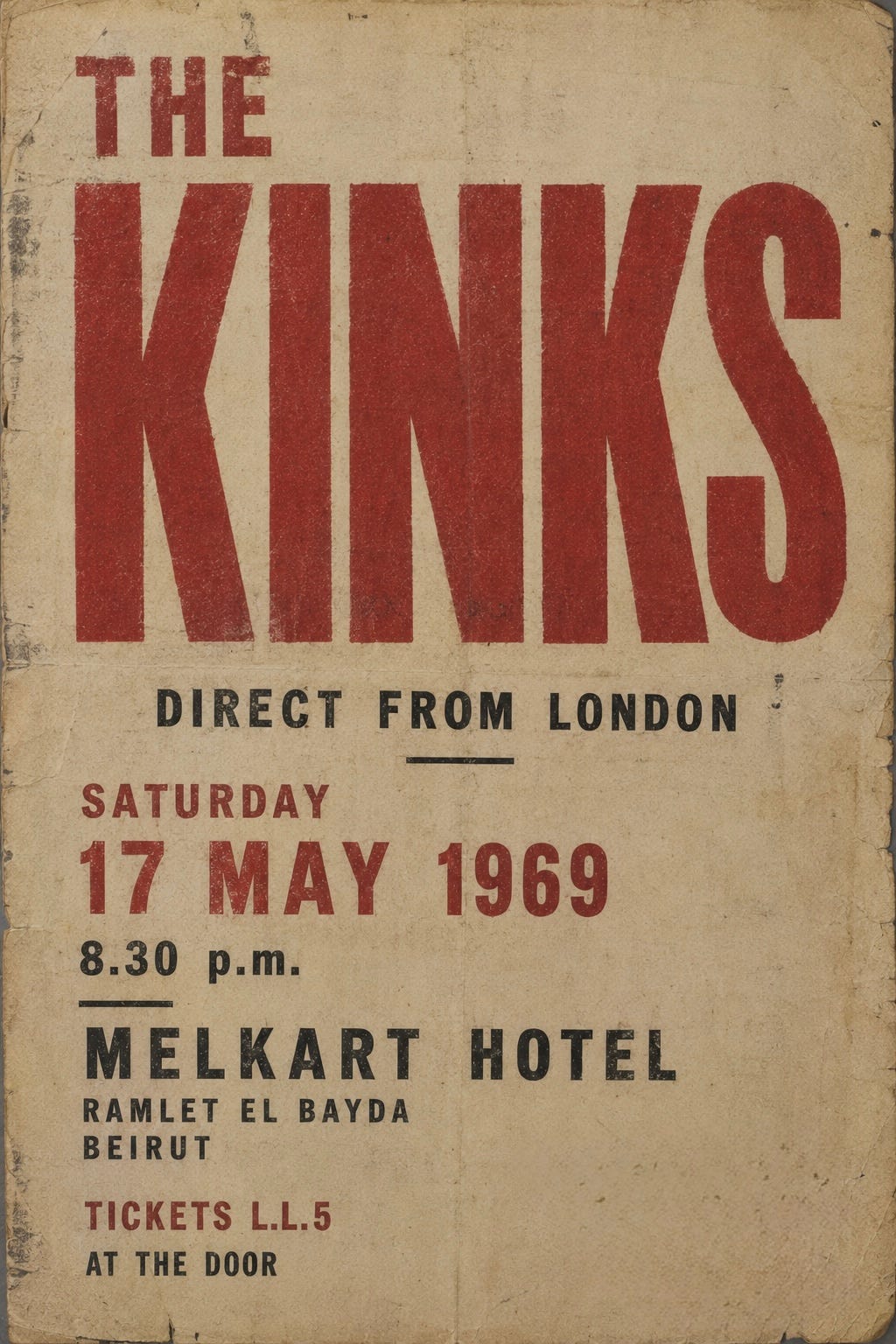
These lyrics, written by Ray Davies for Arthur (Or the Decline and Fall of the British Empire), were taking shape in the spring of 1969. Around the time this song was written, during the recording sessions for the album Arthur in fact, The Kinks left London to play a concert at a venue they had never played before.
Today, they are remembered alongside The Beatles, The Rolling Stones, and The Who as one of the groups that shaped modern rock music. Yet unlike many of their contemporaries, The Kinks spent much of the second half of the 1960s following an unusual path. Unable to tour the United States because of an American Federation of Musicians ban and moving through one of the most creative periods of their career, they accepted engagements in places that now seem unexpected. On 17 May 1969, one of those places was Beirut.
More than half a century later, bassist John Dalton — who had then only recently joined The Kinks — recalled the visit for Melkart Magazine. His memories offer one of the few surviving first-hand accounts of the band’s forgotten Beirut performance.
Beirut and The Kinks
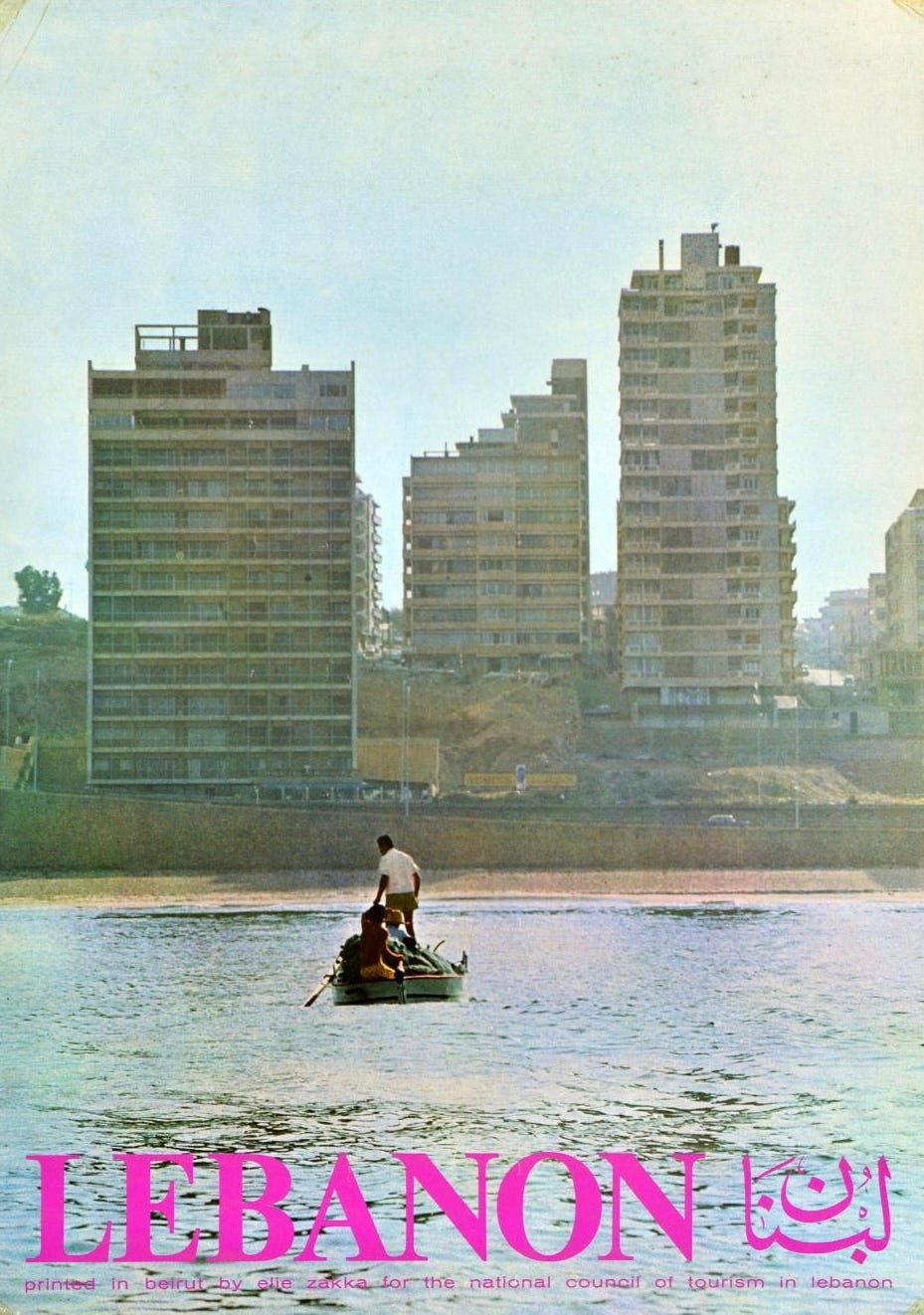
The Beirut that greeted The Kinks in 1969 was a city at the height of its reputation as a cultural crossroads. International performers like Louis Armstrong regularly passed through Lebanon, and the city’s hotels, theatres and nightclubs hosted artists from across Europe, the Middle East and beyond.
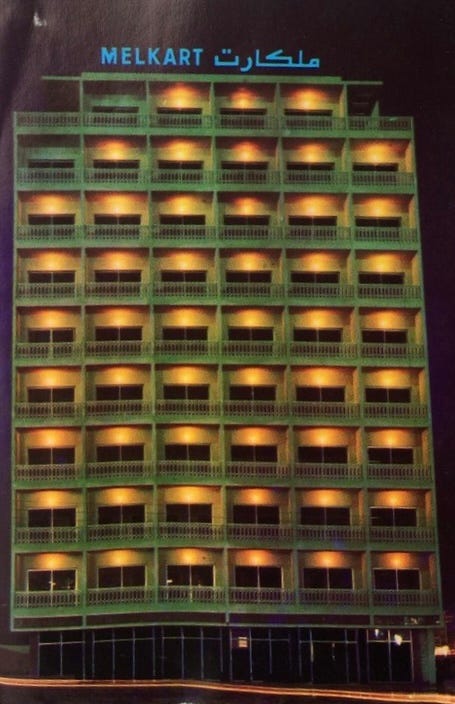
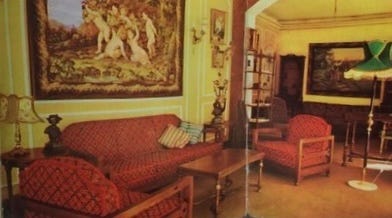
The concert took place at the Melkart Hotel in Ramlet al-Bayda, one of Beirut’s best-known seaside districts. Looking out toward the Mediterranean, the hotel sat on a stretch of coast where visiting performers often stayed while passing through the city.
The band arrived in Lebanon at a pivotal moment in their career.
Between Village Green and Arthur
Only six months earlier, The Kinks had released The Kinks Are the Village Green Preservation Society. The album sold modestly and attracted little attention outside dedicated fans. Yet over the following decades it was gradually reappraised and is now widely regarded as one of the key British albums of the period.
Rather than embracing the psychedelic experimentation that dominated the late 1960s, Ray Davies turned his attention to memory, community, ordinary lives and a disappearing England. The songs were intimate, observational and deeply English, qualities that gave the record a lasting appeal far beyond its original audience.
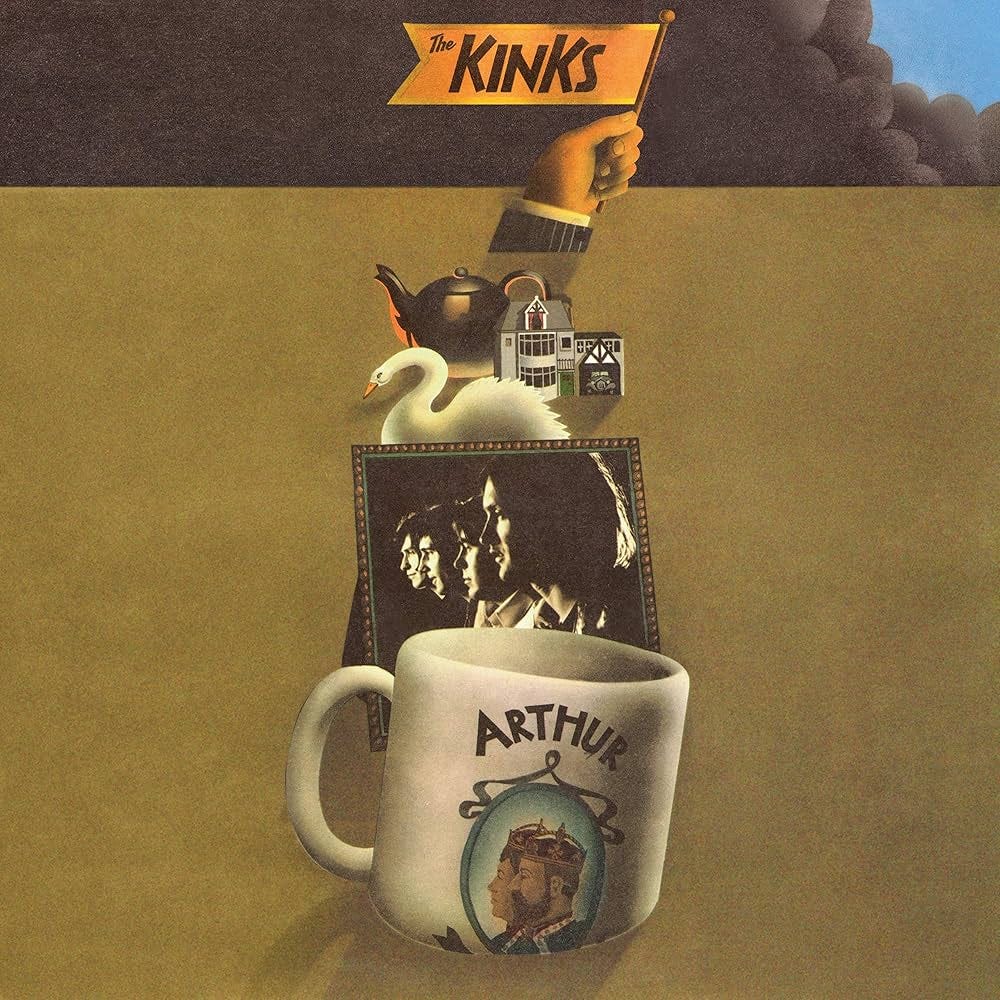
When The Kinks arrived in Beirut, they had already begun work on their next album, Arthur (Or the Decline and Fall of the British Empire), during sessions at Ray Davies’s manor in Borehamwood. The album would be released five months later in October 1969.
If Village Green was an inward look at a fading England, Arthur was an outward turn toward the forces reshaping it. Through the story of an ordinary family, Davies explores themes of emigration, class, war and the fading certainties of post-war Britain. Together, the two albums came to represent the moment when The Kinks moved beyond hit singles and produced some of the most ambitious songwriting of their career.
What Did Beirut Hear?
No complete setlist from the Melkart Hotel performance appears to have survived. Yet concerts from the same period provide some clues about what Lebanese audiences likely heard that evening.
The band were still performing many of the songs that had made them famous: You Really Got Me, All Day and All of the Night, Tired of Waiting for You and Sunny Afternoon regularly appeared in their live shows.
Contemporary setlists suggest that newer material almost certainly featured as well. Songs such as Days and Plastic Man were part of the band’s repertoire at the time, while selections from Village Greenmay also have appeared.
John Dalton Joins The Kinks
John Dalton had first moved into The Kinks’ sphere in 1966, when he was brought in as a temporary replacement for Pete Quaife after Quaife was injured in a car accident. At the time, Dalton was already an experienced working musician, having played in The Mark Four, part of the London beat circuit that produced a generation of mid-1960s groups. His initial role with the group was straightforward: cover the bass duties until Quaife could return. He did so for live performances and early recording sessions, before stepping back when Quaife rejoined the band later that year.
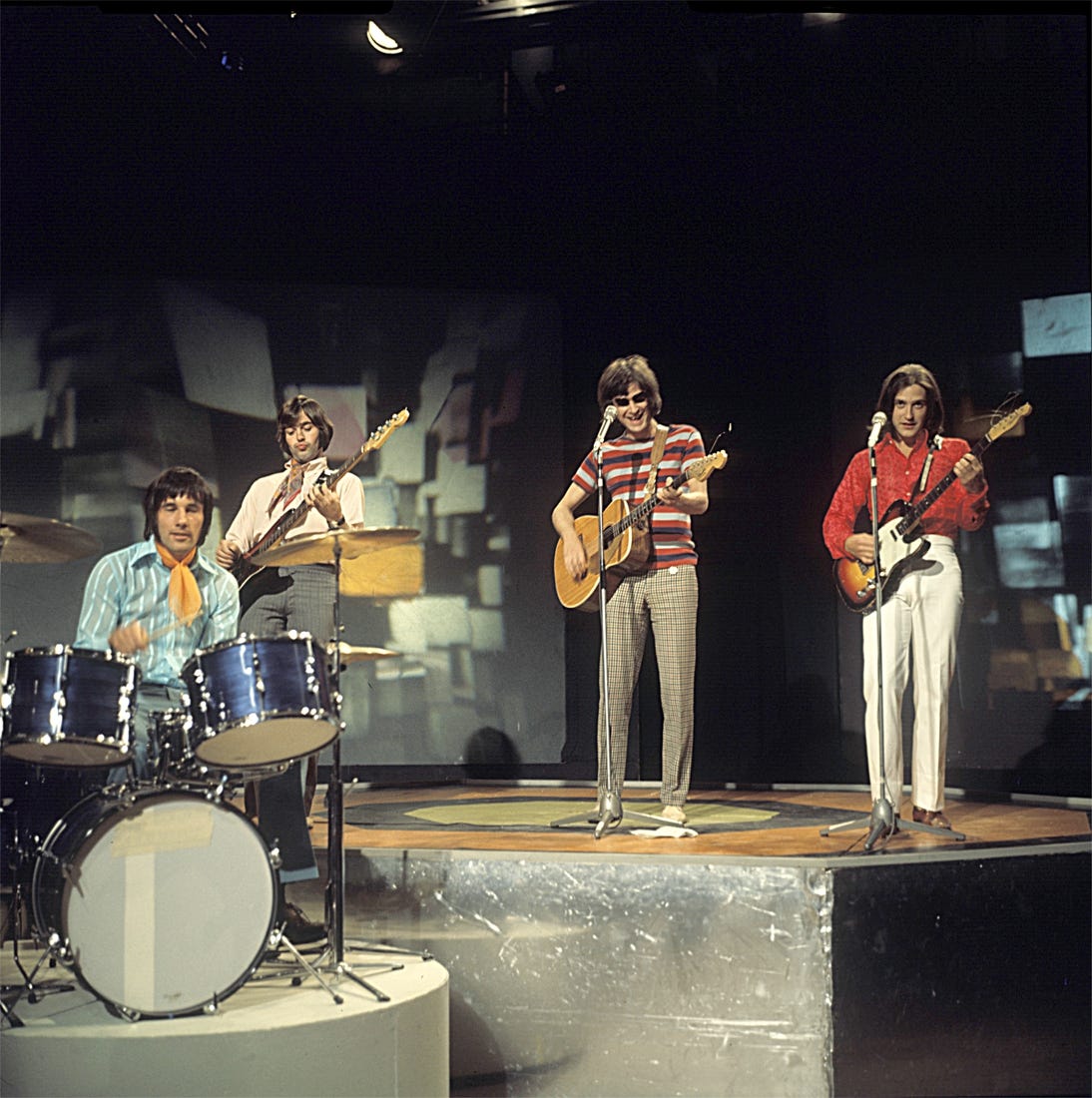
Three years later, the situation had changed. Quaife left The Kinks permanently in 1969, and Dalton was called back — this time not as a stand-in, but as a full-time member. From that point onward he became the band’s bassist through one of their most creatively productive periods. He played on Arthur and remained through the years that followed, including the era of Lola and Muswell Hillbillies, when The Kinks re-established themselves internationally after their return to the American touring circuit.
John Dalton Remembers
For a concert that has largely disappeared from the historical record, John Dalton’s memories of Beirut are refreshingly ordinary.
He does not recall the setlist, nor does he have any pictures, posters, or promotional material from the event. Rock history has a habit of turning ordinary events into mythology. Yet one of the few surviving first-hand memories of The Kinks’ visit to Beirut involves neither music nor mayhem:
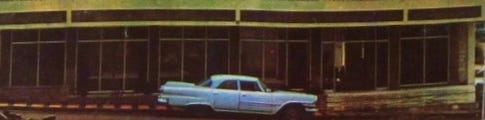
“Nothing much happened in Beirut apart from the fact I walked into a plate glass window in the hotel, and was lucky that I didn’t have a scratch on me from the broken glass!”
His impression of the city itself is equally direct.
“I didn’t know anything about Beirut, so was surprised when we landed there were soldiers with guns everywhere.”
For many British musicians of the era, Beirut was not yet the familiar reference point it would later become through news coverage and political events. It was just another cosmopolitan stop on a tour schedule, somewhere beyond the usual European circuit.
“I do remember there wasn’t many people at the show, and I don’t think we got paid.”
Which gives the event a rather embarrassing place in the city’s history. Fortunately for Beirut’s reputation, Dalton adds that such incidents were not unique.
“But that happened a few times with The Kinks!”
Perhaps the promoter disappeared. Maybe there was a dispute. It’s possible the accounting simply never worked out. More than fifty years later, nobody seems entirely sure.
Other published accounts claim that the band members had their passports confiscated by hotel staff until the hotel bill was paid, and that some equipment was even left behind in Beirut. But Dalton’s final observation of the ordeal isn’t bitter.
“It’s a shame we couldn’t spend more time there because it would have been nice to see some places.”
Unlike other touring musicians of the era, the band did not develop a lasting relationship with the city and never returned.
Yet, while the concert itself left few physical traces, The Kinks’ presence in Lebanon survives in another, more tangible form.
A Lebanese Village Green
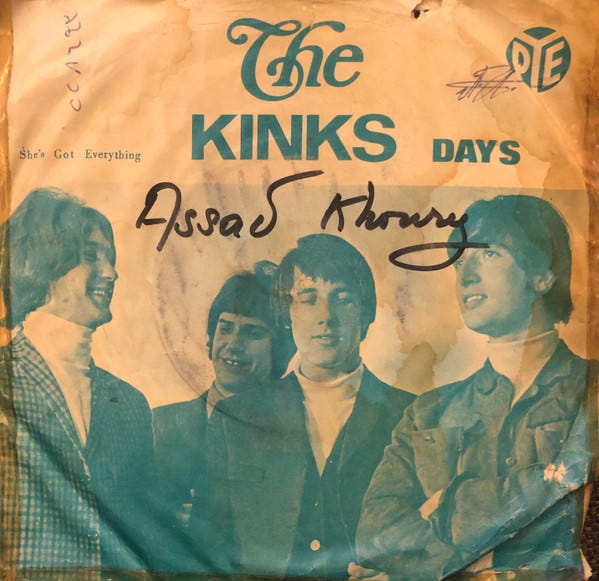
Among record collectors today, one of the more intriguing artefacts associated with the band’s history is a Lebanese pressing of The Kinks Are the Village Green Preservation Society. Issued for the local market, it stands as a reminder that Beirut was not simply a stop on an unusual tour itinerary but part of a wider international network through which music circulated during the 1960s.
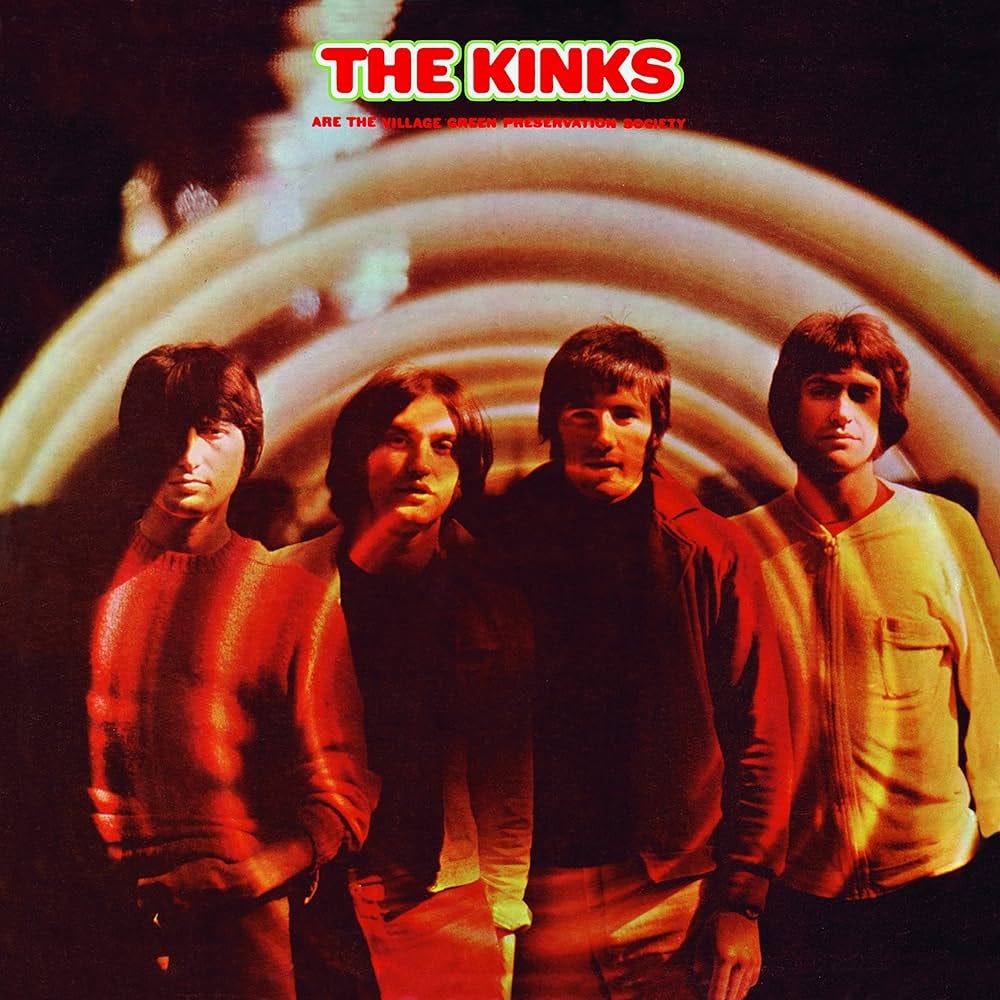
That a Lebanese edition exists at all says enough on its own. At a time when the album struggled commercially in Britain and America, copies nevertheless reached Lebanon, where local listeners could engage with the same music that would later earn a place in the rock canon.
A Small Chapter in Beirut’s Story
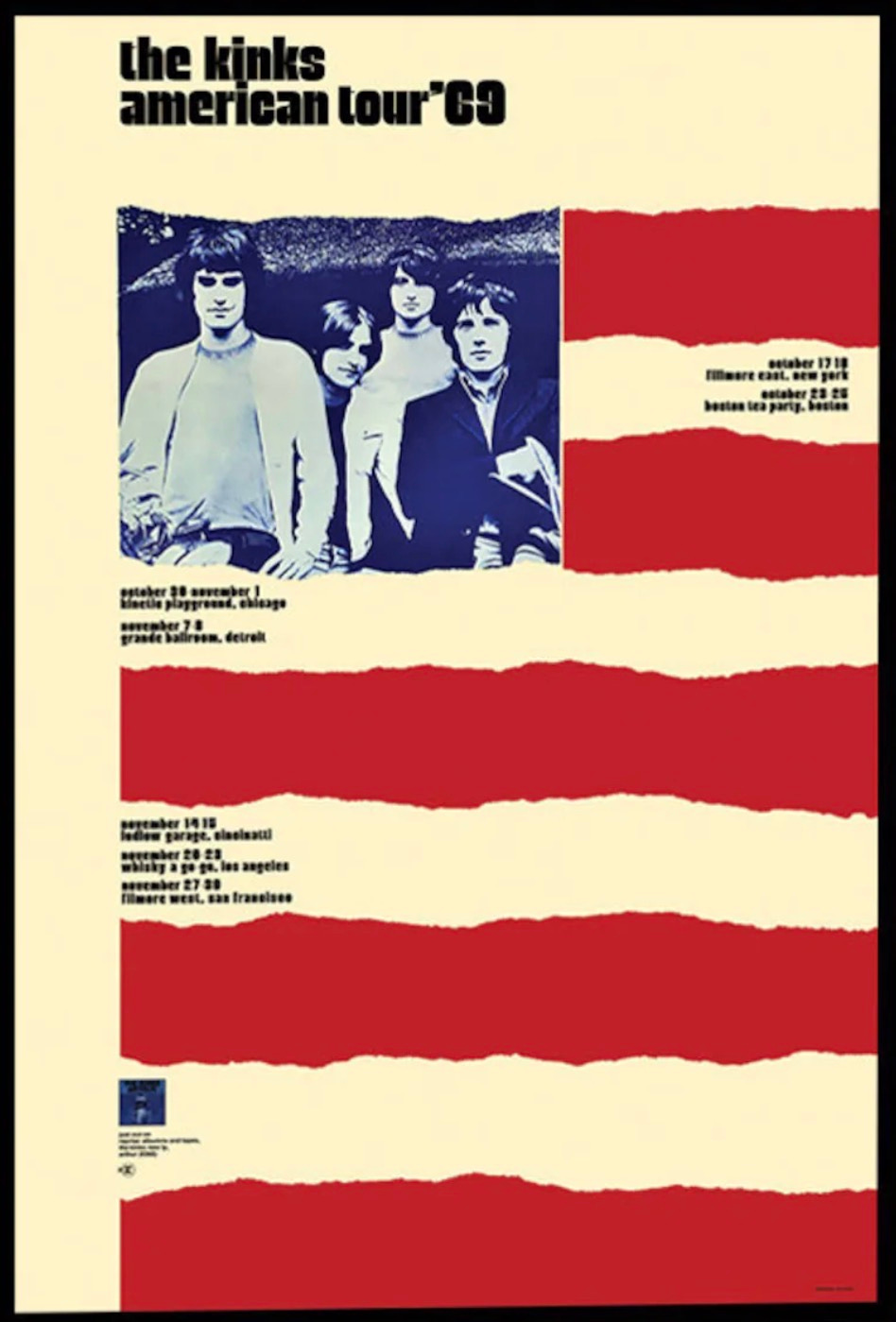
By the end of 1969, The Kinks’ American ban had finally been lifted. The band returned to the United States and entered a new phase of their career.
Most of the physical traces of the concert in Beirut have vanished. The Melkart Hotel is gone. No recording of the concert has surfaced. No complete setlist survives. Even Dalton’s memories are remembered in fragments.
The Kinks spent much of their career writing about places threatened by time, events remembered imperfectly, and reconstructed through scattered details and fading recollections. In an unexpected way, their Beirut concert has become one of those stories too.
Although the Kinks’ experience in Beirut was less than ideal, the fact that the city remembers them more than half a century later is a kind of consolation of its own.