

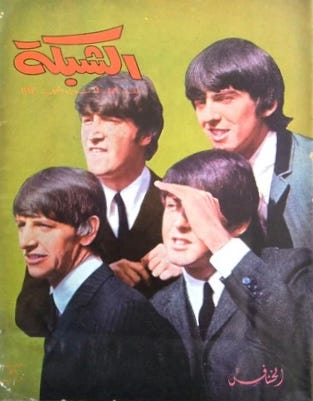
On a warm Sunday afternoon in June 1964, hundreds of people pressed against the edge of Beirut International Airport’s runway, straining for a glimpse of an aircraft that wasn’t even scheduled to stay. Some clutched vinyl records, others scraps of paper. One even wore a mop-top wig. At a moment when Beatlemania was sweeping the globe, Lebanon found itself hosting unexpected guests — The Beatles. Though they never performed in the country, their brief refueling stop in Beirut left a small yet memorable imprint.
A One-Hour Stop That Drew Hundreds
On Sunday, June 7, 1964, The Beatles’ aircraft landed at Beirut International Airport for a quick refueling stop as the group traveled from Europe to Hong Kong. The band was in the middle of a 27-day tour spanning Denmark, the Netherlands, Australia, New Zealand, and the Far East.
News of their arrival spread quickly. More than four hundred fans — Lebanese and expatriates — gathered at the airport, turning an ordinary logistical stop into a spontaneous celebration. Many brought posters and vinyl records; some held out scraps of paper hoping for autographs. The crowd’s excitement spilled onto the runway, to the point where police reportedly deployed fire-fighting foam across the runway in an improvised attempt to hold back a crowd that had spilled beyond the terminal.
Initially, the band hesitated to leave the plane, but eventually appeared at the top of the stairs to wave to the crowd. Silent footage from the stop shows fans rushing toward the aircraft and a young Paul McCartney leaning down to shake hands with those who managed to get close.
The stop was brief, but it did not go unnoticed. Beirut newspapers the following day treated the arrival as both curiosity and spectacle, noting the crowd it drew and the unusual disruption of an otherwise routine airport stop.
Long after the airport crowd dispersed, the band’s presence lingered in record shops, living rooms, and car stereos across the city.
Local Pressings, Lasting Presence
In the years that followed, The Beatles’ presence in Lebanon continued in quieter ways. By the late 1960s, their records were being manufactured locally.
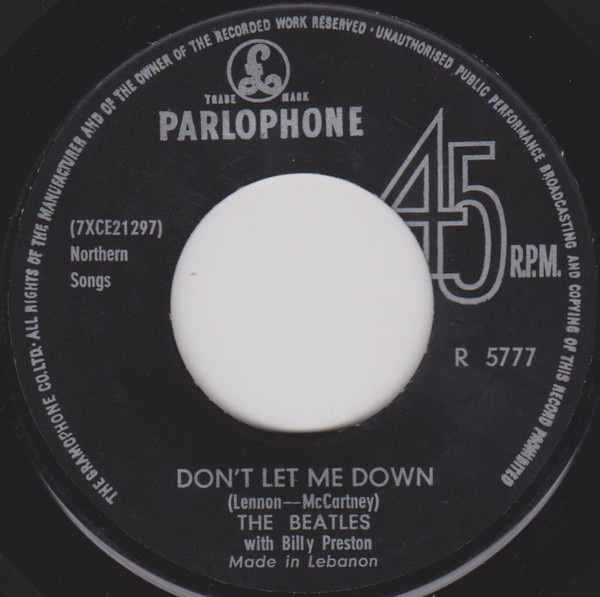
Even into the 1990s, Lebanese listeners could buy Beatles music produced for the local market. A compilation cassette manufactured in 1996 is one example of how their catalogue remained part of the musical landscape.
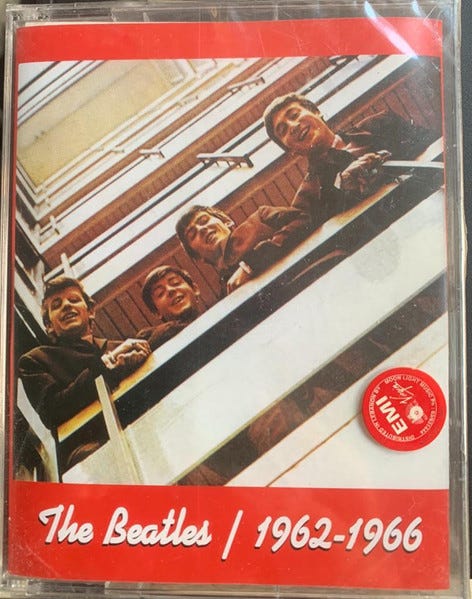
These releases weren’t novelties or imports — they were produced locally for a listening public that labels and distributors knew existed.
Echoes Across the City
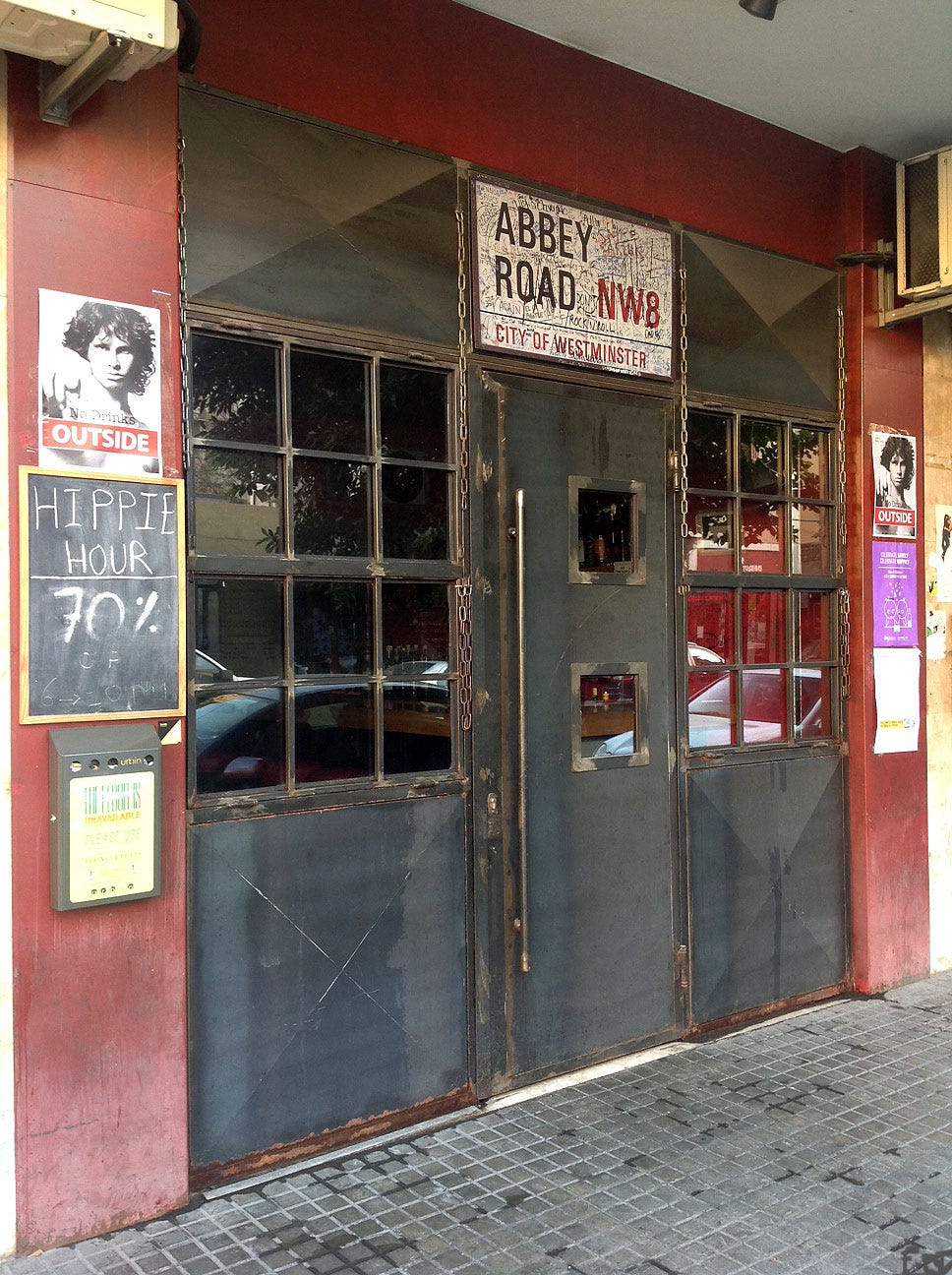
Traces of The Beatles still surface across Beirut today. In Mar Mikhael, a public house named Abbey Road references the band’s famous album cover.
In Achrafieh, their name appears in graffiti on a traditional Lebanese home, blending global pop culture with vernacular architecture.
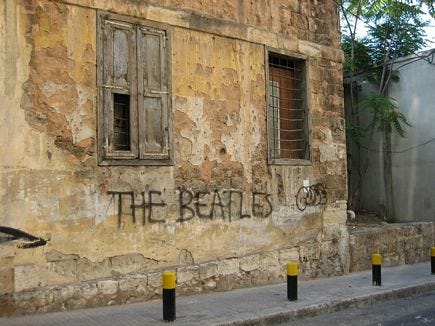
Beirut and The Beatles
In the end, the story is less about The Beatles than about Beirut. The airport stop was brief, unplanned, and unremarkable on paper — but the response it drew, and the traces it left behind, reveal a city deeply connected to the wider world.