

In the heart of Tripoli, Lebanon’s second-largest city, lies one of the most ambitious architectural projects of the twentieth century in the Middle East: Tripoli’s Rachid Karami International Fair, designed by Oscar Niemeyer in 1962. Conceived at the height of Lebanon’s post-independence optimism, the fair was intended to embody progress, openness, and national unity. Yet more than half a century later, it remains unfinished — an immense modernist landscape frozen in time, often described as a cemetery of modernity. The abandoned structures stand as witnesses to a political vision interrupted, a society fractured, and a modernity left unrealised.
Tripoli and Lebanon’s “Golden Age”
Tripoli occupies a paradoxical position within Lebanon. Located in the north of the country and historically connected to Syria through trade, culture, and geography, the city has long struggled to define its place within the Lebanese nation-state. After Lebanon gained independence in 1943, Tripoli was gradually forced to reduce its economic and commercial ties with Syria. The closure of once-open traditional trade routes in 1948 dealt a severe blow to the city’s already fragile economy. This marginalisation was compounded by the Lebanese state’s relative neglect of Tripoli, while Beirut emerged as the political, financial, and cultural centre of the country.
During the 1950s, Lebanon experienced rapid economic growth fuelled by liberal economic policies and an influx of foreign capital. Infrastructure expanded, institutions developed, and the country gained a reputation as a regional hub of modernity. Yet this prosperity was unevenly distributed. Beirut absorbed the majority of investment, deepening the gap between the capital and peripheral cities such as Tripoli. Despite being only 80 kilometres from Beirut, Tripoli became one of the poorest cities in Lebanon, suffering from high unemployment, insufficient infrastructure, and uncontrolled urban expansion driven by demographic growth.
Tripoli’s relatively homogeneous social fabric reinforced a strong sense of local belonging, sometimes at odds with the young Lebanese state, which struggled to impose a shared national identity. As inequalities between regions intensified, the legitimacy of the state itself came into question. It was within this context that a policy of decentralisation began to take shape — one that sought to rebalance economic, social, and cultural development across the country. Addressing territorial inequalities was seen not only as an economic necessity, but also as a political strategy to strengthen national unity.
Modernisation as Political Strategy
Tripoli was directly affected by this new modernisation agenda. Ambitious projects were launched to transform the city into a dynamic economic and tourist centre capable of rivaling Beirut. Following severe floods in January 1955, large-scale engineering works were undertaken to consolidate the banks of the Kadisha River, which runs through the historic city. While these interventions were justified in the name of progress and sanitation, they resulted in the destruction of hundreds of traditional houses, the partial covering of the river, and new problems related to pollution and public health. In the process, much of Tripoli’s architectural heritage and cultural identity was irreversibly altered.
At the beginning of the 1960s, the port of El Mina was expanded in an attempt to revive Tripoli’s maritime economy. Yet even modernised, the port could not compete with Beirut’s dominance, further reinforcing the city’s sense of economic decline. It was against this backdrop of frustrated ambition, regional imbalance, and political decentralisation that the idea of an international fair emerged.
Across the Arab world, newly independent states were adopting international fairs as symbols of openness, industrial development, and participation in global trade networks. The Baghdad International Fair (1954) and the Damascus International Fair (1955) served as precedents, while similar projects later appeared in West Africa, notably in Senegal. In Lebanon, the international fair was imagined as both an economic catalyst and a cultural showcase — an architectural statement of modern nationhood.
Oscar Niemeyer and the Vision for Tripoli
The idea of a permanent international fair was first proposed in 1958, initially to be located in Beirut. However, in 1960, President Fouad Chehab, a key figure in Lebanon’s modernising project, made the strategic decision to relocate the fair to Tripoli in the name of regional balance. Two years later, the Lebanese government commissioned Oscar Niemeyer, already world-famous for his work in Brasília, to design the complex.
Niemeyer envisioned the fair as a new urban pole situated between Tripoli’s historic centre and the port of El Mina, along the Mediterranean coast. His proposal aimed to reconnect the city to the sea and create a third urban core — Tripoli as a city of “three cities.” Through bold modernist forms and a carefully planned urban layout, the fair was meant to project an image of confidence and progress, positioning Tripoli as a modern gateway between Lebanon and the wider world.
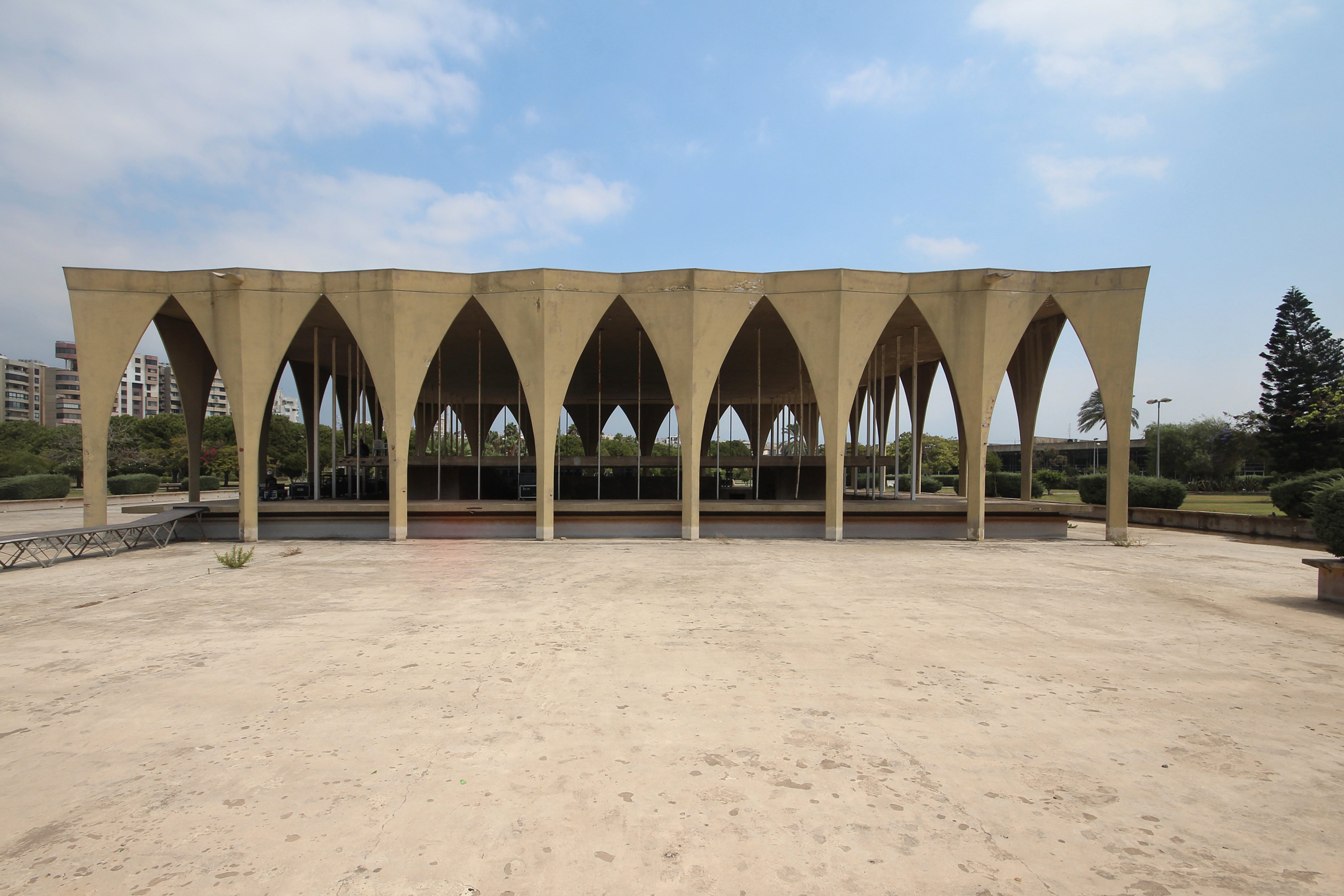
The original masterplan extended far beyond the fair itself. It proposed coastal development, residential and commercial districts, tourist infrastructure, and major road connections linking Tripoli to Beirut and northern Syria. The fairground was conceived as the heart of this new district, a crossroads between the old city, the port, and the sea.
Stripped of Its Ambition
Very quickly, however, Niemeyer’s vision was curtailed. Political compromises and financial constraints led the Lebanese government to abandon most of the broader urban project. Only the fair itself was retained, and even then, it was disconnected from the seafront and reoriented toward the old city — directly contradicting the original goal of opening Tripoli to the Mediterranean. The highway infrastructure was rerouted, further isolating the site from its surroundings.
The project was reduced to a 70-hectare elliptical plot, cut off from both the city and the coast. Construction was delayed by the expropriation of agricultural land, particularly Tripoli’s famous orange orchards, once a defining feature of the city’s identity. Work finally began in 1964, with the inauguration initially planned for 1967, then postponed to 1969 due to funding shortages and political instability.
By 1975, the fair was close to completion when the Lebanese civil war erupted. Construction stopped abruptly, and the site was later occupied by Syrian military forces. Although efforts were made in the early 1980s to revive the project, the Israeli invasion of Lebanon in 1982 definitively ended any realistic prospect of completion. Renamed the Rachid Karami International Fair in 1995, the site hosted a few minor events before being fully evacuated by military forces in 1998. It was never officially inaugurated, nor fully used.
Architecture as Unfinished Manifesto
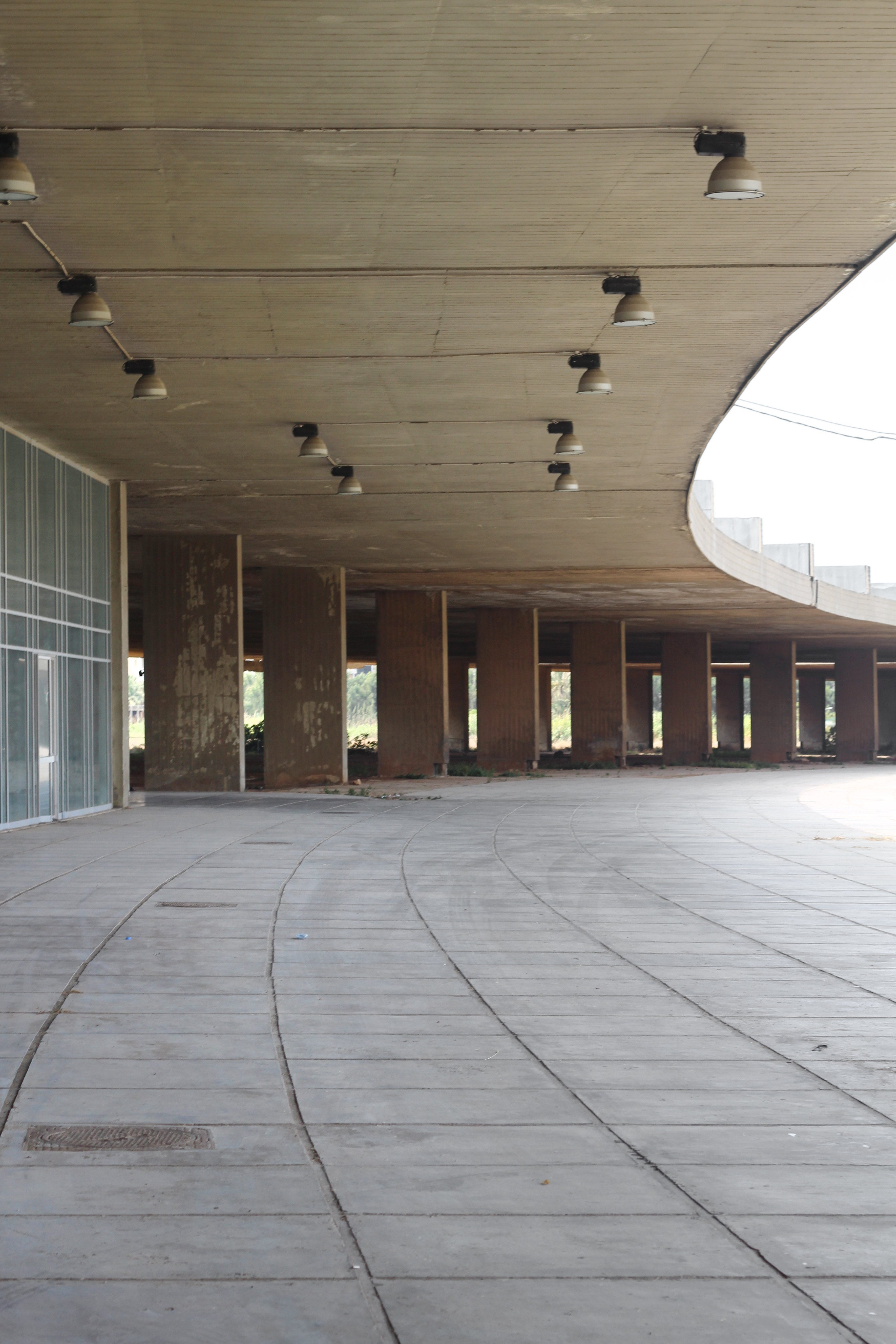
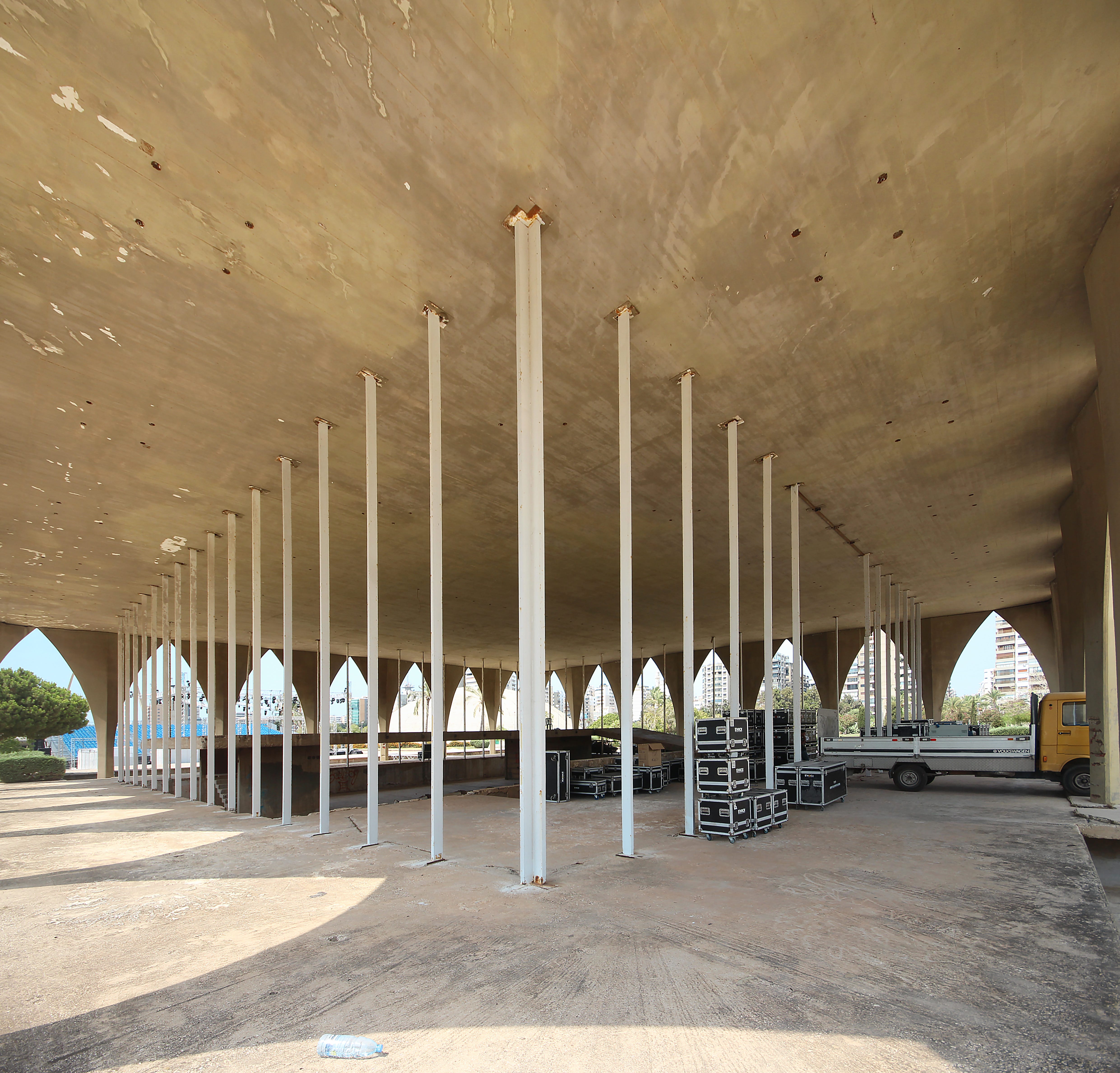
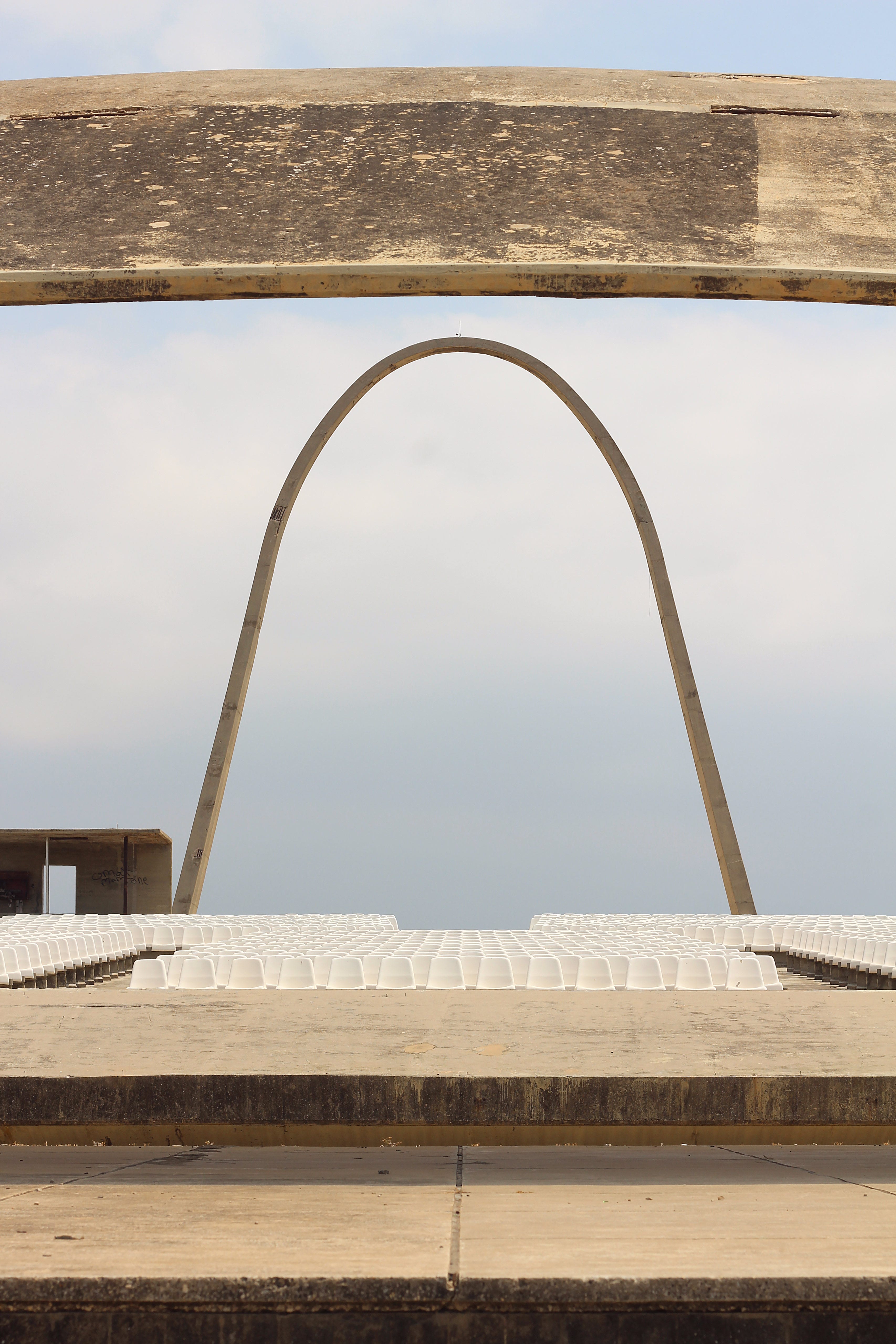
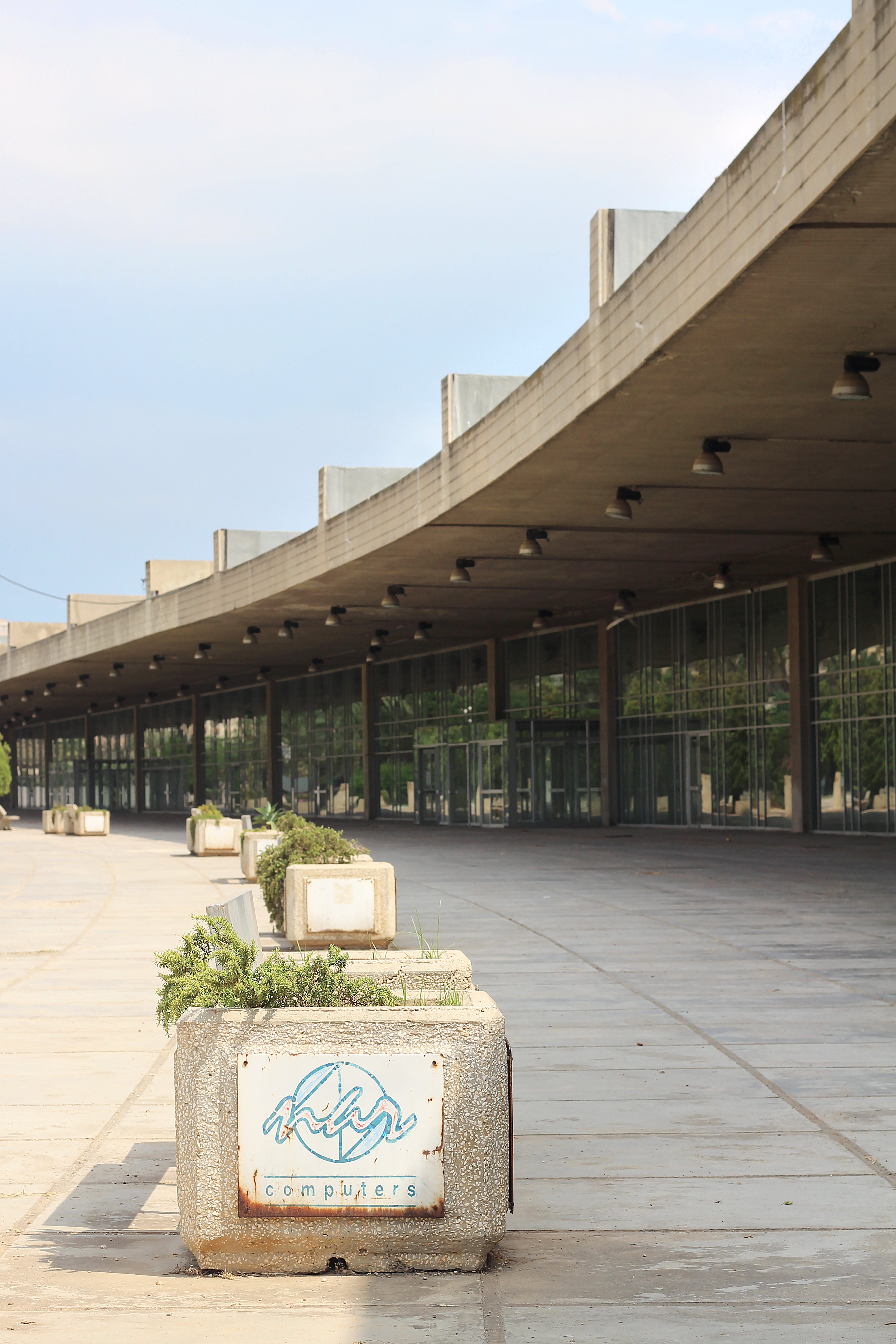
Despite its failure, the Tripoli International Fair remains one of the most remarkable modernist complexes in the region. Niemeyer conceived it as a “museum of modernism,” concentrating architectural experimentation within a single site. Rejecting the traditional model of scattered pavilions, he designed a single, monumental exhibition building: a boomerang-shaped structure 750 metres long, covered by a vast reinforced-concrete roof known as the Great Canopy. Beneath this continuous surface, all exhibitors were to be housed, reinforcing the idea of unity and collective progress.
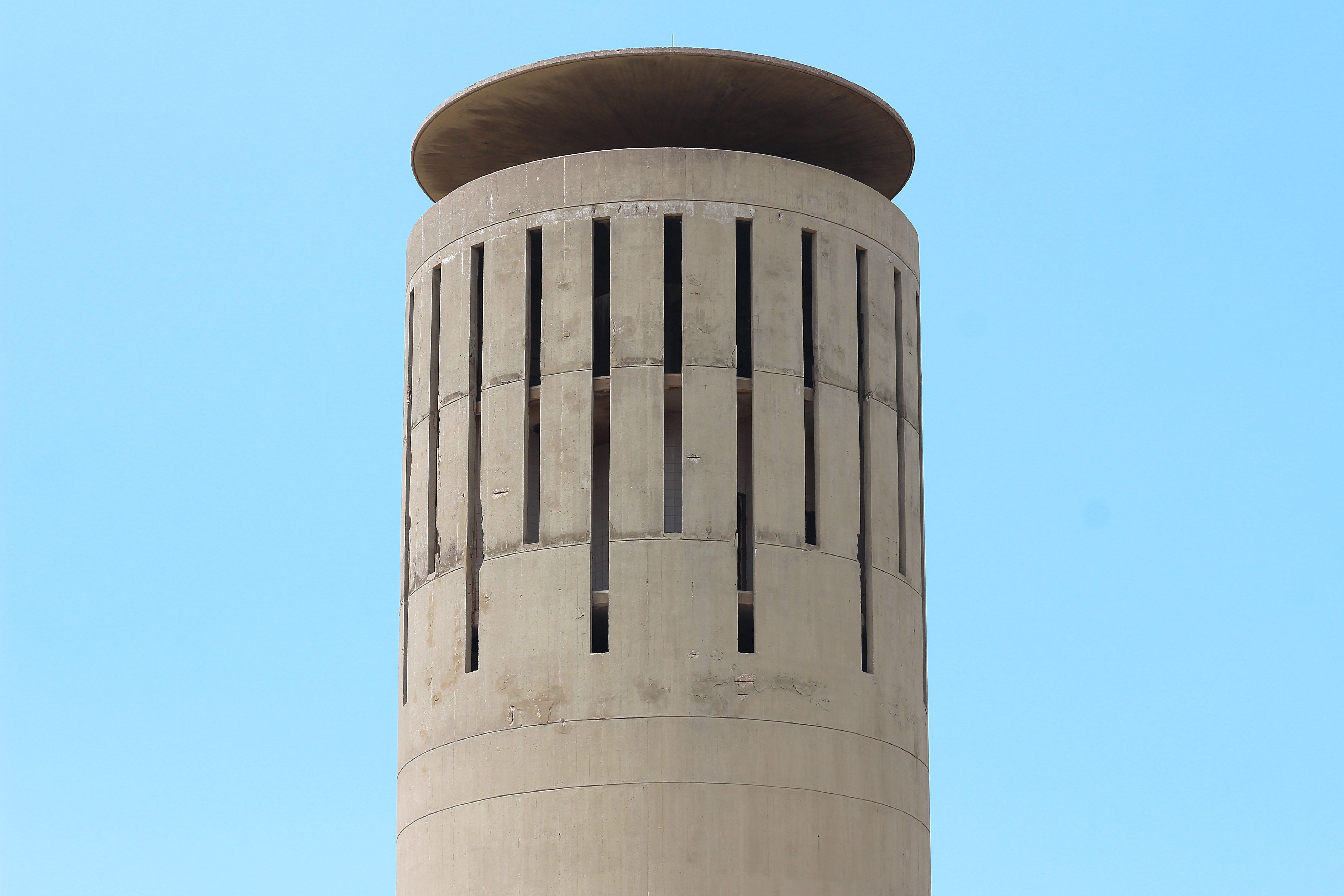
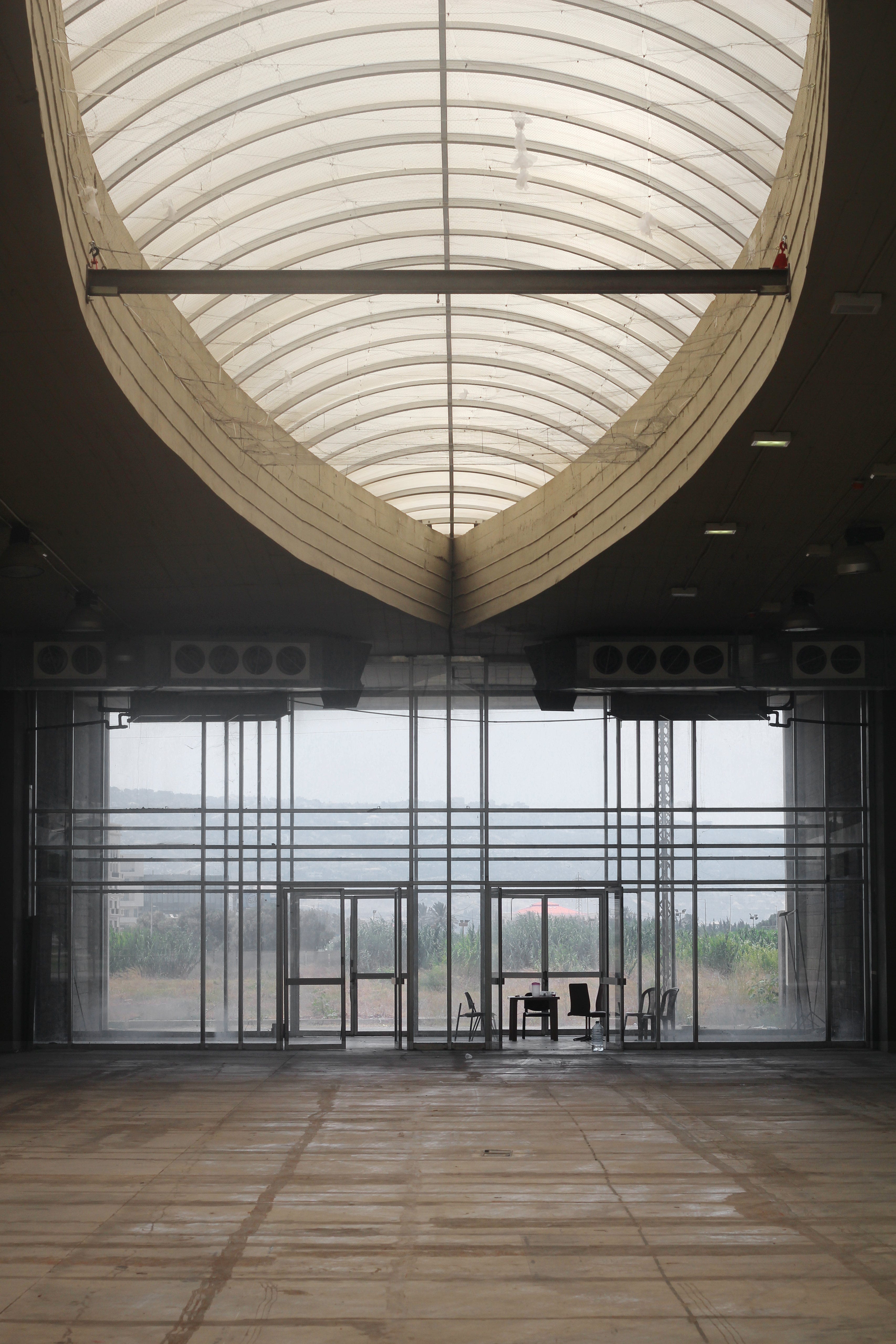
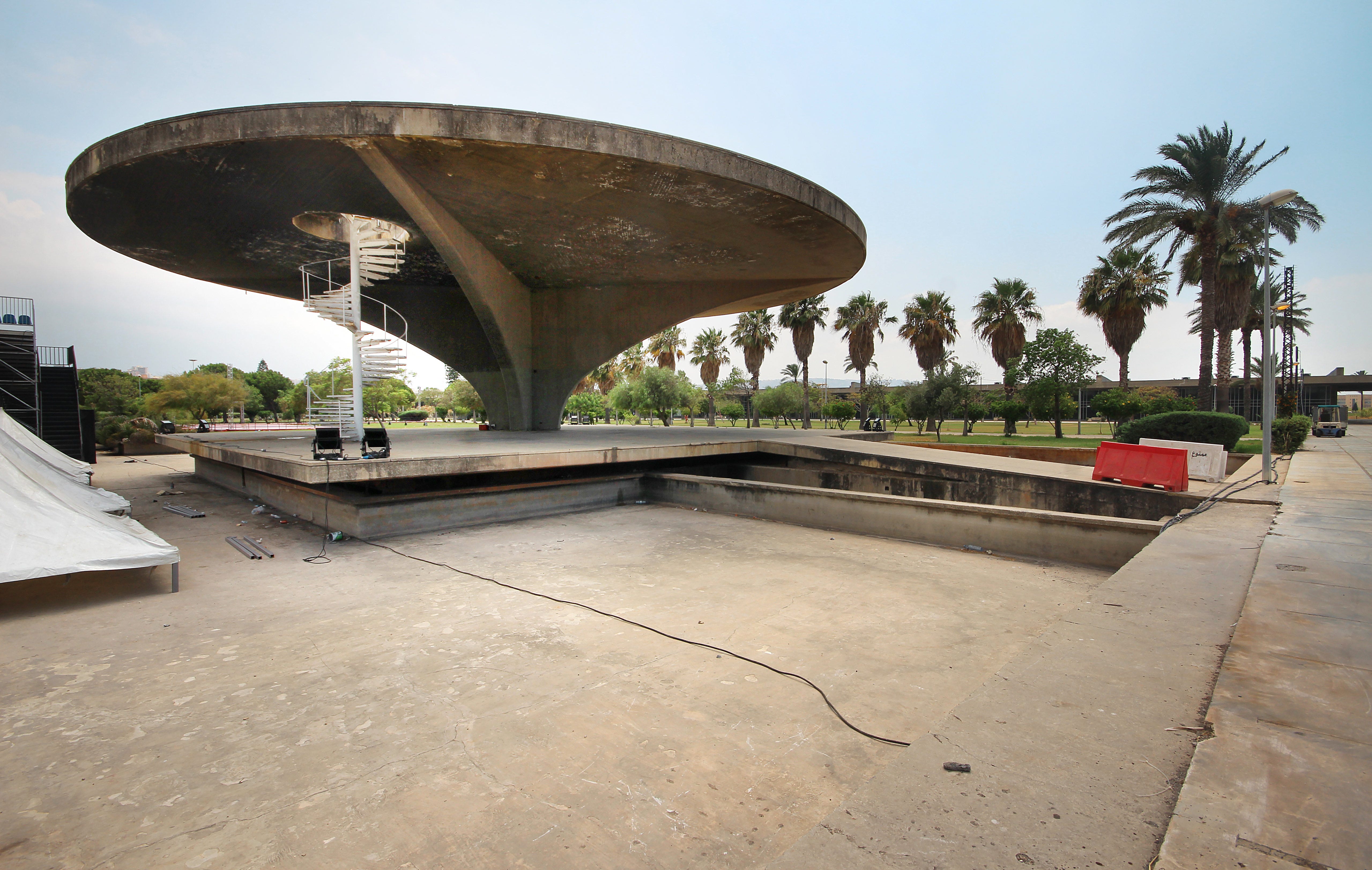
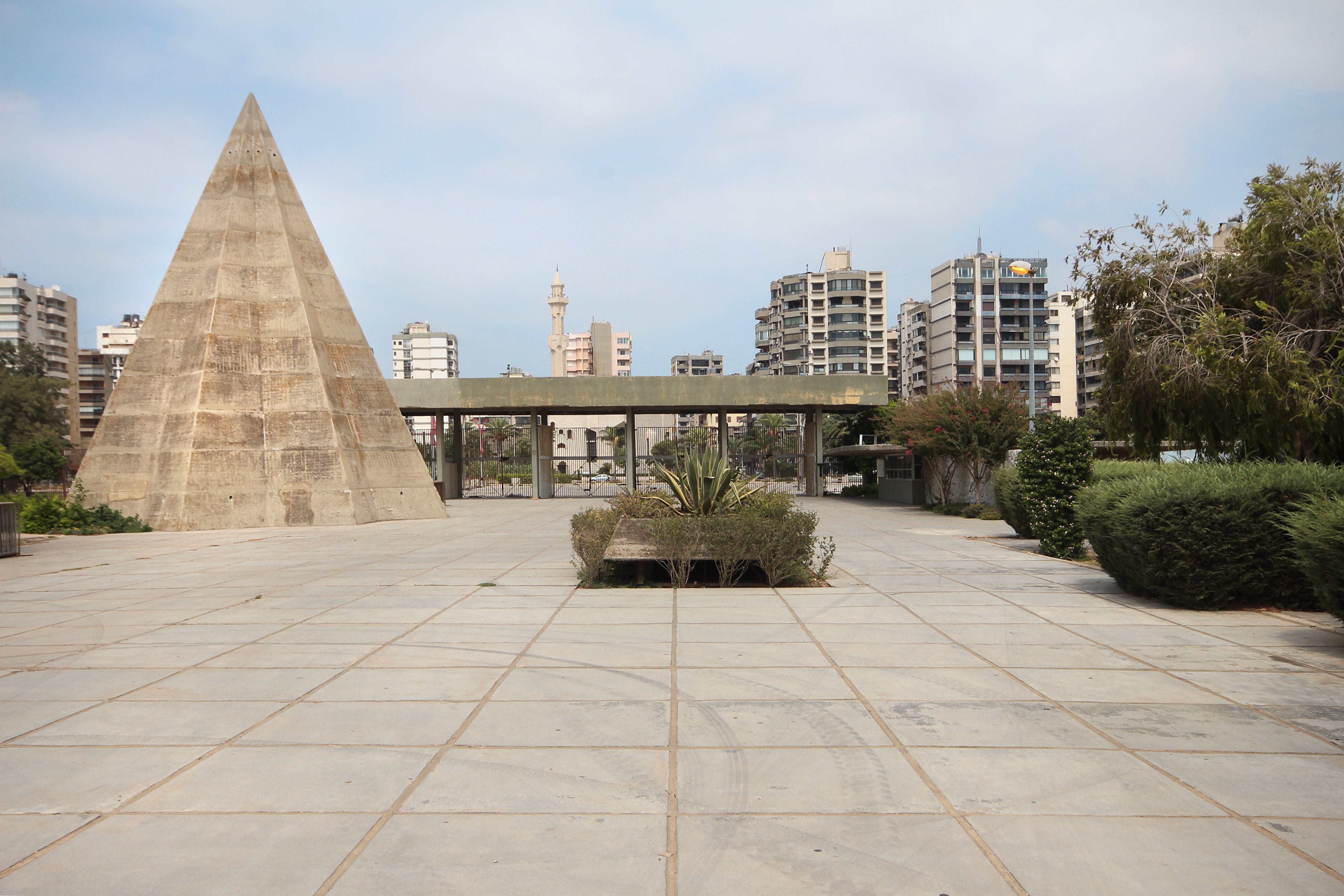
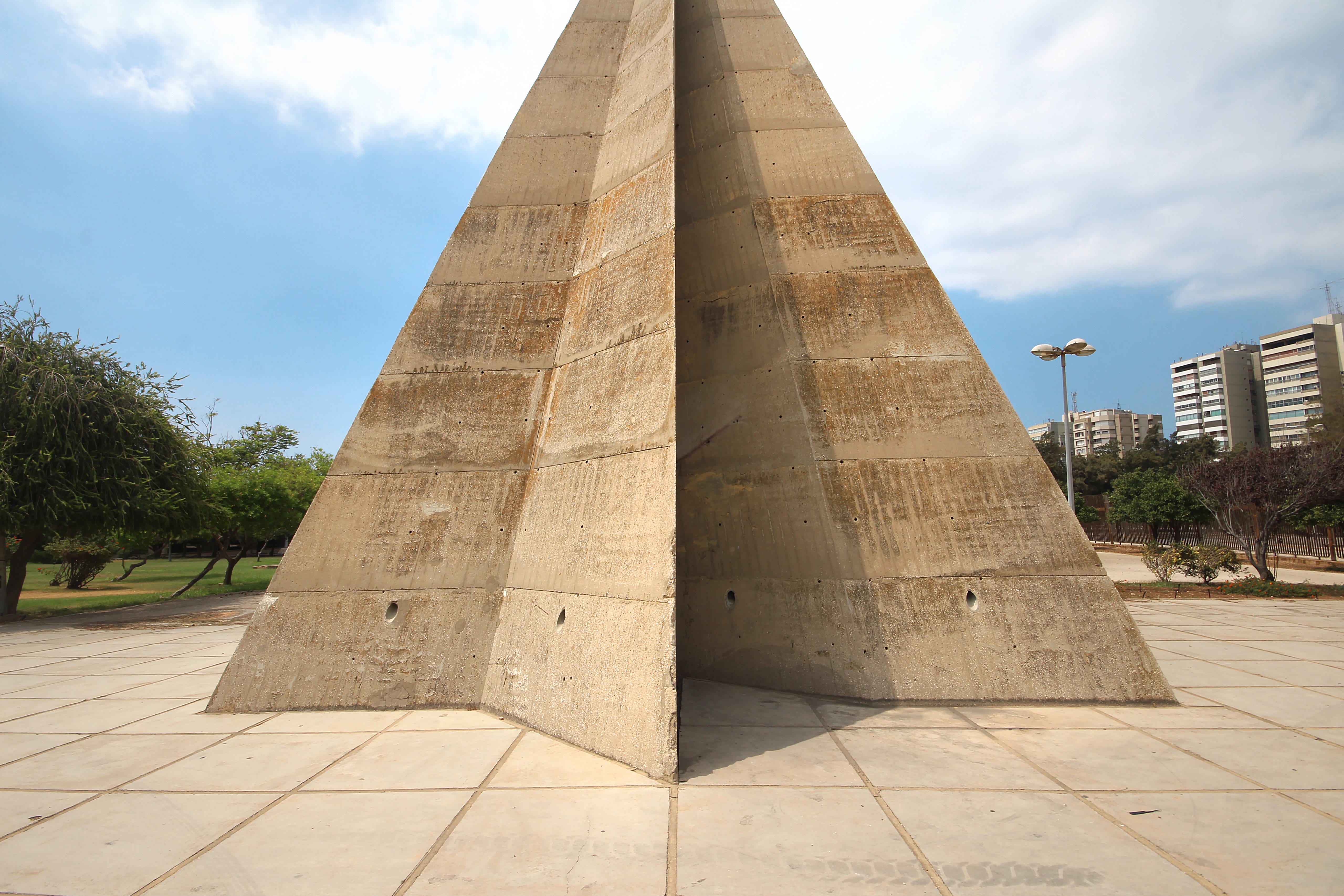
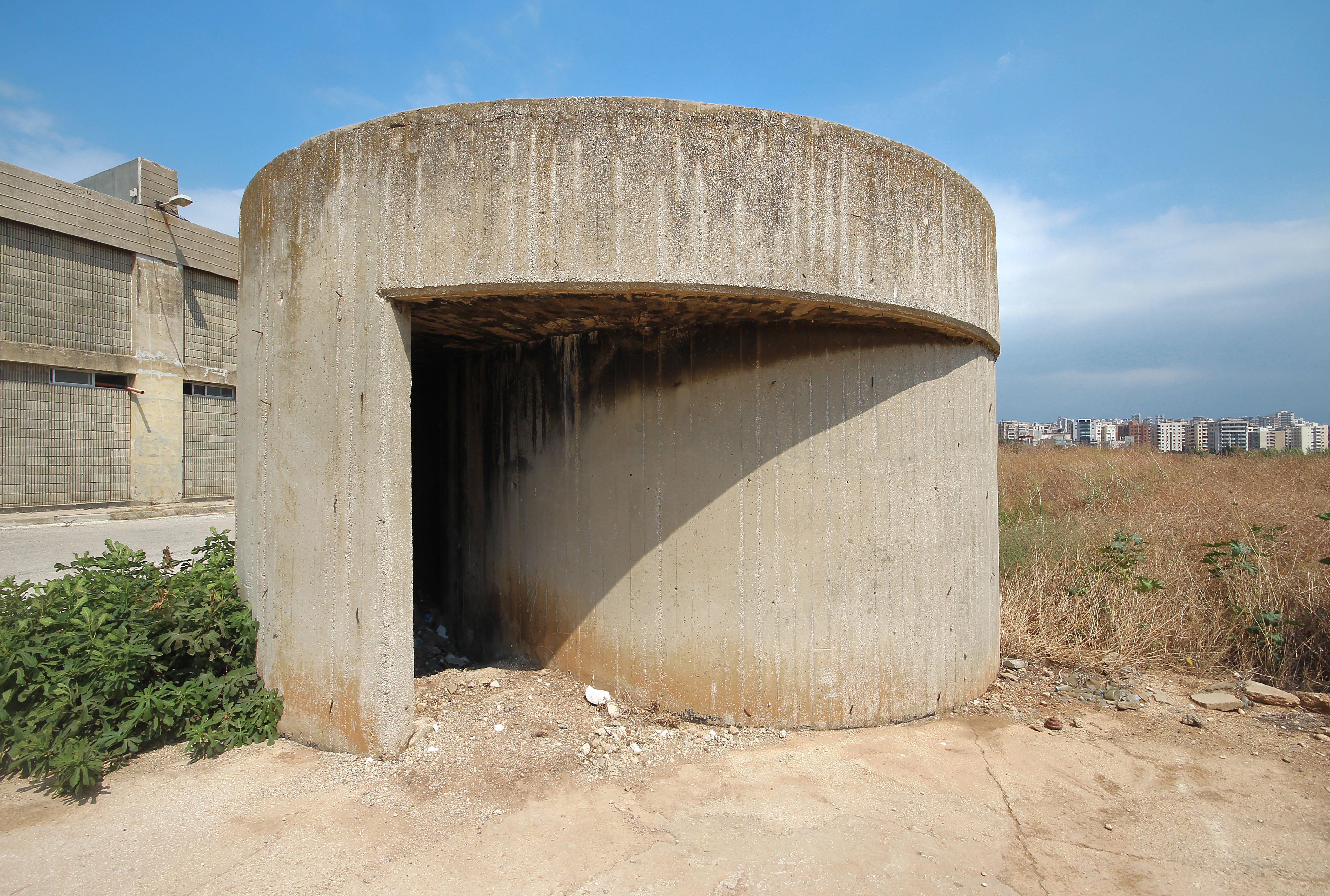
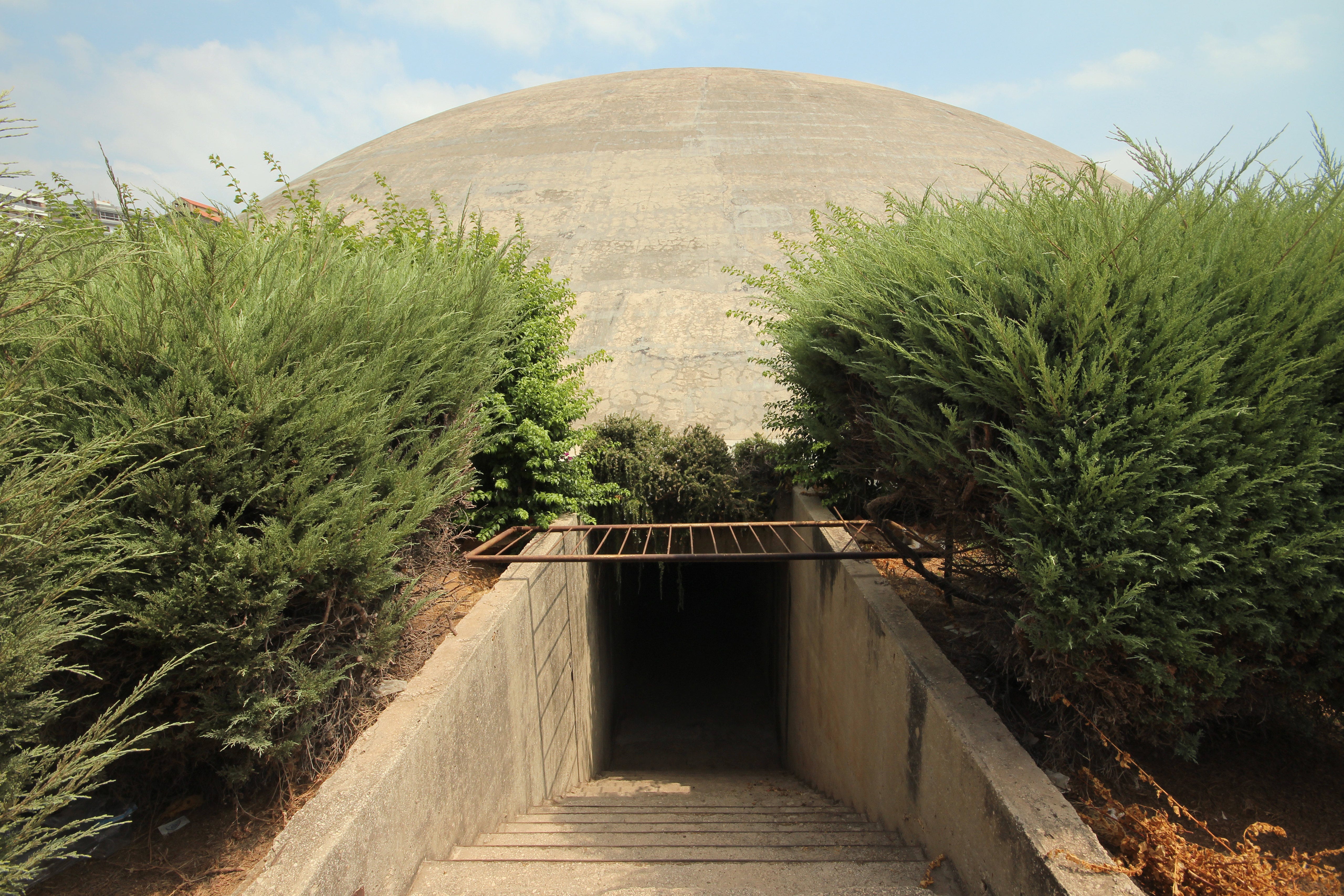
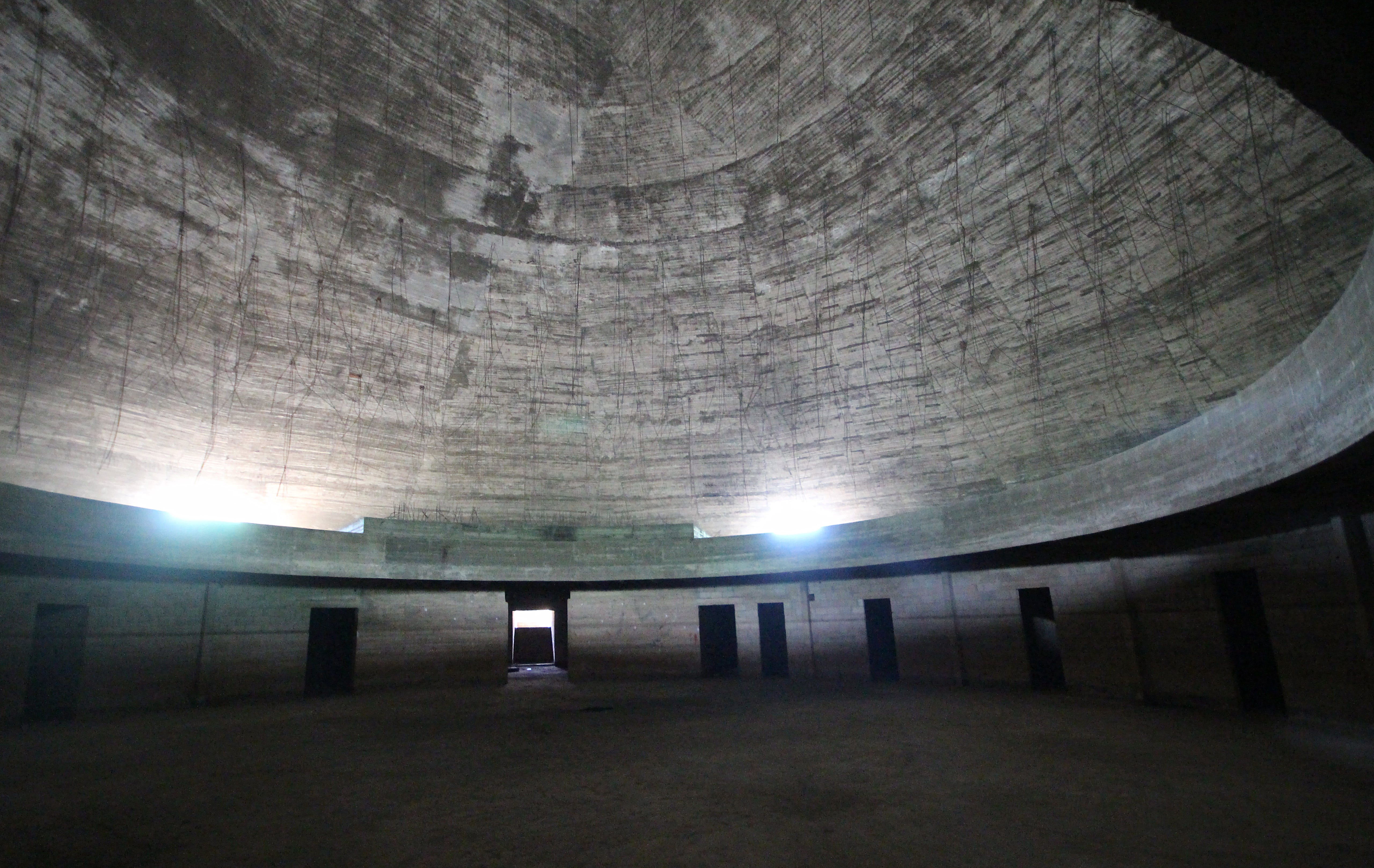
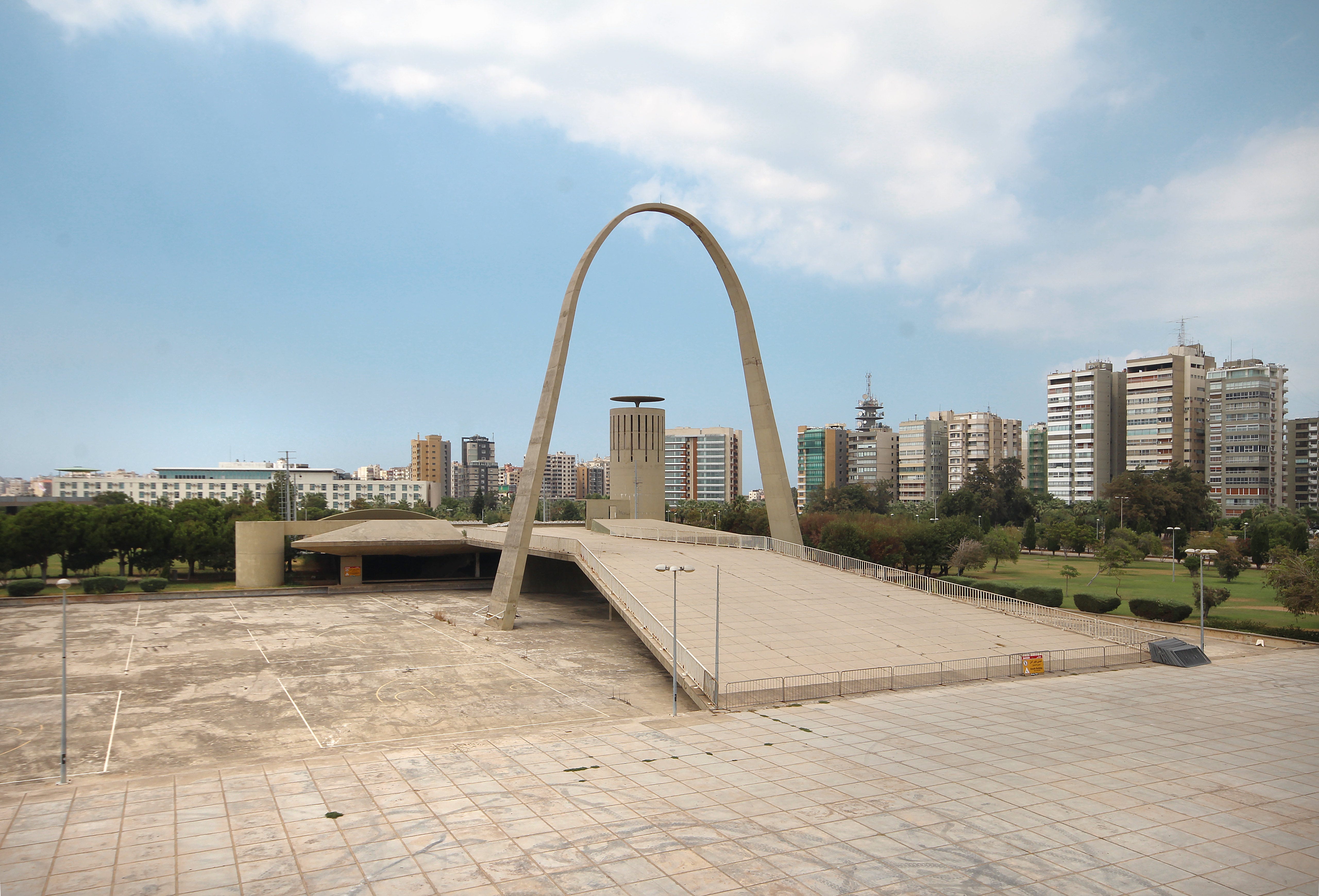
Around fifteen independent structures populate the site, many echoing forms Niemeyer explored elsewhere. The experimental dome theatre recalls his work in Brasília, while the Lebanese Pavilion adapts modernist principles to local architectural references. Other elements include an open-air theatre accessed by a monumental ramp crowned by a concrete arch, a heliport integrated with a space museum, a water tower topped by a panoramic restaurant, a children’s pavilion shaped like a pleated pyramid, and experimental housing prototypes.
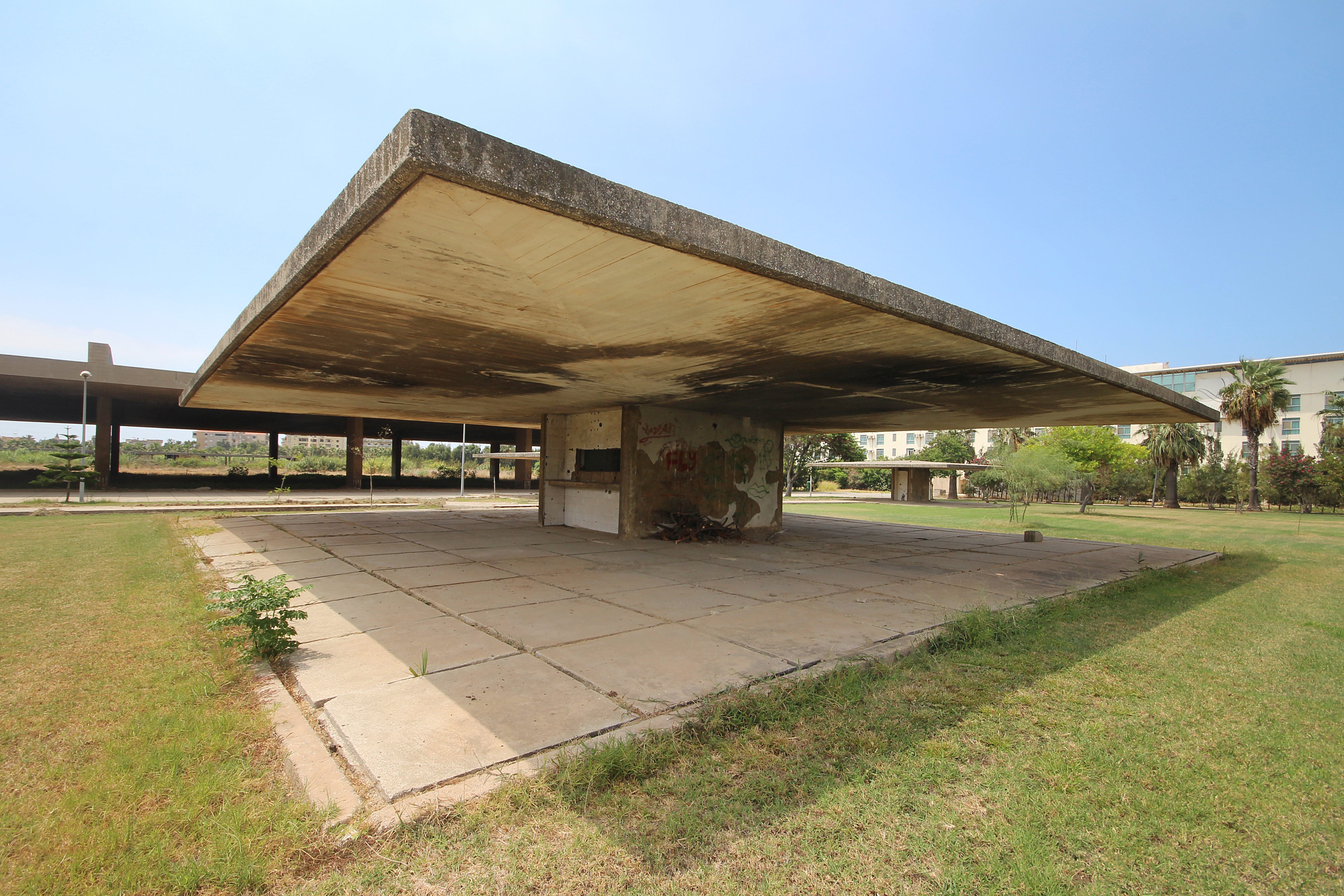
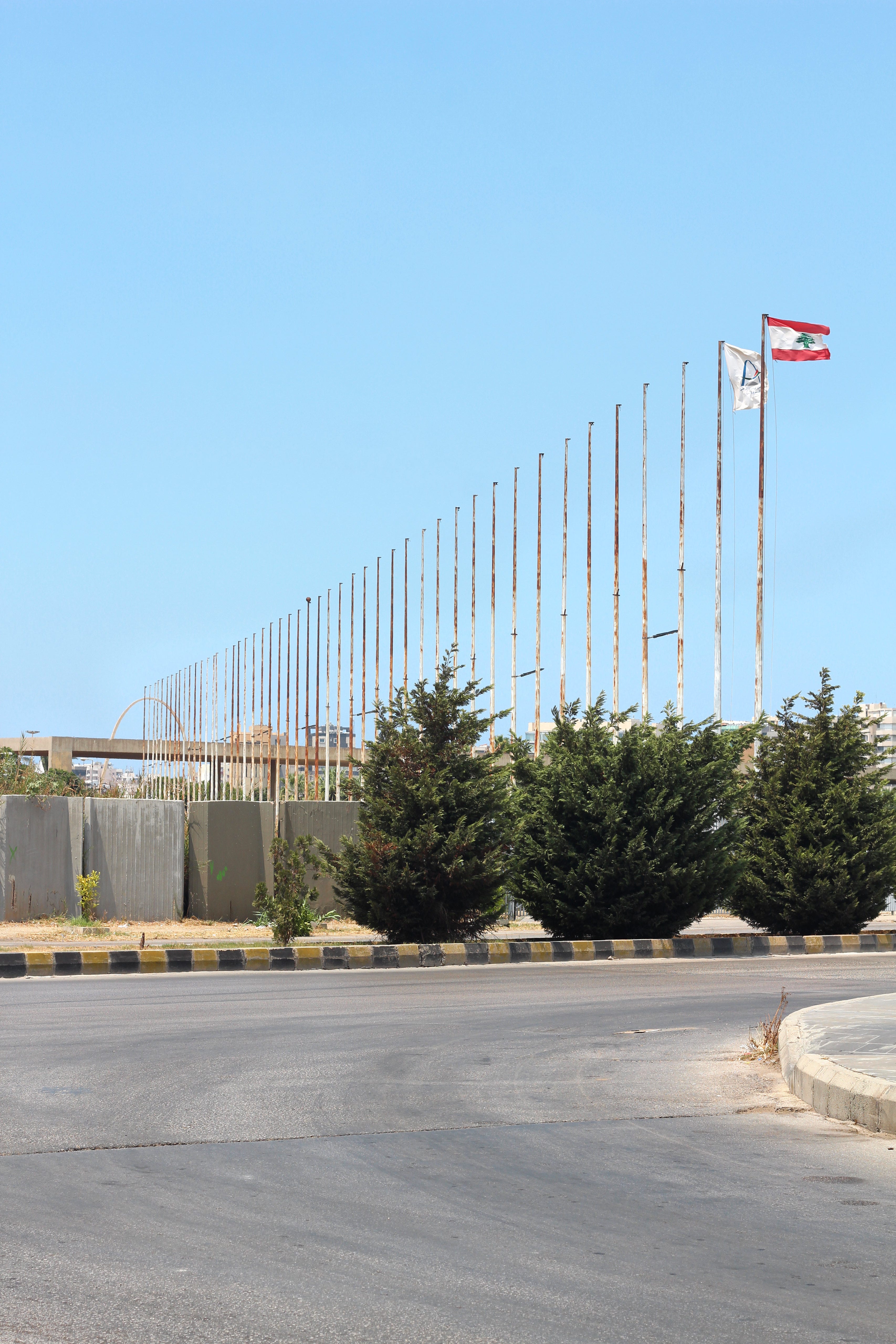
Landscape design played a crucial role, with reflecting pools intended to mirror the buildings and create dialogue between architecture, water, and vegetation. Yet today, the pools are dry, the parks deserted, and the structures stand as empty concrete shells — powerful, but mute.
Ruins of a Society in Limbo
The Tripoli International Fair ultimately failed in its political, economic, and social ambitions. Isolated by infrastructure, disconnected from the city and the sea, it became a vast enclosed void rather than a catalyst for development. The civil war brought a definitive end to the modernist dream that had inspired both Niemeyer and the Lebanese state.
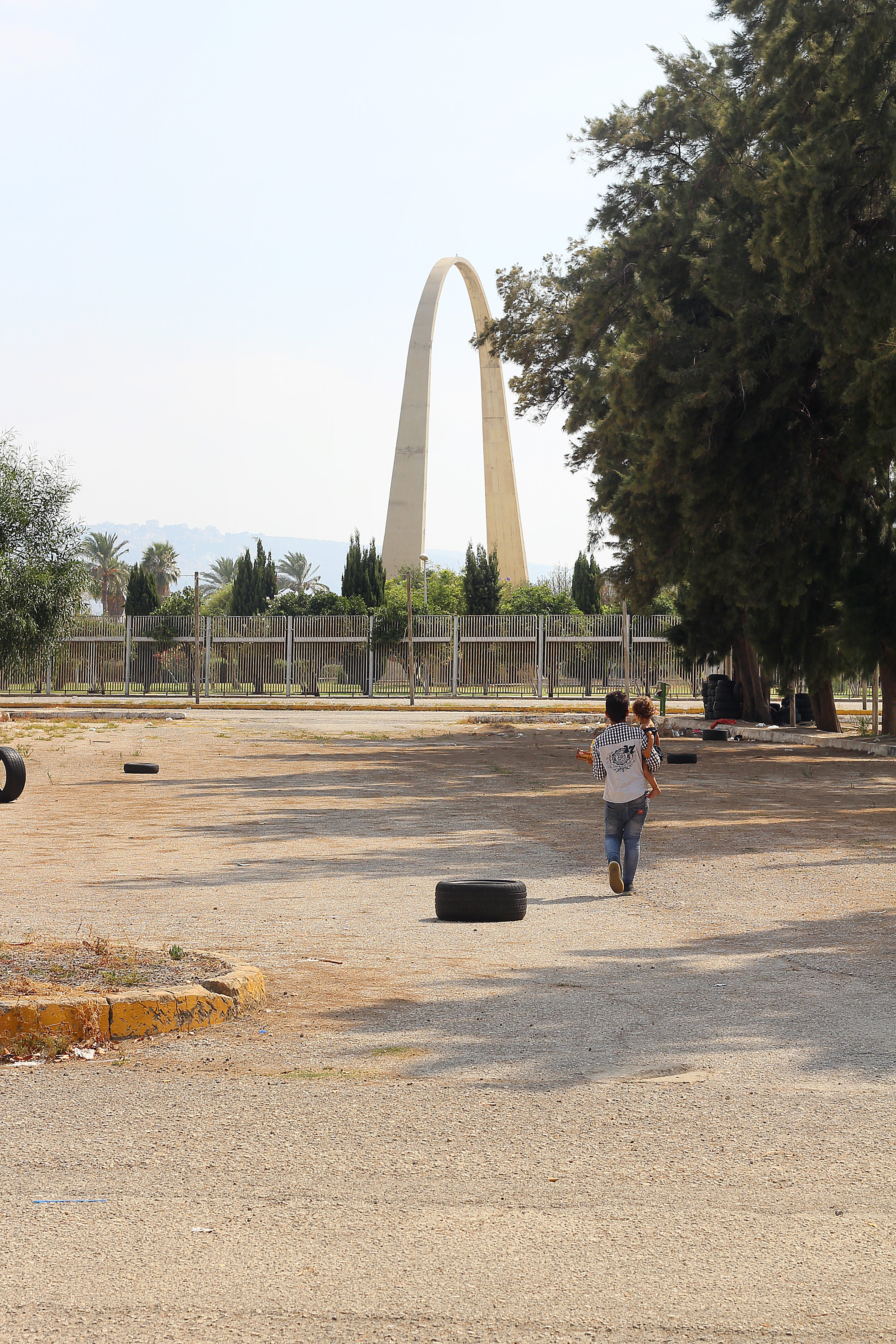
Today, the fair exists as a landscape of abandonment — a symbol of lost possibilities and interrupted histories. Its ruins reflect not only the failure of a single project, but the fragility of a national vision unable to withstand conflict and division. In these skeletal structures, one can read the story of a society in limbo: a city where modernity remains suspended between ruin and promise.