

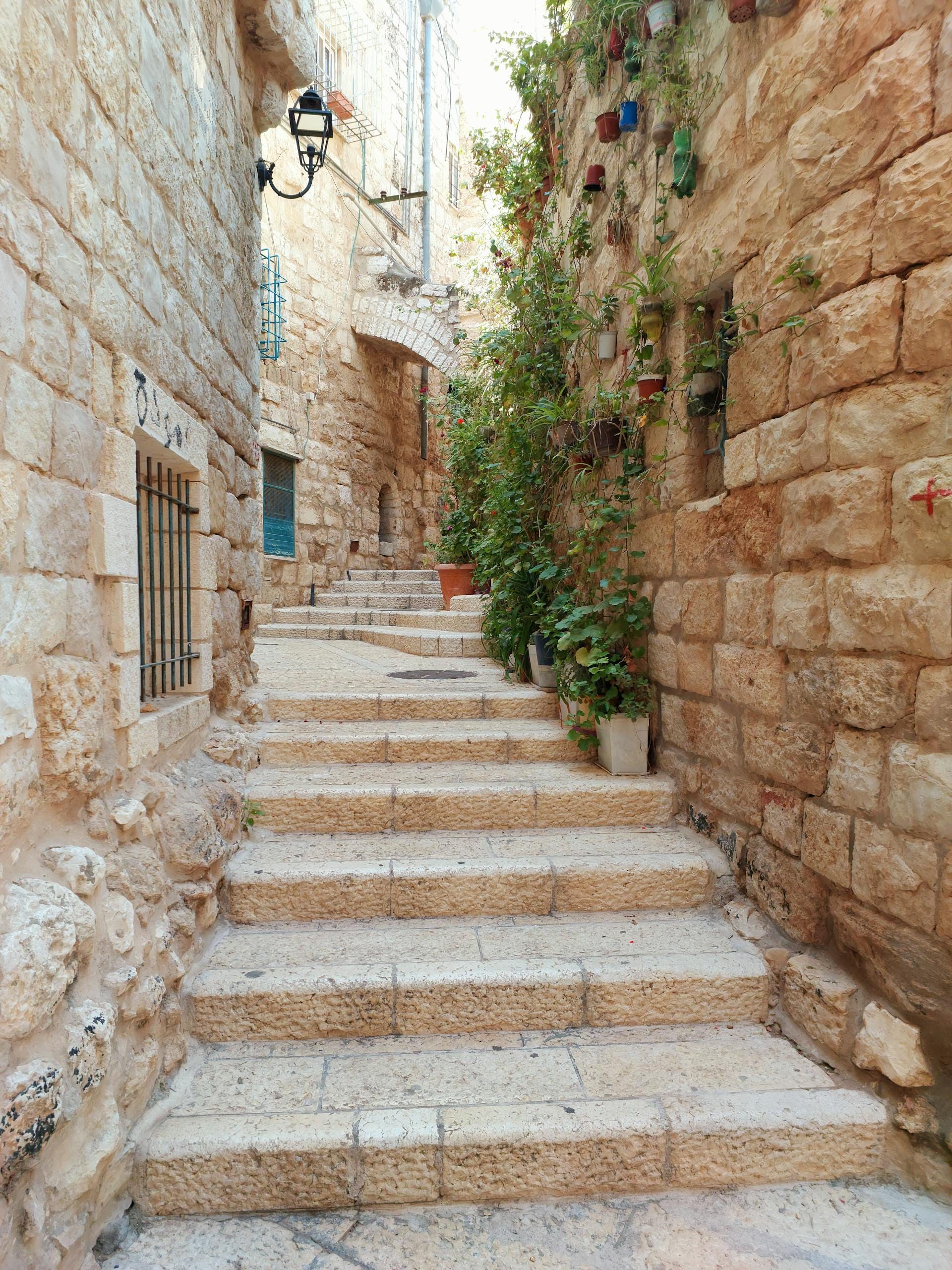
Reflections of Culture and History
The traditional architecture of Palestine reflects centuries of cultural layering, adaptation, and resilience. From the rugged hilltop villages of the West Bank to the densely built quarters of ancient cities, Palestinian architecture has evolved into a distinctive tradition shaped by geography, climate, and the complex history of the region. This built heritage not only embodies aesthetic qualities but also reveals how families lived, how communities interacted, and how cultures blended over time. Despite political and social upheavals, these architectural traditions stand as tangible testaments to Palestinian identity and its ongoing continuity.
A Confluence of Civilizations
Palestine’s architectural landscape is deeply tied to its history as a crossroads of civilizations. Successive cultures — including the Canaanites, Romans, Byzantines, early Islamic dynasties, Crusaders, Mamluks, and Ottomans — have all left distinct marks on building styles and construction techniques. Over thousands of years, local builders adopted, adapted, and transformed outside influences into a uniquely Palestinian vernacular. Ancient stone houses, domed sanctuaries, and courtyard-centered residences reveal this confluence of traditions. Even as political powers shifted, Palestinian architecture retained its connection to the land and local materials, creating a heritage deeply rooted in place.
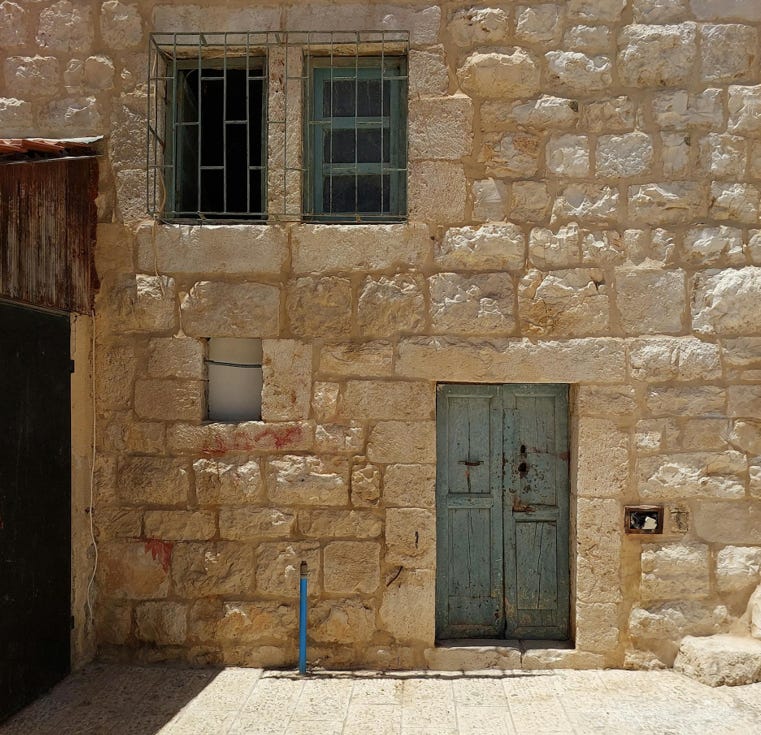
A Blend of Purpose, Tradition, and Environment
Palestinian architecture is distinguished by several core elements that emerge repeatedly across different periods and regions. These features demonstrate how design was guided not only by aesthetics but also by environmental needs, social customs, and available resources.
Local Stone — The Foundation of Palestinian Building
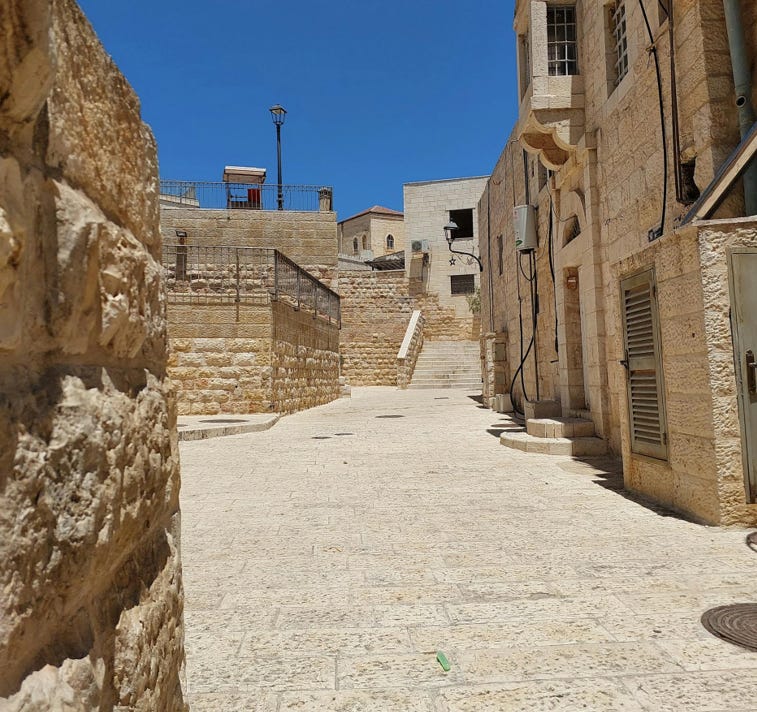
Limestone, abundant in the region, has long been the primary construction material for homes, religious structures, and public buildings. Builders used locally quarried stone to create thick walls that provided natural insulation, keeping interiors cool in the summer and warm in the winter. These walls often reached a meter in thickness, forming a protective buffer against the region’s climatic extremes. The use of local stone also reinforced a strong sense of continuity between the people and the land, as homes appeared to emerge naturally from their surrounding terrain.
Domes, Vaults, and Arches-Strength and Elegance
A feature of Palestinian traditional buildings is the frequent use of domes and vaulted ceilings. These structures — developed and refined across Roman, Byzantine, and Islamic periods — provided stability and insulation while allowing builders to span interior spaces without large wooden beams. Domes and cross-vaults were constructed from carefully arranged stones, each contributing to the structural integrity of the whole. Arches, used in doorways, windows, and interior openings, distributed weight evenly and added aesthetic rhythm to facades and courtyards. Together, these elements gave Palestinian structures their distinctive silhouettes and enduring durability.
The Courtyard — Heart of the Household
Central to many traditional Palestinian homes is the courtyard. This open-air space served as the nucleus of family life, offering privacy in densely populated neighborhoods and functioning as a site for cooking, children’s play, gatherings, and household work. Rooms typically opened directly onto the courtyard, emphasizing communal living while maintaining separation between public and private areas. In both rural and urban homes, the courtyard acted as a mediator between interior and exterior, offering sunlight, ventilation, and social cohesion.
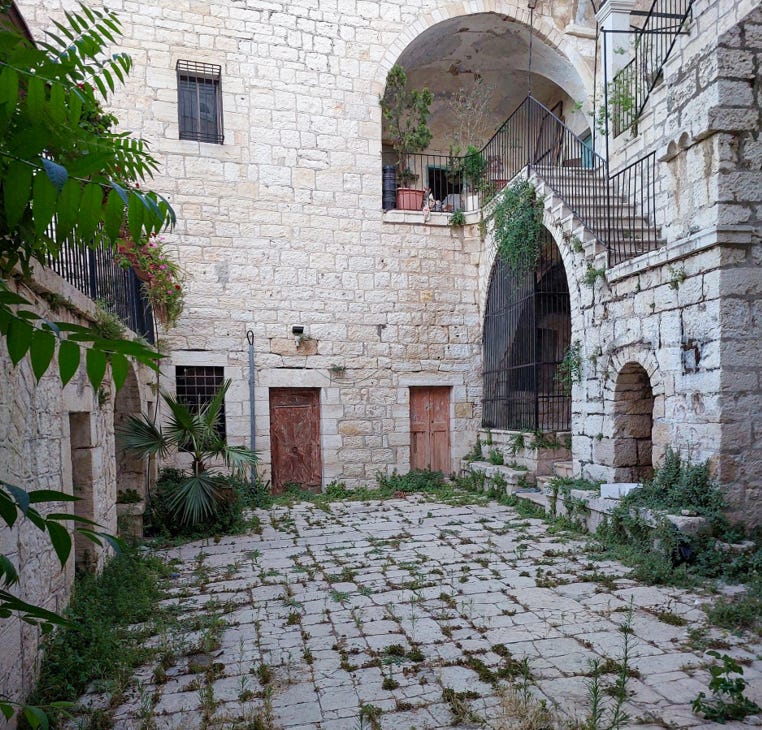
Decorative Features-Craftsmanship and Cultural Expression
While many architectural features were rooted in practicality, Palestinian homes also displayed an appreciation for craftsmanship and ornamentation. Wooden lattice screens, often called mashrabiya, were used to filter sunlight, allow airflow, and preserve privacy. Carved stone details, geometric motifs, and finely crafted wooden doors added artistic expression to otherwise utilitarian structures. In some urban houses, long reception halls known as liwans opened onto the courtyard, highlighting the cultural importance of hospitality and family gatherings.
Religious Architecture-Cultural and Spiritual Anchors
Religious buildings in Palestine — mosques, shrines, and churches — reflect some of the region’s most refined architectural expressions. Stone-built mosques with domed chambers, Mamluk-era minarets, Crusader-influenced churches, and Ottoman renovations illustrate the long spiritual and political history of the land. Many rural shrines, known as maqams, feature simple domed chambers constructed from local stone, serving as landmarks and symbols of communal identity. These sacred structures highlight the blend of local craftsmanship with broader architectural traditions.
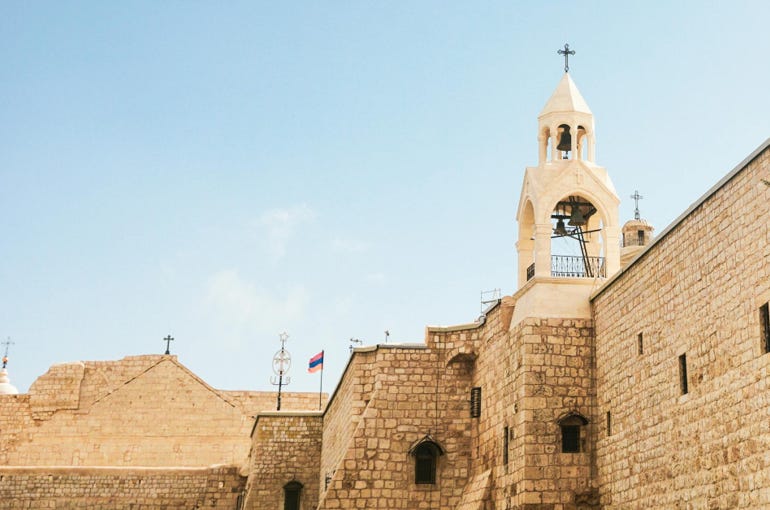
Regional Variations-Urban Density and Rural Tradition
Although common features appear across Palestine, architectural styles vary significantly between cities and villages.
Urban centers such as Jerusalem, Nablus, and Hebron feature compact housing clusters, multi-story stone homes, and narrow passageways shaped by centuries of dense settlement. In these cities, domestic architecture often adapted to limited space while retaining elements such as courtyards and arched entrances. Shops frequently occupied ground floors, with living quarters above, reflecting the integration of commerce and residence.
Rural villages, by contrast, often display expansive courtyards, broader house layouts, and homes integrated naturally into the landscape. Thick-walled stone houses, vaulted ceilings, and multi-functional lower floors — sometimes used for storage or animals — reflect agrarian lifestyles. Hilltop villages often feature fortified-style layouts, with houses built closely together for protection and vantage, illustrating how geography influenced architectural choices.
Modernity, Conflict, and Preservation Challenges
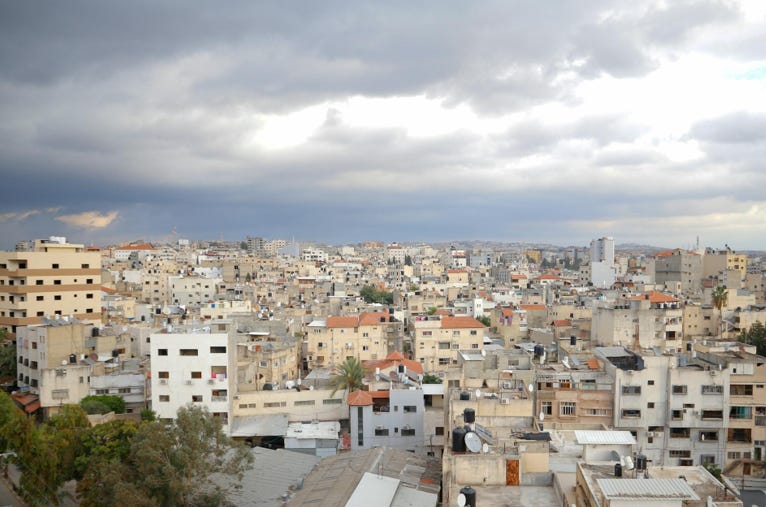
In the 20th and 21st centuries, traditional architecture has faced significant pressures from modernization, urban expansion, and political upheaval. The introduction of reinforced concrete and new planning systems transformed the built environment, often at the expense of older architectural forms. Conflict has also contributed to the deterioration or destruction of historical sites. As modern life shifts toward nuclear family homes, high-rise buildings, and commercial expansion, the cultural and spatial logic of traditional architecture is increasingly at risk.
Despite these challenges, preservation efforts have grown. Local and international organizations have worked to document, restore, and protect traditional homes, historic neighborhoods, and religious structures. These initiatives recognize that architectural heritage is not merely a relic of the past but a vital expression of Palestinian continuity, culture, and identity.