

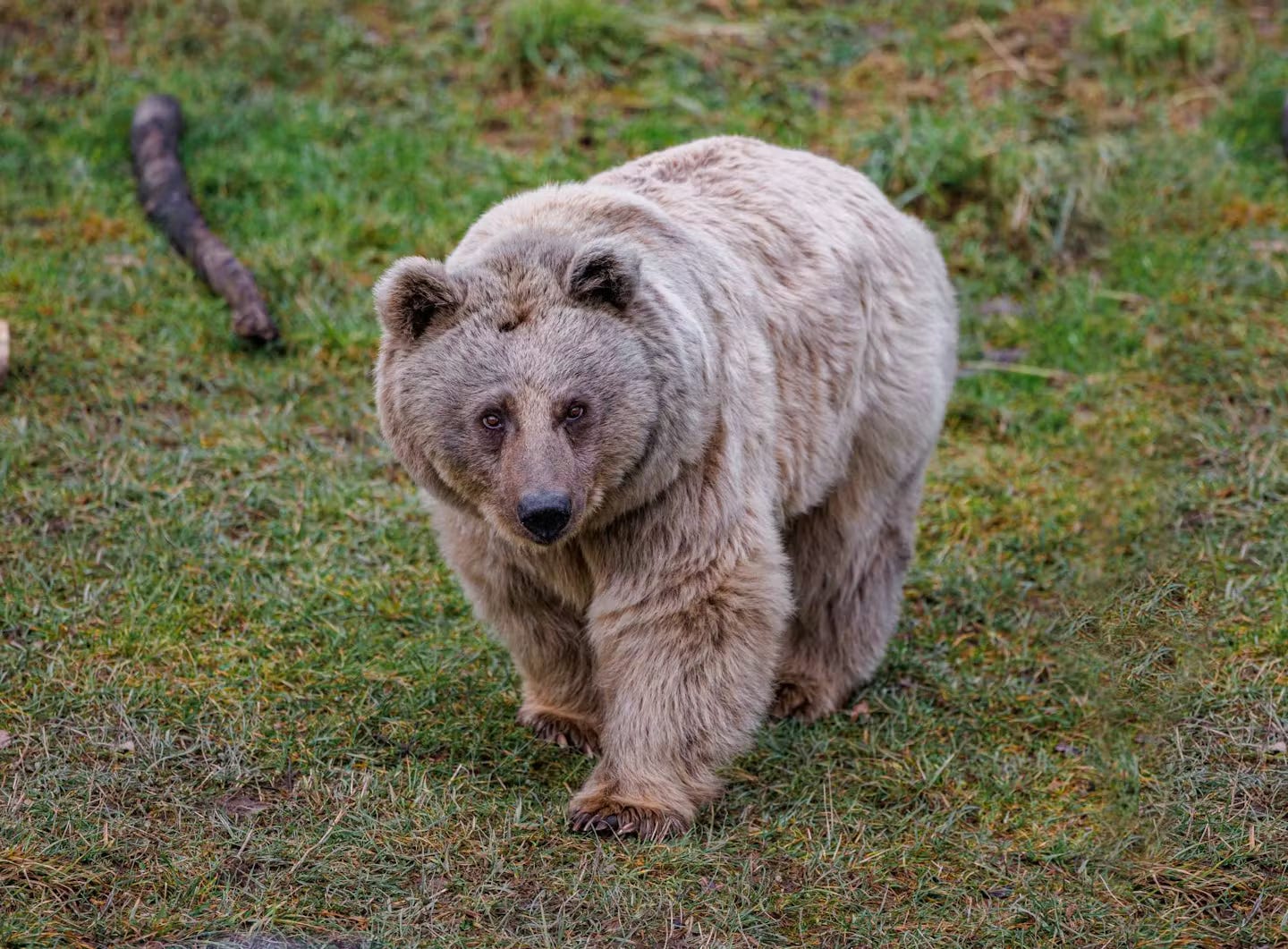
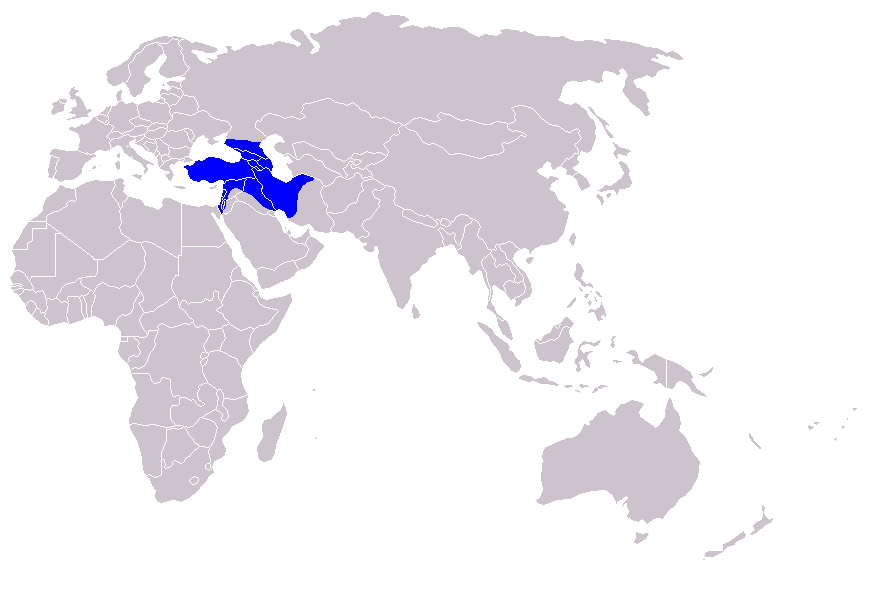
In the mountains and forests that run like a spine through the Levant, there once lived abundantly a large and noble creature — the Syrian brown bear (Ursus arctos syriacus). This subspecies of the brown bear was historically native to the mountainous regions of the Middle East and the Caucasus, including the highlands of Lebanon, Syria, and neighbouring lands.
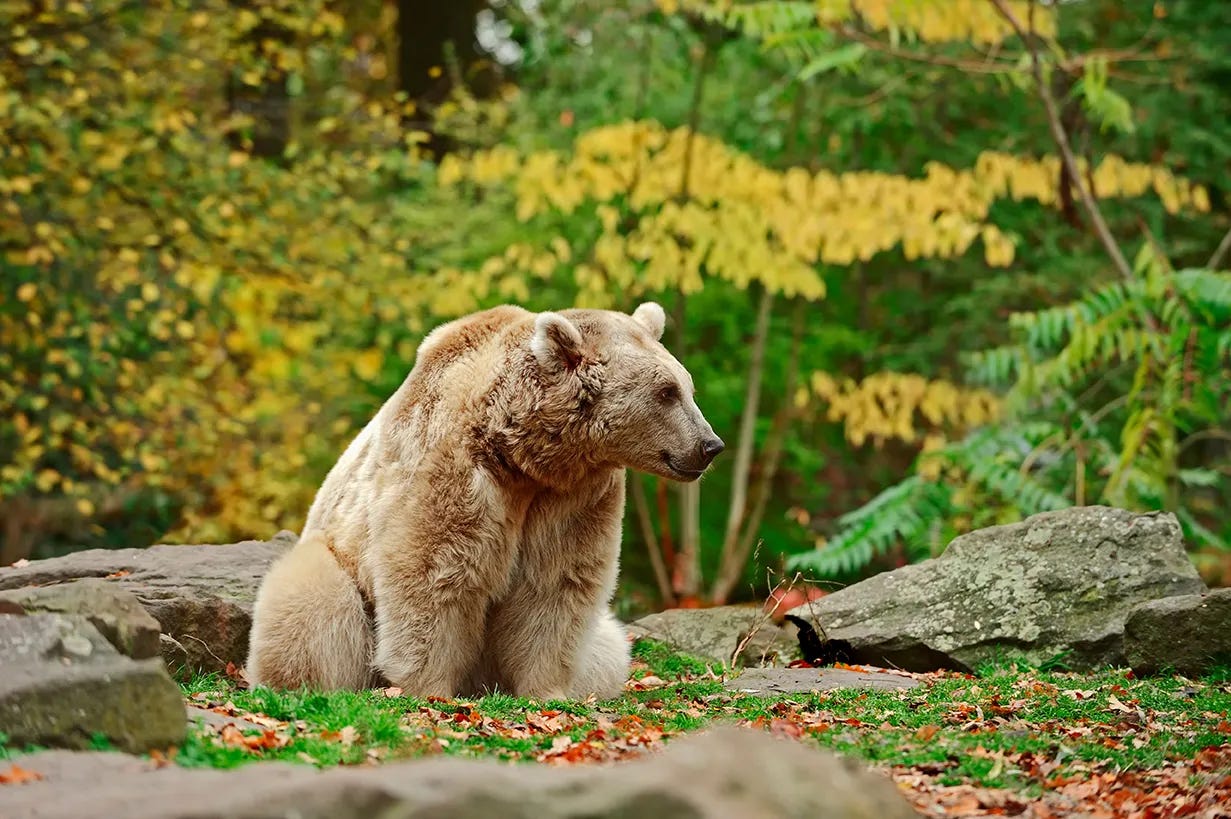
Larger than a man yet smaller than the grizzlies of North America, the Syrian brown bear is distinctive for its lighter-colored fur and robust build. It foraged across grasslands and forests for berries, nuts, roots, and occasionally small animals, marking its presence as both omnivore and seed disperser in the natural web of life.
From Forests to Folklore
Historically, these bears roamed oak woodlands, cedar slopes, and high alpine meadows. In Lebanon, they shared the land with people for centuries until the early 20th century, when hunting and habitat loss reduced their numbers so drastically that the subspecies was considered locally extinct.
For decades, that was that — until late December 2016, when an astonishing piece of footage emerged from the Beqaa Valley near the Syrian border. A female bear and her cub, caught on a mobile phone camera in the snow, gave scientists and nature lovers alike a rare glimpse of a creature that had not been seen in Lebanon for over 60 years.
This sighting sparked widespread excitement and debate: Was this a stray visitor from populations still surviving in Turkey, Iran, or the Caucasus, or a sign that the species still clings on in the wild edges of the Levant? No definitive answer exists yet, but the footage reminded everyone that nature always holds surprises.
A Struggling Species in a Fragmented World
Across its broader range, the Syrian brown bear is endangered and increasingly rare. While the global species of brown bear (Ursus arctos) is listed as “least concern” due to its large total population in parts of Eurasia and North America, the Middle Eastern subspecies faces steep declines and fragmented populations.
Today, healthy populations are found in mountain forests of Turkey, Iran, Iraq, and the Caucasus, with hundreds rather than thousands of individuals surviving in isolated pockets. In contrast, the bear is considered extinct across large parts of its former range — including Lebanon, Syria, Israel, and Jordan — meaning it no longer has a stable, resident population there.
The pressures that drove the bear’s decline are familiar: overhunting, habitat fragmentation, and the expansion of agriculture and human settlements into once-wild landscapes. But long before modern conservationists counted bears, they loomed large in the region’s imagination.
The Syrian Brown Bear in the Bible
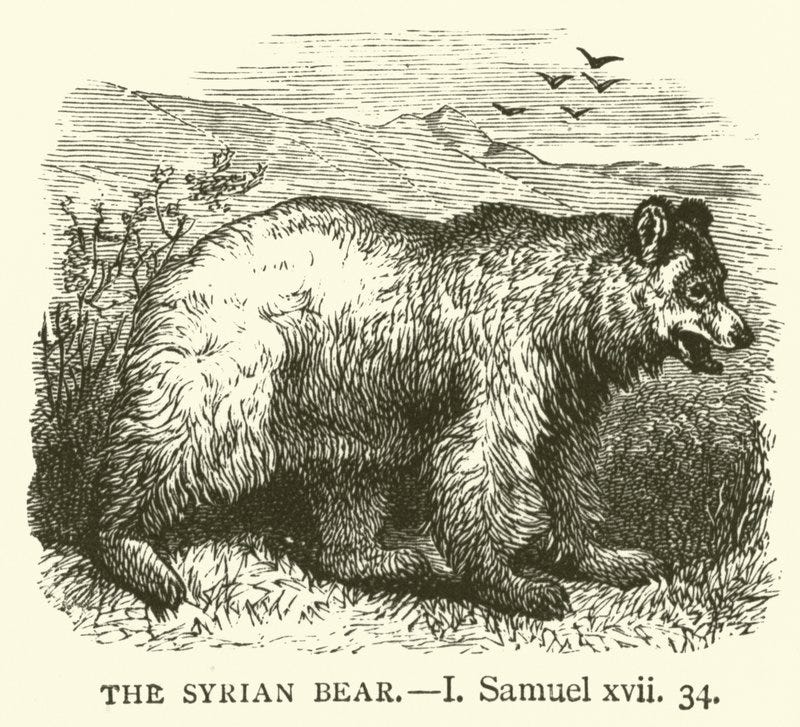
The Syrian brown bear is the bear most likely referenced in the Bible, where it appears as a symbol of fierce maternal protectiveness and unrestrained violence when provoked. The image of a mother bear defending her cubs is invoked proverbially on three occasions (2 Samuel 17:8; Hosea 13:8; Proverbs 17:12), emphasizing both ferocity and inevitability.
Wojtek, The Syrian Brown Bear Poland Adopted
Beyond scripture, the Syrian brown bear occupies an unexpected place in modern history through the story of Wojtek. Acquired as a cub by Polish soldiers in Iran during the Second World War, Wojtek became the unofficial mascot of the Polish II Corps and was formally enlisted with the rank of private. Remarkably social and intelligent, he adopted many human habits: riding in truck cabs, showering with soldiers, wrestling playfully, and sharing their rations. He developed a taste for fruit, honey, marmalade, sweet syrups, and beer, and was even issued a cigarette allowance, which he preferred to chew rather than smoke.
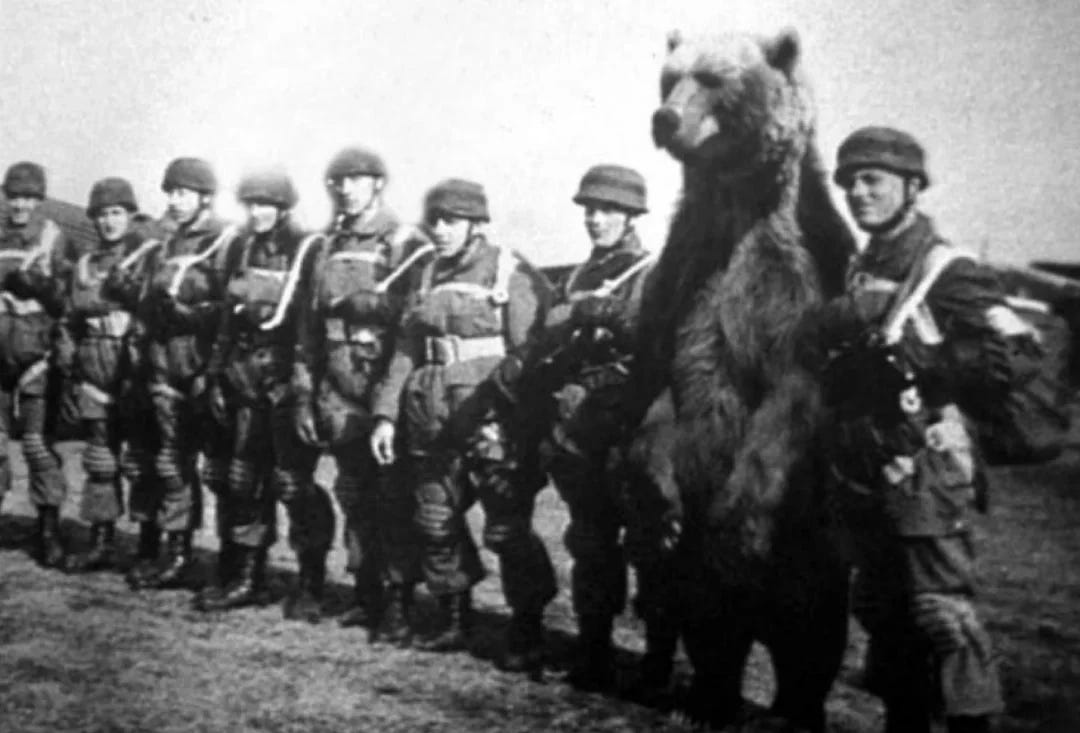
Though prone to occasional mischief — raiding supplies or pilfering laundry — Wojtek was widely trusted and sought out human company, often choosing to sleep among the soldiers even after being given his own quarters. Wartime lore credits him with detecting an enemy spy and carrying artillery shells during the Battle of Monte Cassino, an act that inspired the emblem of the 22nd Artillery Supply Company and earned him a promotion to corporal. After the war, Wojtek retired to Edinburgh Zoo, where he became a beloved public figure.
Why This Matters
At first glance, a bear may seem like a creature far removed from everyday life in the Levant. Yet its decline tells a larger story — one of ecological change, cultural loss, and our complicated relationship with the natural world.
The Syrian brown bear is more than a biological footnote. It was once part of the shared natural heritage of the region, a presence woven into mountain myths, shepherd tales, and the lived experience of a landscape that people and wildlife shaped together. Its absence is a reminder of how easily wildness can slip away when human needs overwhelm habitat protections.
Future Preservation
The Syrian brown bear may no longer roam the Levant’s forests as it once did, but its story is not just a tale of loss. The rare sightings, the continued survival of the species elsewhere, and the growing awareness among regional conservationists suggest incremental progress.
Protecting the wild places that remain — the forests, the highlands, and the places where animals and people still intersect — is not just about saving one species. It’s about preserving the ecological and cultural richness of the Levant for future generations.