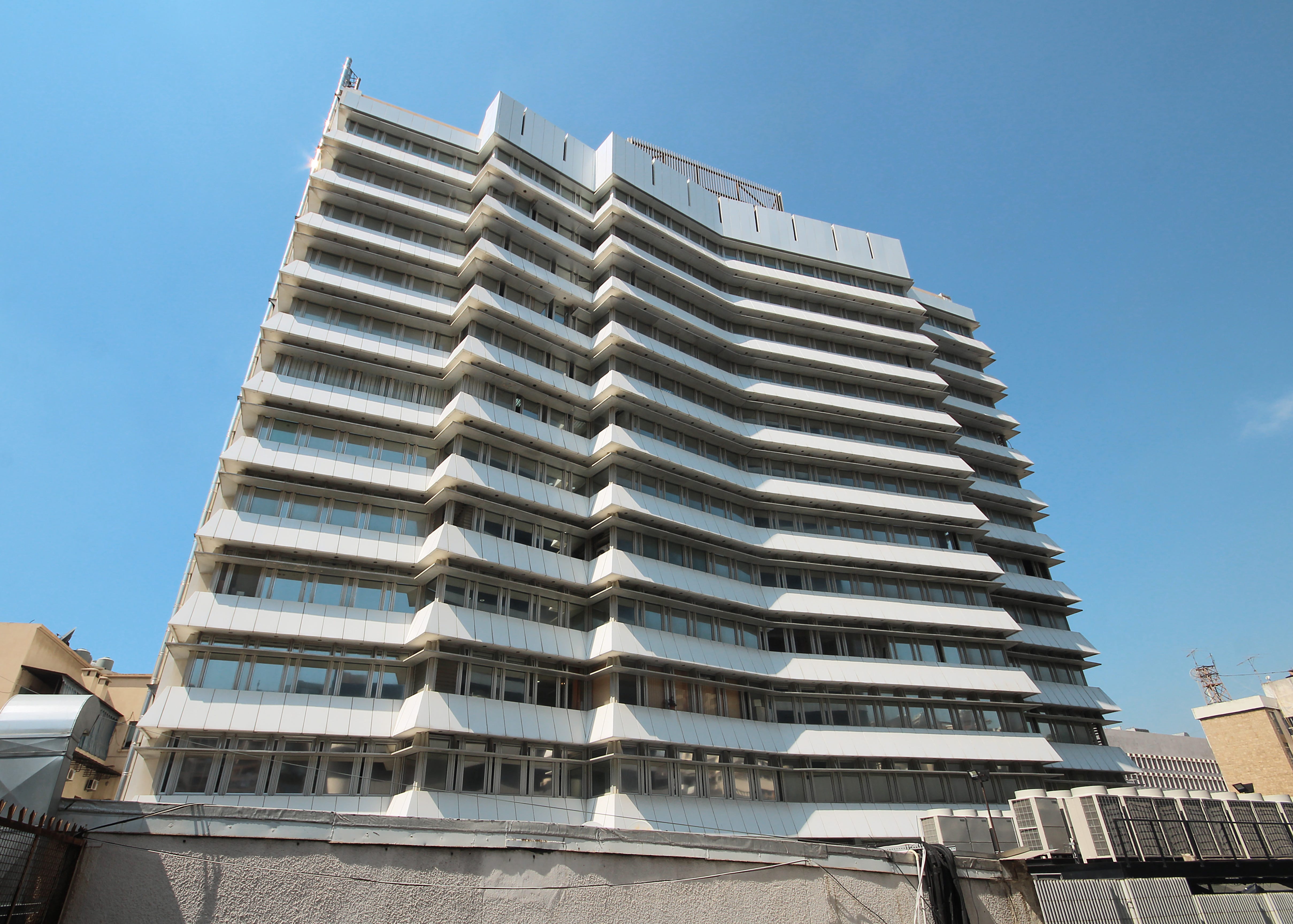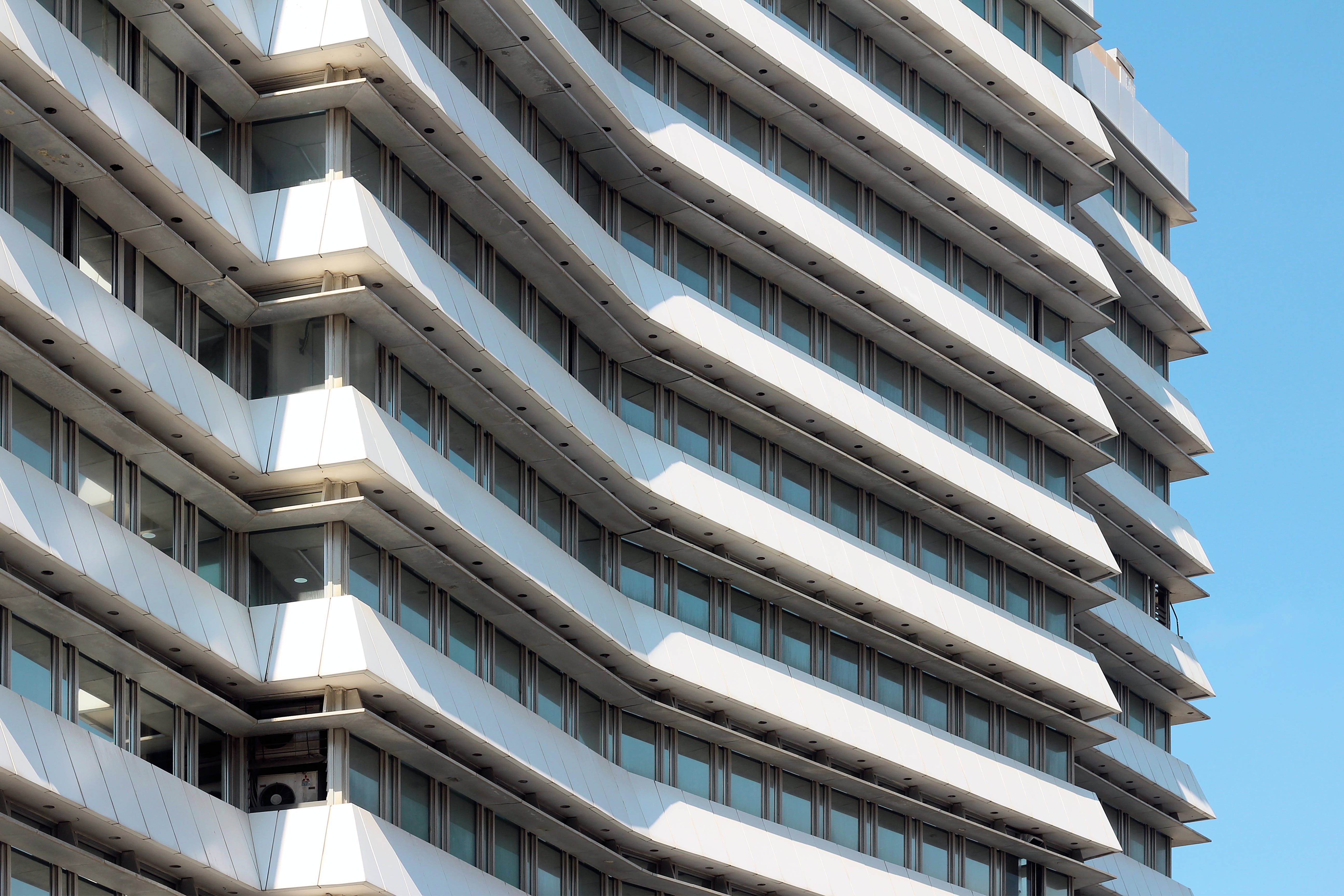
Designed in collaboration with Alfred Roth, the Sabbag Center (1967-1970) stands as one of the last and lesser-known works of renowned Finnish architect Alvar Aalto, pioneering architect and designer, celebrated for humanizing modernism with organic forms and natural materials. While it is less widely known than many of his projects in Scandinavia, the building contributes an important chapter to the history of modern architecture in Beirut. Its design, scale, and urban presence reflect broader trends in mid-20th-century architecture and Lebanon’s economic and cultural development.
Beirut and Hamra Street in the 20th Century
From the 1930s through the 1960s, Beirut experienced rapid growth as a regional center of commerce and culture. Hamra Street became a focal point for cafés, cinemas, shops, and new construction that drew on international modernist currents. By the 1960s, institutional buildings such as the Central Bank of Lebanon helped solidify the area’s role in the country’s economic expansion. The Sabbag Center, completed in 1970 just a block from the Central Bank, emerged within this context of urban and commercial transformation.
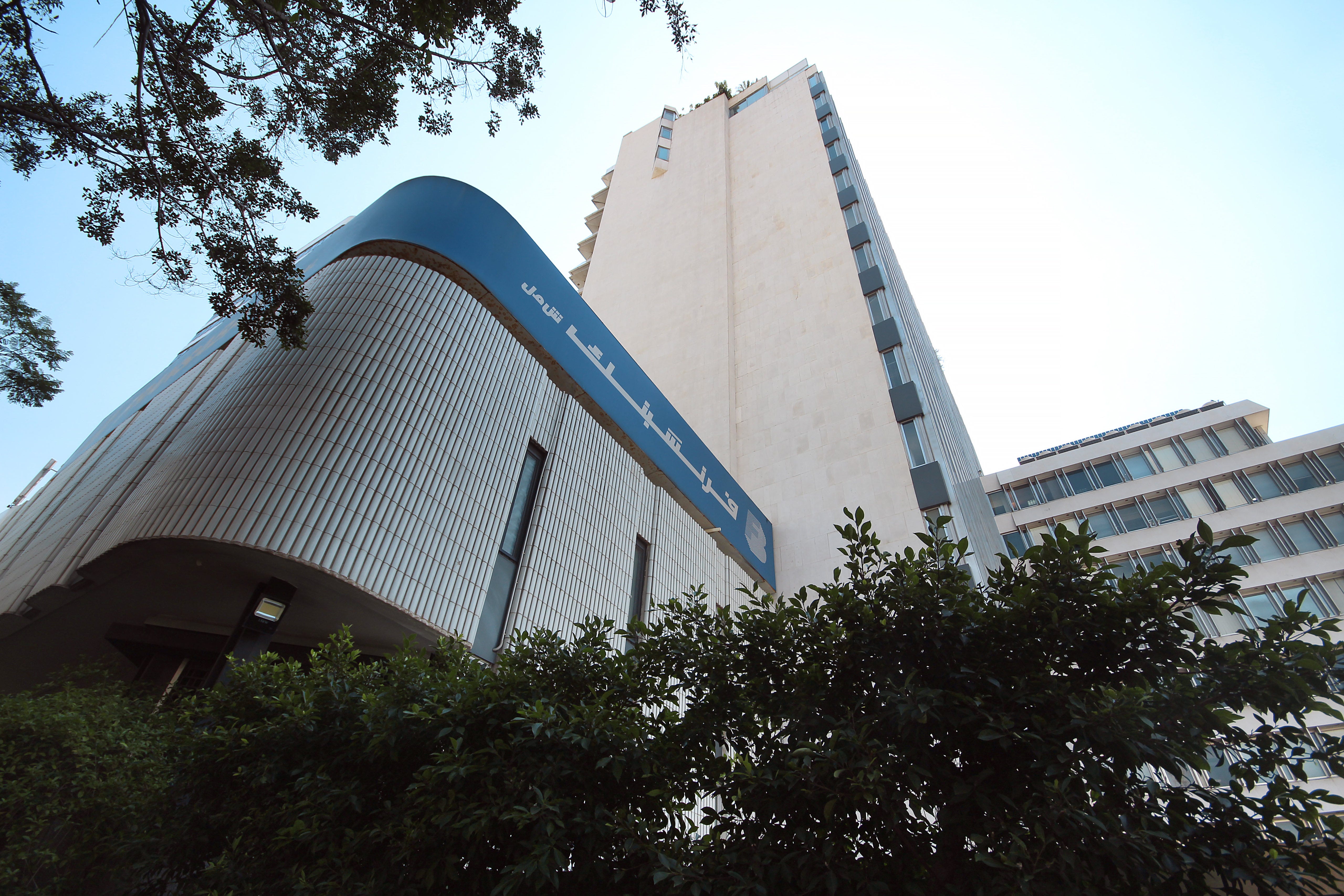
Design and Urban Presence
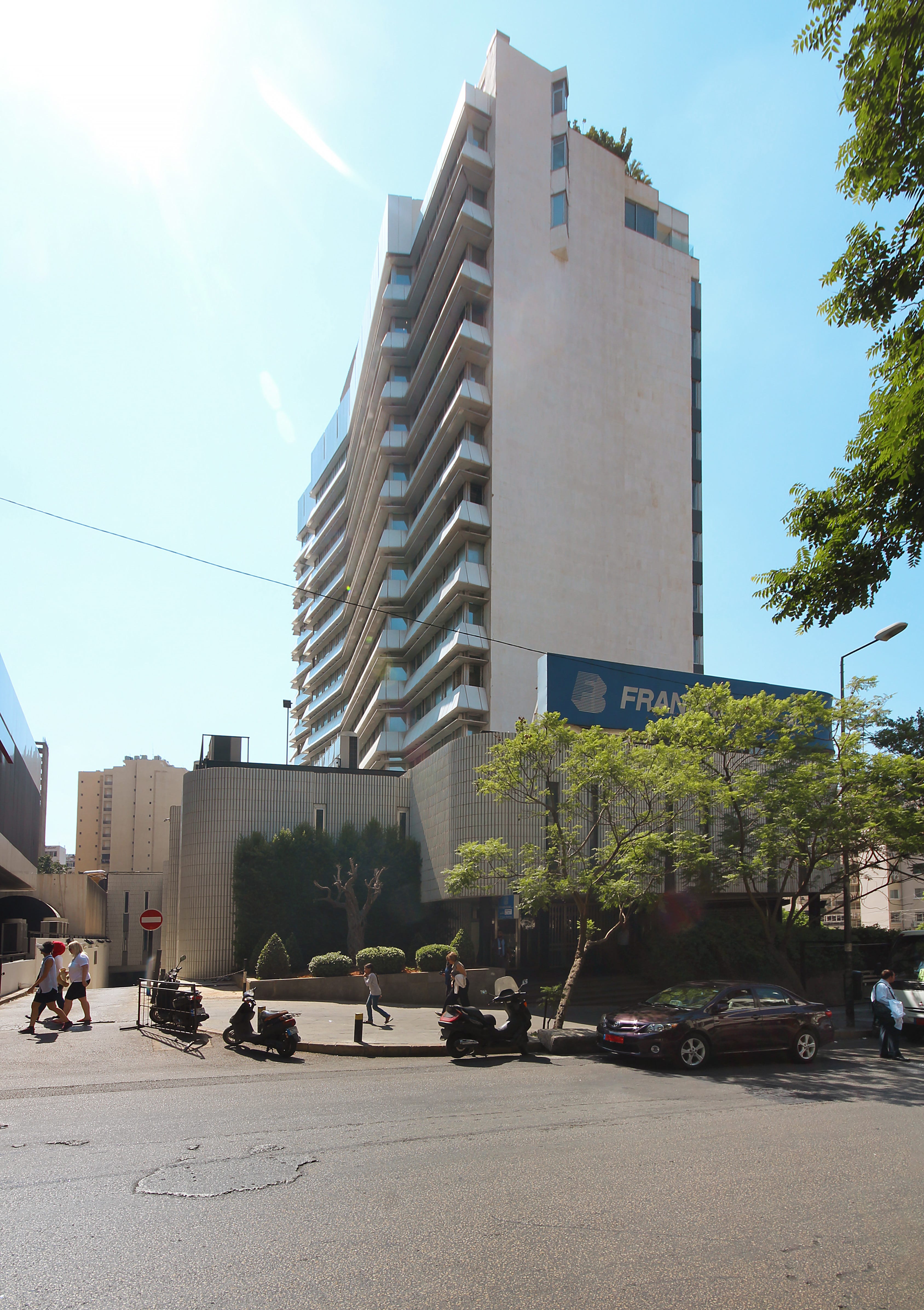
The complex includes a 15-story office tower set back from the streets, a smaller adjoining structure, a large piazza, commercial spaces at ground level, and an underground cinema. The arrangement of volumes and the metallic canopy articulate strong spatial relationships with the surrounding city, creating an identifiable public zone.
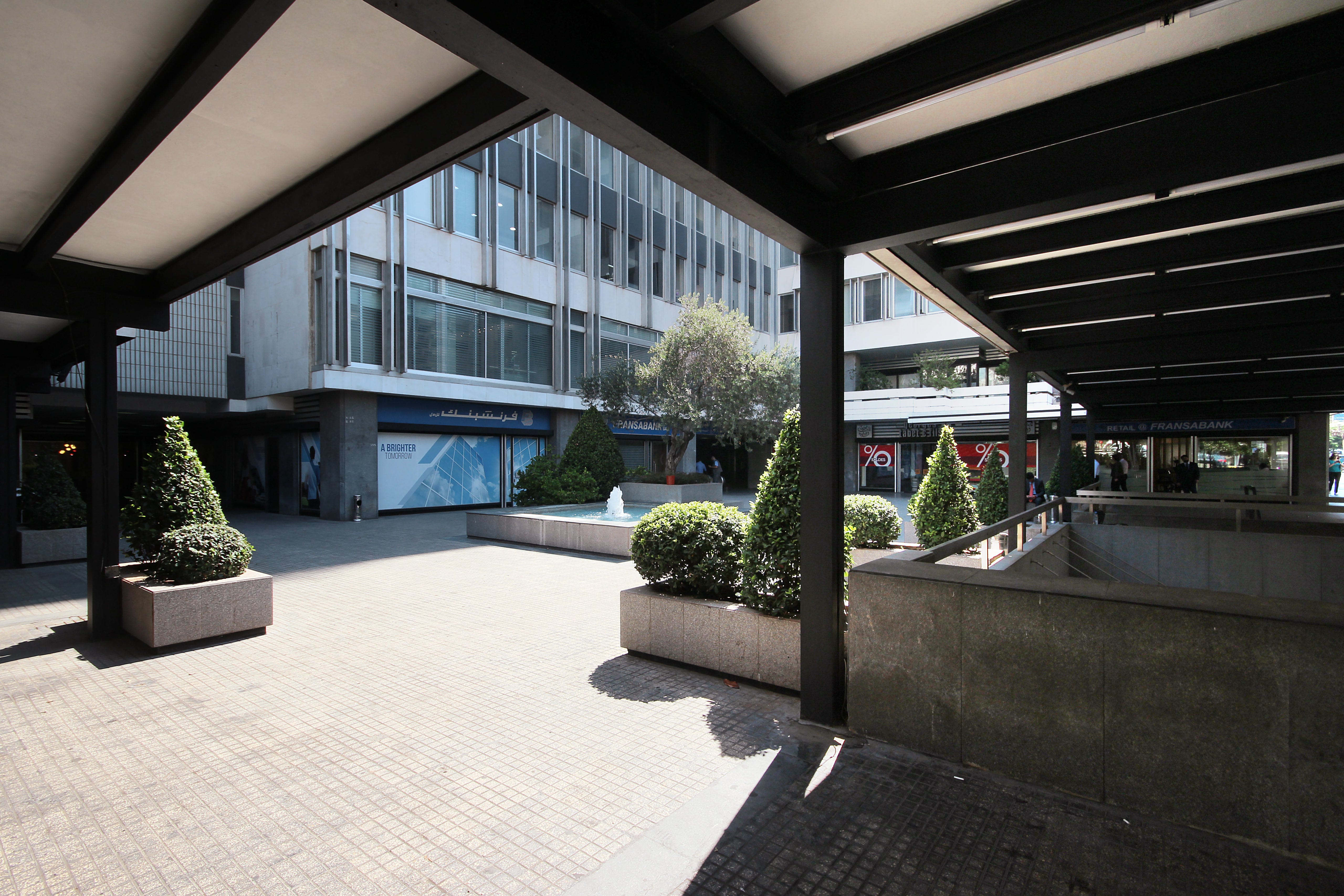
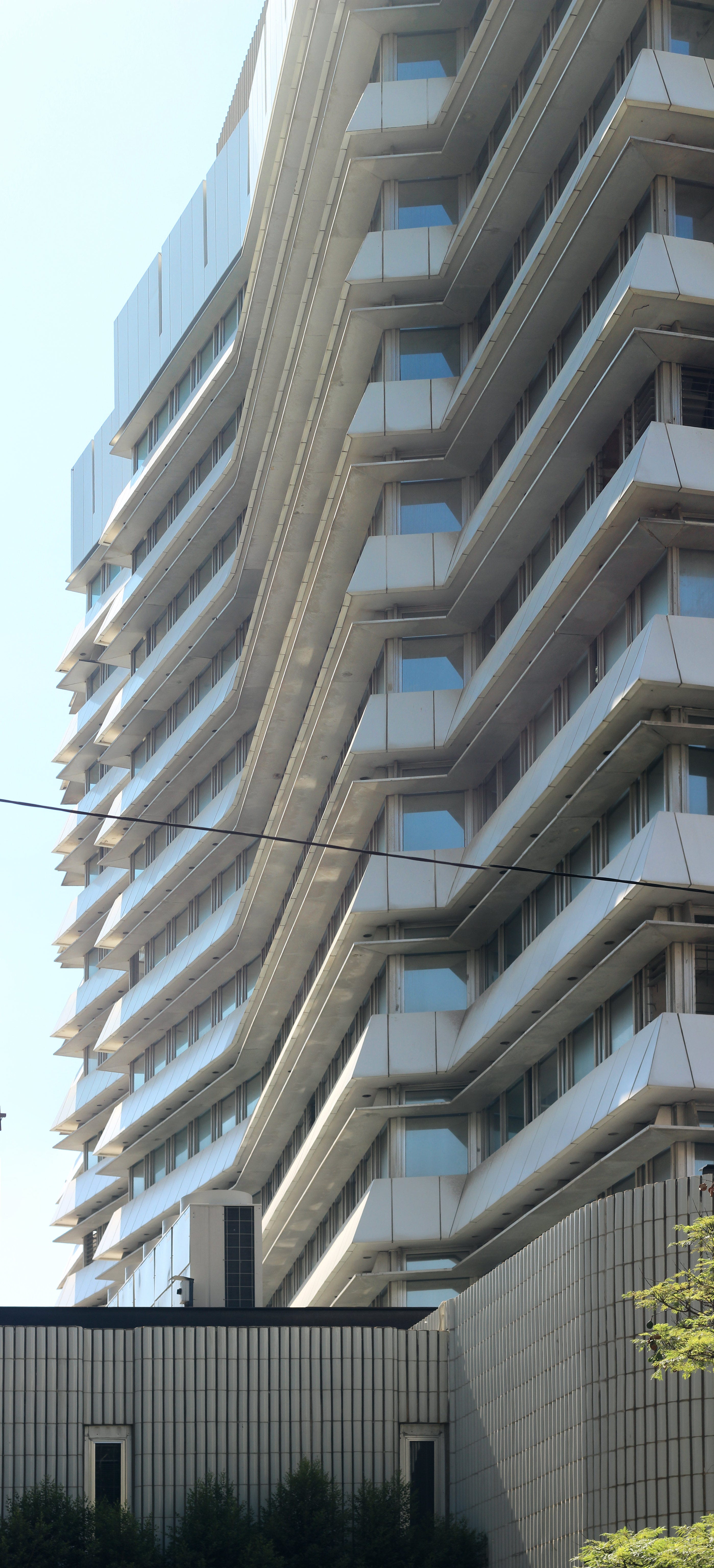
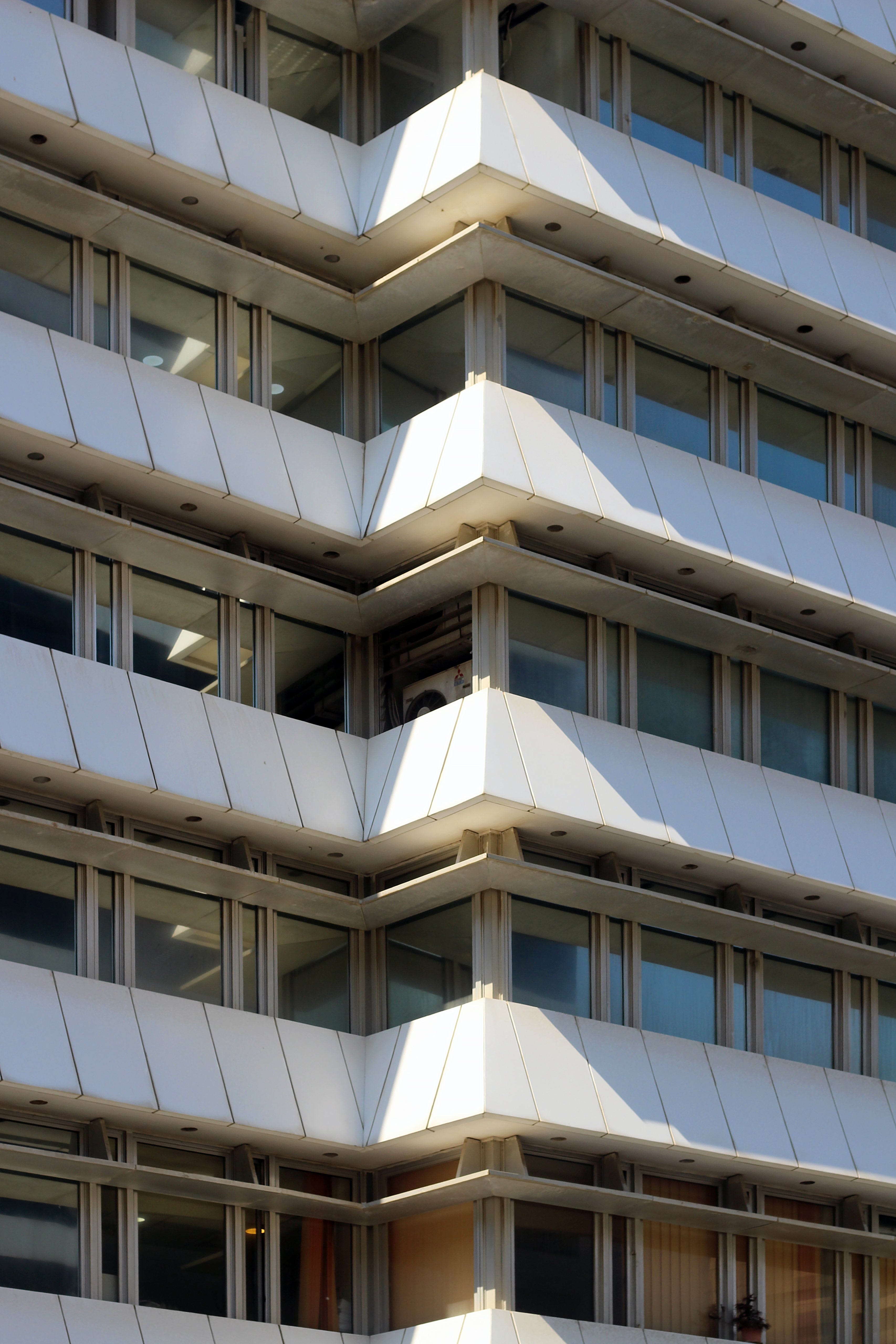
The facades of the Sabbag Center demonstrate a considered response to both architectural composition and environmental conditions. On the north side, deep vertical mullions function as shading devices, reducing direct sun exposure while allowing daylight to penetrate the interior — an approach that aligns with advanced curtain-wall techniques of the period and helps manage Beirut’s intense sunlight.
Alvar Aalto’s Approach to Light and Facade Design
Aalto’s work is widely recognized for integrating natural light and environmental responsiveness into architectural form. His projects often aimed to optimize daylight while reducing glare, using features such as deep reveals, shading devices, or carefully oriented openings to balance illumination and comfort. Aalto described architectural orientation and sunlight as fundamental considerations, asserting that buildings should use light intentionally rather than leaving it to chance.
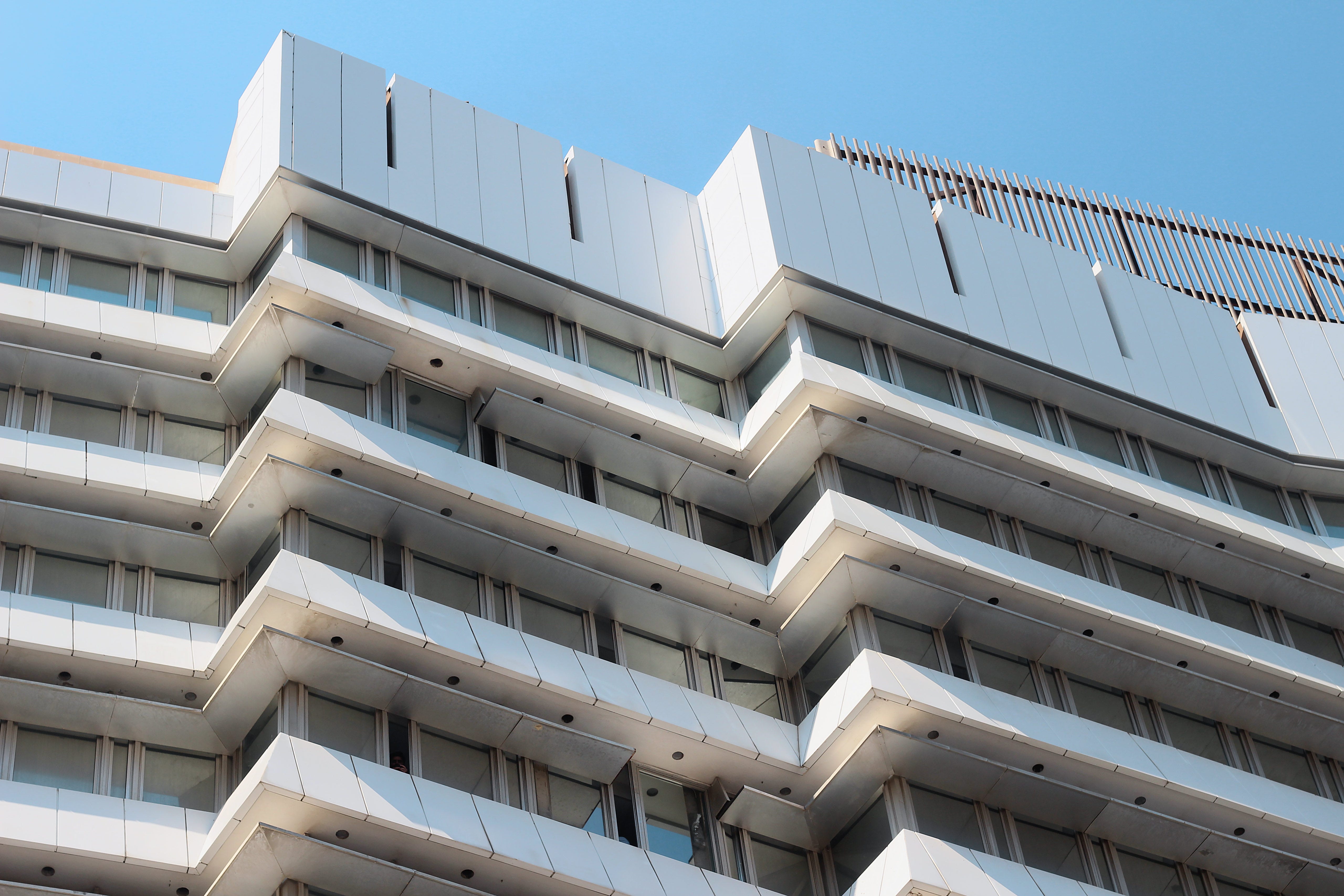
Although specific analyses of the Sabbag Center’s environmental design are limited in published literature, the building’s facade articulation — especially the use of horizontal shading elements and differentiated facades — can be understood in light of Aalto’s broader interest in controlling direct sunlight while admitting diffuse daylight. Such strategies are consistent with his work elsewhere, where facade elements and openings are designed to shape light levels and spatial quality rather than merely framing views.
Collaboration and Architectural Language
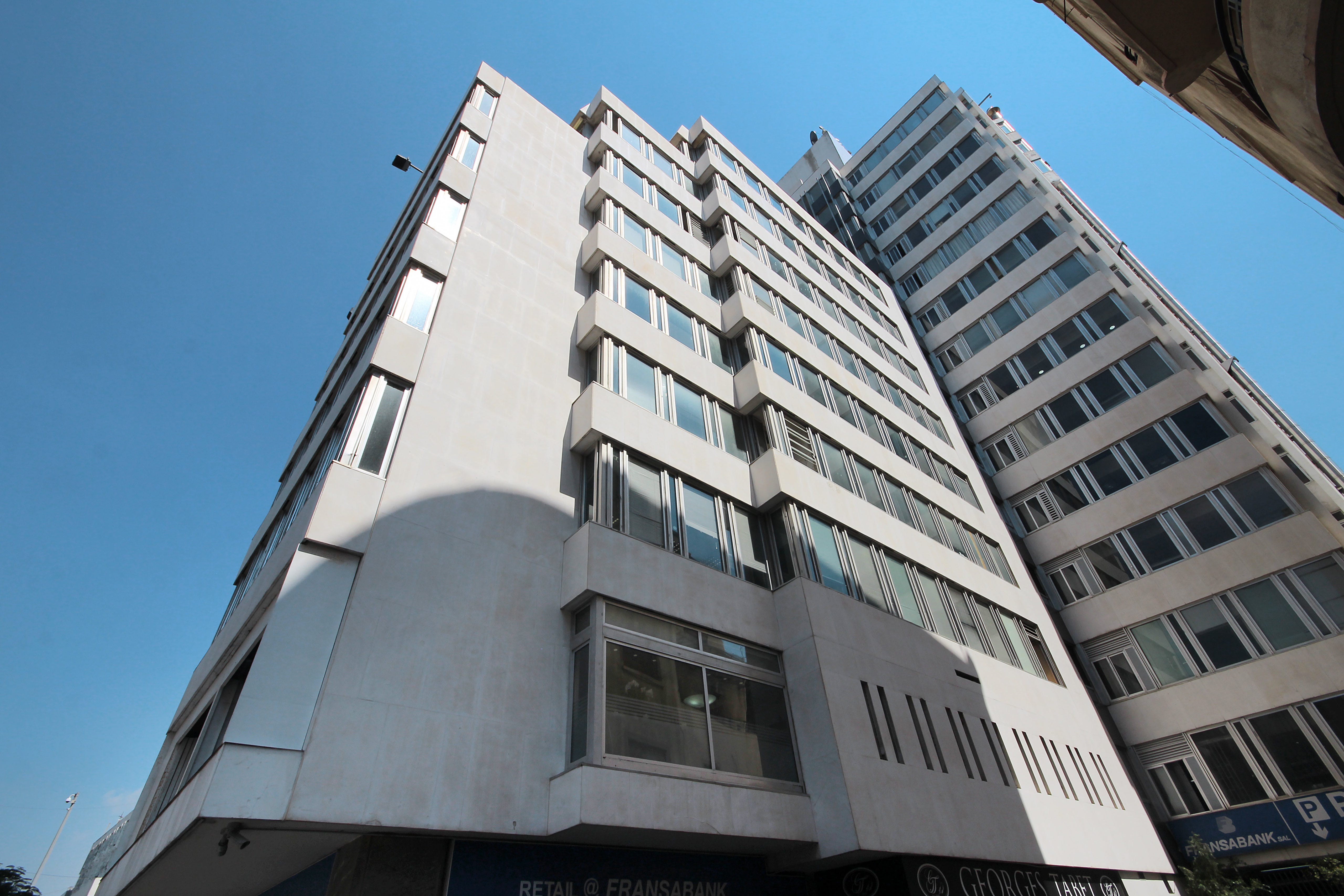
The project’s dual authorship reflects a blend of architectural logics. Roth’s rational, structured design language is evident in the more regular treatments of the frontal facades, while Aalto’s influence appears in the sculptural articulations and material choices the rear elevation. This duality creates a complex architectural expression that resists simple categorization.
Social and Cultural Role
Beyond its architectural qualities, the Sabbag Center has played a meaningful role in Beirut’s cultural life. The underground Etoile Cinema and street-level cafés contributed to the daily rhythms of Hamra, acting as social hubs during times of relative peace and conflict alike. These functions have made the building a point of collective memory for many Beirut residents.
Preservation Challenges
Despite its significance, the Sabbag Center lacks formal protection under Lebanon’s heritage regulations. Subsequent alterations by current occupants have modified aspects of its original design, including facade treatments and additions that diverge from the building’s initial architectural intent. These changes underscore the need for careful conservation that respects both the building’s design and its role within the city.
Layers of Architectural and Urban History
The Sabbag Center embodies multiple layers of architectural and urban history: it is part of the international modernist movement, reflects Aalto’s engagement with environmental design principles, and occupies an important place in Beirut’s social and cultural landscape. Preserving the building offers an opportunity to maintain a tangible connection to these histories and to support a more nuanced understanding of modern architecture in the Middle East.