

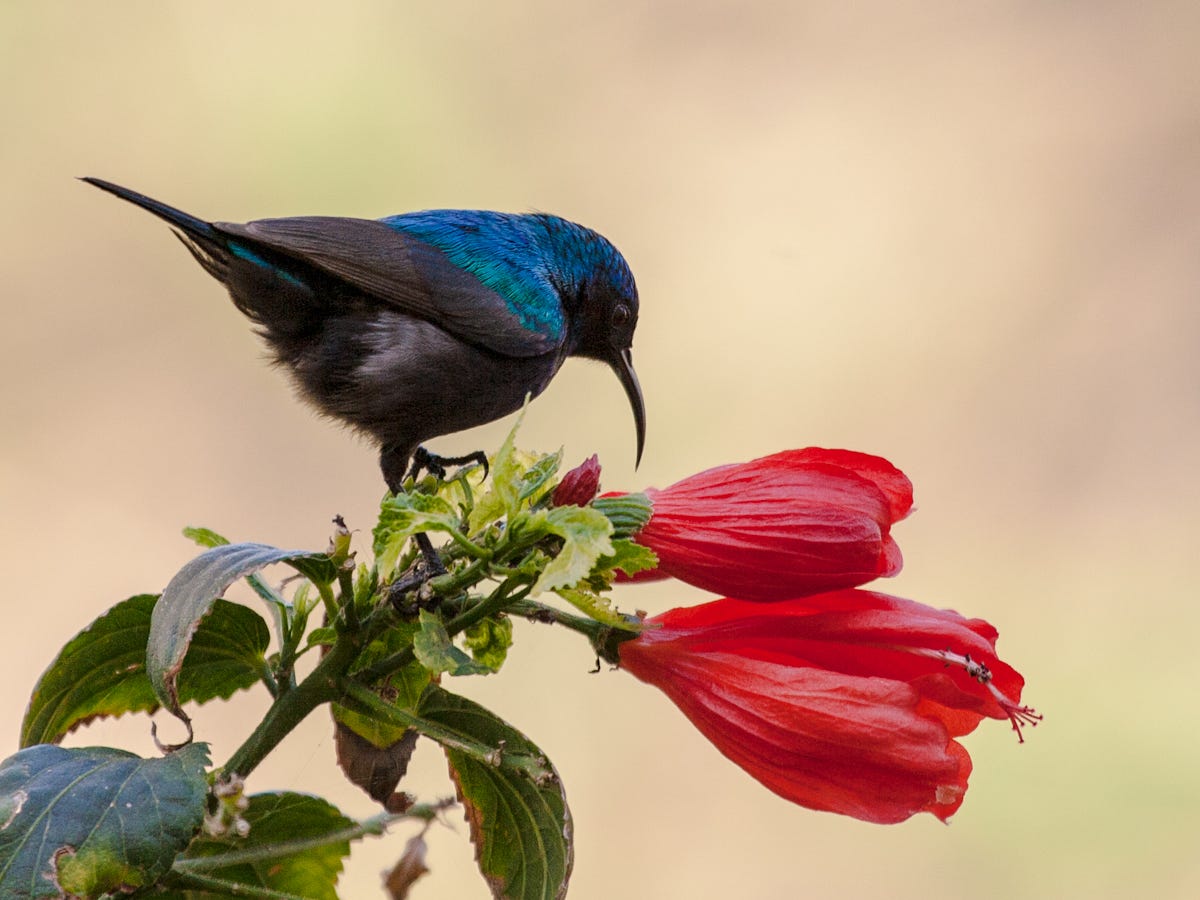
The Palestine sunbird (Cinnyris osea) is one of the most dazzling birds of the Levant. Small in size but radiant in appearance, it flashes metallic colors as it darts between flowers in gardens, forests, and rocky hillsides. Beyond its ecological importance, this remarkable bird holds a deep cultural meaning: it is the national bird of Palestine, symbolizing resilience, beauty, and a strong connection to the land.
Though measuring only about 11–13 centimeters in length, the Palestine sunbird leaves a lasting impression on anyone fortunate enough to see it.
Striking Appearance and Adaptations
The male Palestine Sunbird is especially eye-catching during the breeding season. In good light, his plumage shimmers with iridescent shades of emerald green, deep blue, and violet, highlighted by a vivid reddish-orange patch on his chest. These brilliant colors are created not only by pigments but also by microscopic feather structures that reflect and refract light, causing the bird to appear to change color as it moves.
Females are more subtly colored. Their brownish-grey plumage, sometimes tinged with faint green, provides effective camouflage while nesting. This difference between males and females is common among nectar-feeding birds.
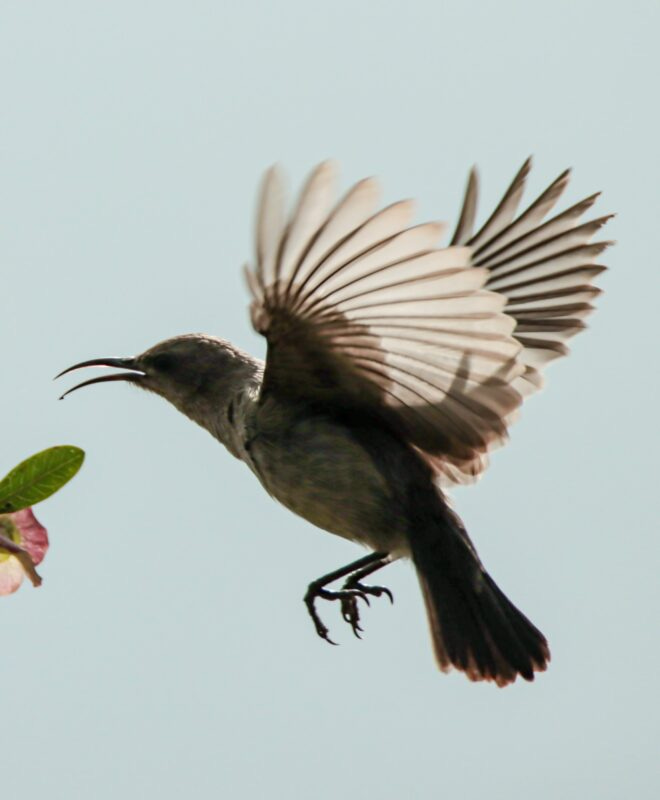
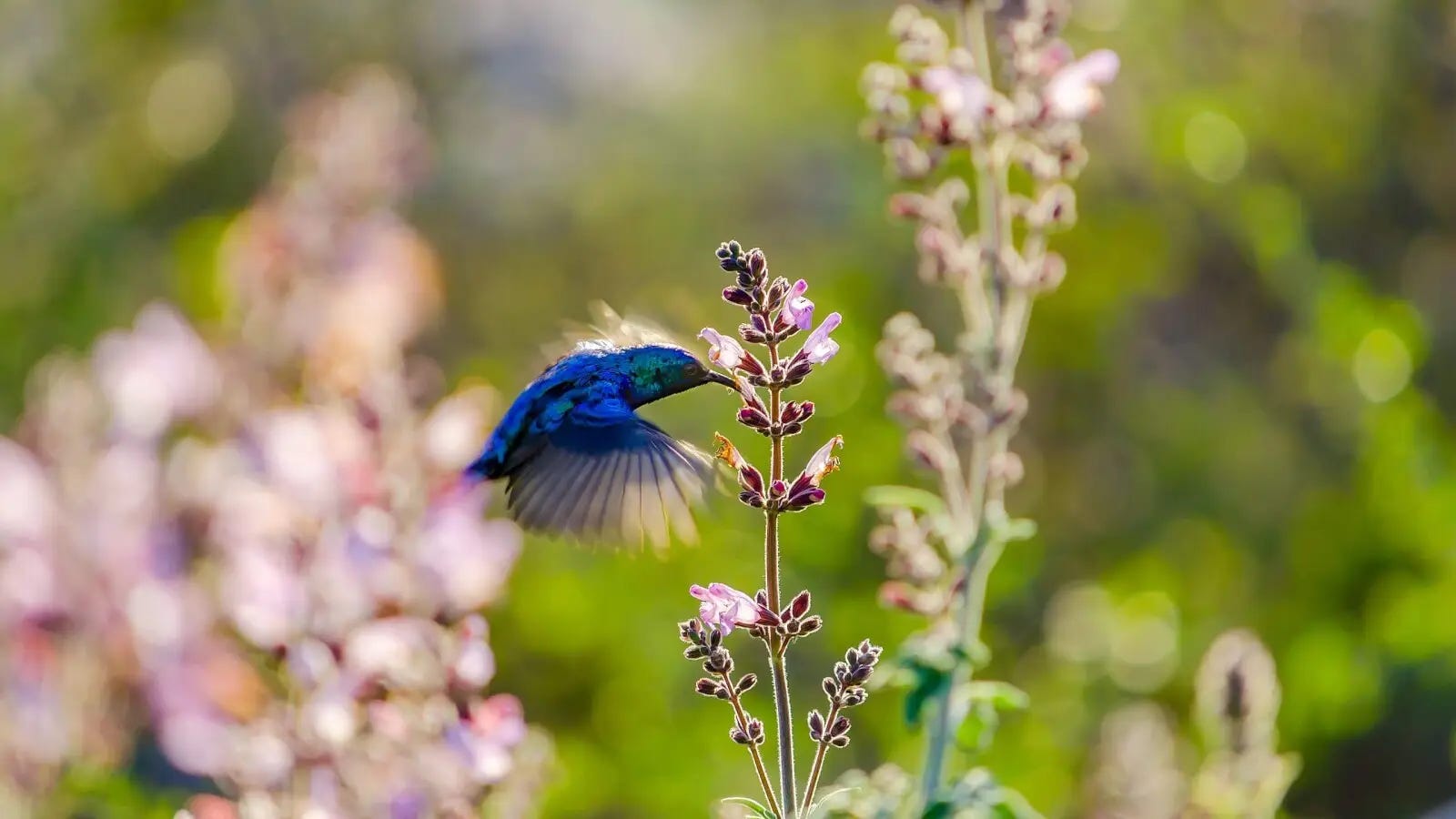
The sunbird’s long, curved bill and brush-tipped tongue are perfectly designed for feeding on nectar. Unlike hummingbirds of the Americas, which hover frequently, Palestine sunbirds often perch while feeding, though they can hover briefly when needed. Their slender bodies and agile wings allow them to maneuver quickly and precisely among blossoms.
Habitat and Geographic Range
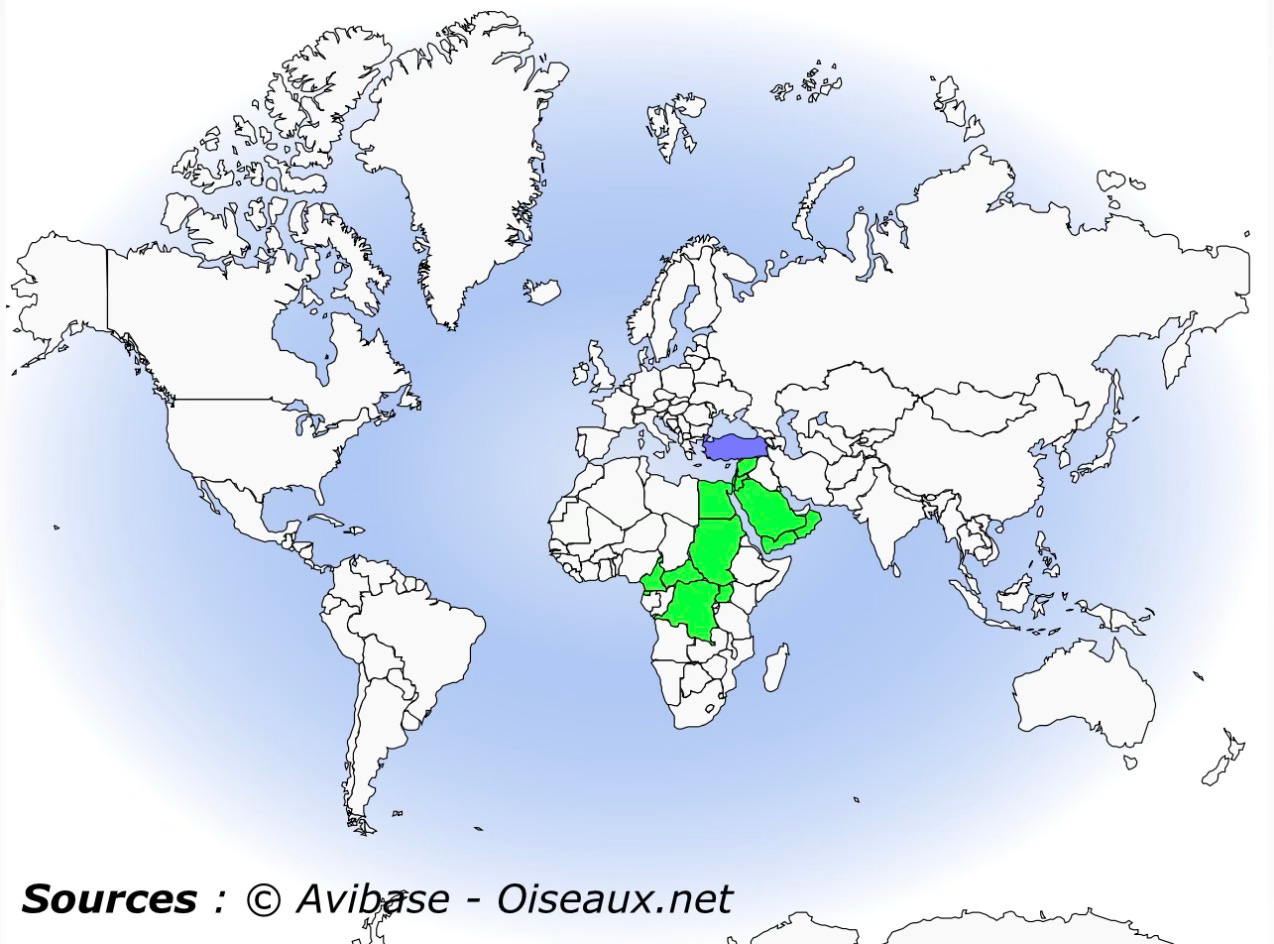
The Palestine sunbird is widely distributed across the eastern Mediterranean and surrounding regions. Its range extends from southeastern Turkey through the Levant, and into Egypt, with populations also present in parts of the Arabian Peninsula.
It thrives in a variety of environments, including Mediterranean scrublands, open woodlands, rocky hillsides, agricultural landscapes, and urban gardens. One of the species’ greatest strengths is its adaptability. As cities expand, the Palestine sunbird has learned to make use of ornamental plants and flowering trees, becoming a familiar sight in towns and villages.
Some northern populations move southward during colder months in search of flowering plants, though the species is not strongly migratory throughout its entire range.
Feeding Behavior and Ecological Role
Primarily nectarivorous, the Palestine sunbird plays a vital ecological role as a pollinator. As it feeds, pollen adheres to its head and bill and is transferred from flower to flower, supporting the reproduction of many native plant species.
Its curved bill allows it to access nectar deep within tubular blossoms that other birds may struggle to reach. In doing so, it helps maintain plant diversity across its habitats. The bird feeds on both wildflowers and cultivated ornamental plants, linking natural ecosystems with human-shaped environments.
Nectar alone, however, is not sufficient — especially during breeding season. The Palestine sunbird also consumes small insects and spiders, which provide essential protein for growing chicks. It may catch insects mid-air or pick them from leaves and branches. This mixed diet strengthens its ecological importance, as it contributes to both pollination and insect population balance.
Courtship, Nesting, and Reproduction
Breeding typically takes place in spring and early summer, when flowers and insects are abundant. During this period, males become more vocal and energetic. They perform animated courtship displays that include rapid flights, hovering movements, and persistent singing to attract females.
The female constructs a small, oval nest woven from plant fibers, grasses, and spider silk. Often suspended from a branch or hidden within dense foliage, the nest is carefully positioned to reduce exposure to predators and harsh weather. A small side entrance provides additional protection.
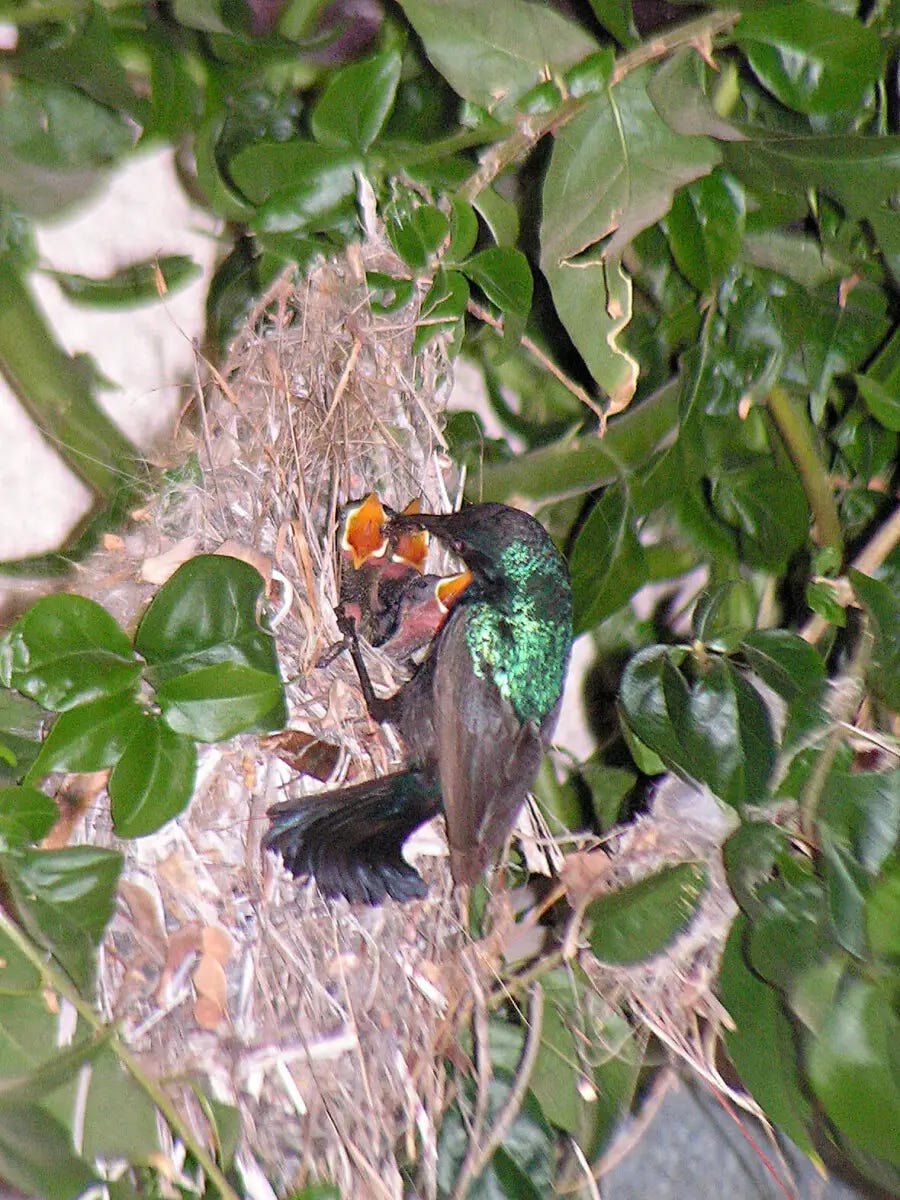
She lays two to three eggs, incubating them for about 12 to 14 days. After hatching, the chicks are fed a combination of nectar and insects. Within roughly two weeks, they fledge and begin exploring their surroundings, continuing the species’ close relationship with flowering plants.
A Symbol of Resilience and Heritage
As the national bird of Palestine, the sunbird carries symbolic weight beyond its biological role. Its vivid colors and lively movements are often seen as reflections of vitality and endurance. Closely associated with flowers and renewal, it represents growth, continuity, and a deep-rooted bond with the land.
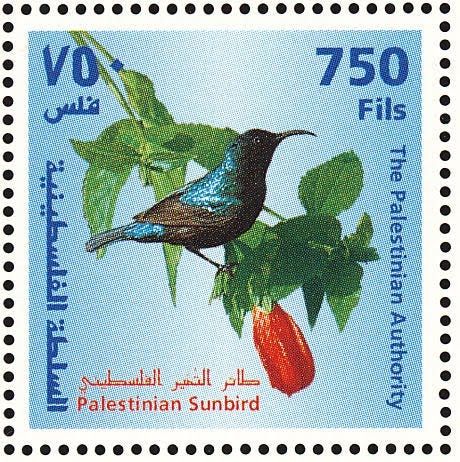
The bird’s designation as a national symbol also underscores the importance of environmental stewardship. It serves as a reminder that cultural identity and natural heritage are closely intertwined, and that protecting wildlife is part of preserving collective memory and pride.
Conservation and Future Outlook
According to the International Union for Conservation of Nature (IUCN), the Palestine sunbird is currently classified as “Least Concern,” thanks to its broad distribution and adaptability. Nevertheless, it faces ongoing pressures from habitat loss, urban expansion, pesticide use, and climate change, all of which can affect flowering patterns and insect availability.
Although the species has shown resilience, its long-term well-being depends on healthy ecosystems. Preserving native vegetation, encouraging pollinator-friendly gardens, and reducing chemical use in agriculture can help sustain its populations.
Bird, Pollinator, & Enduring Symbol
The Palestine sunbird is far more than a small nectar-feeding bird. It is a dynamic pollinator, an adaptable urban resident, and a cherished national emblem. With iridescent feathers flashing in the sunlight and swift movements among blossoms, it embodies ecological vitality and cultural pride.
By safeguarding the environments that sustain it, we ensure that this brilliant bird — both a species and a symbol — continues to brighten the landscapes of the region for generations to come.