

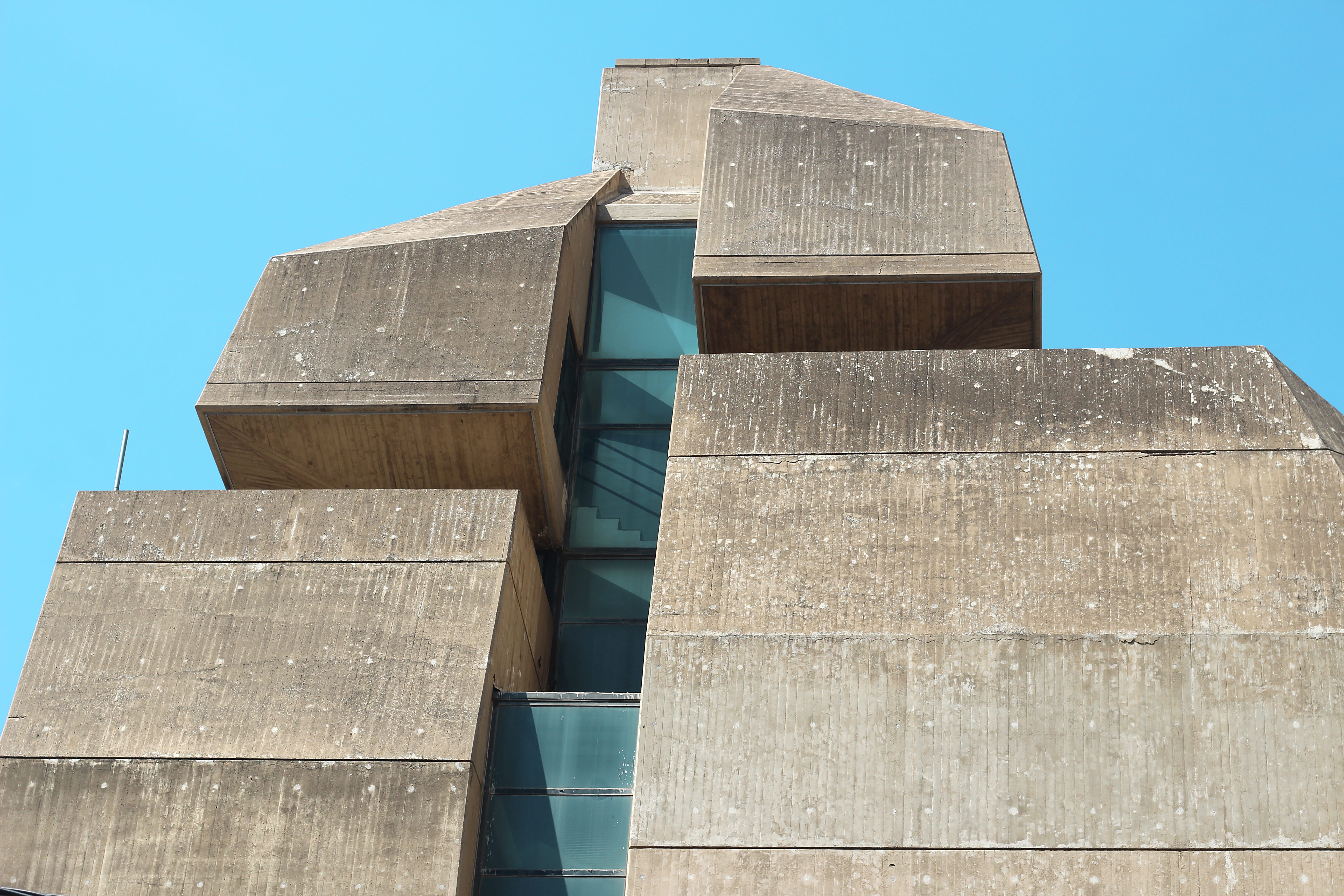
The Interdesign Building does not announce itself as a landmark. Instead, it stands as an accumulation of time — of an idea extended beyond its moment, of ambition slowed by history, and of a city that repeatedly interrupts its own trajectories. Designed in 1973 by Lebanese architect and designer Khalil Khouri, the project emerged during a period of economic confidence in Beirut. Its completion, however, would come more than two decades later, in a city profoundly altered by war and economic upheaval.
From the outset, the project was inseparable from Khouri’s broader intellectual and professional path. Active as an architect during the final years of Lebanon’s post-independence optimism, Khouri gradually shifted his focus toward furniture design and manufacturing. This shift did not mark a departure from architecture, but rather its extension into industrial and economic systems. Interdesign, the family-run company he developed with his brother Georges, grew out of the craftsmanship of their father, Elias El-Khouri, a carpenter and ebonist whose early custom works laid the groundwork for the enterprise.
In the early 1960s, Interdesign introduced one of the region’s first locally produced modern furniture lines, at a time when contemporary design was largely imported and socially restricted. By controlling every stage of production — design, machinery, fabrication, and distribution — Khouri established a vertically integrated model that enabled both experimentation and accessibility. Modern furniture was no longer an elite object but a reproducible, affordable product. By the mid-1960s, Interdesign had become a leading regional producer, exporting to Europe and the United States and positioning itself as both an industrial and cultural project.
The showroom building was intended as the architectural expression of this model: not simply a retail space, but a spatial statement. Outlined in 1973, the project placed Khouri simultaneously in the roles of architect, client, and developer. Construction began in Hamra on Rue Rome shortly thereafter, only to be suspended in 1975 with the outbreak of the Lebanese Civil War. Although the structure had reached ground level by then, repeated attempts to resume work during the conflict proved unsuccessful, leaving the project in prolonged suspension.
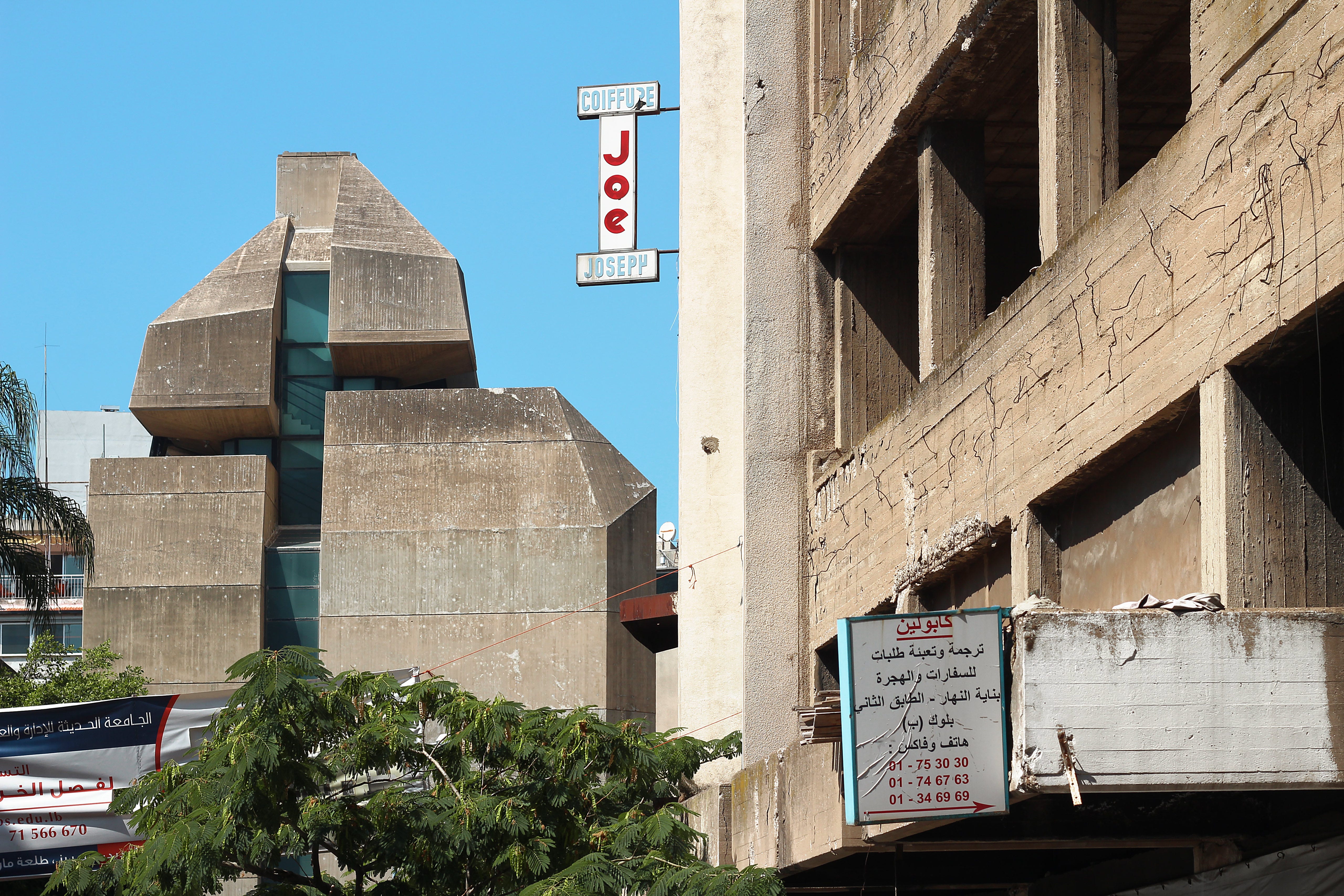
When construction resumed after the war, Beirut was no longer the city the building had been designed for. The economic and social conditions that had sustained Interdesign had shifted, and the company struggled to adapt. Despite mounting debt and uncertain prospects, Khouri remained committed to completing the structure. The building was finally finished in 1996 — twenty-three years after its inception — but it never operated as a showroom. Shortly thereafter, Interdesign declared bankruptcy. The building was seized by banks, briefly tested for alternative uses, and eventually abandoned, its highly specific spatial logic resisting adaptation.
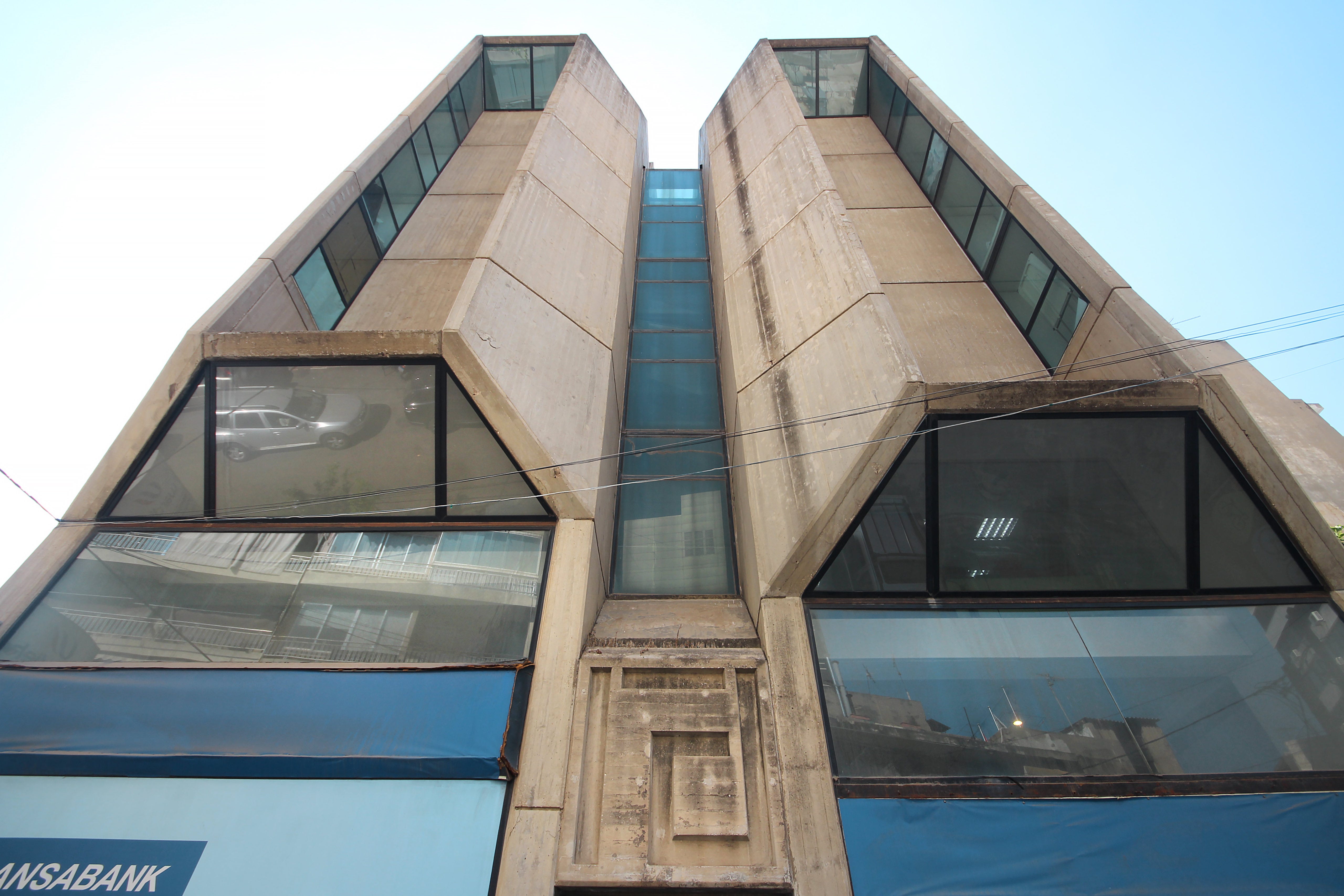
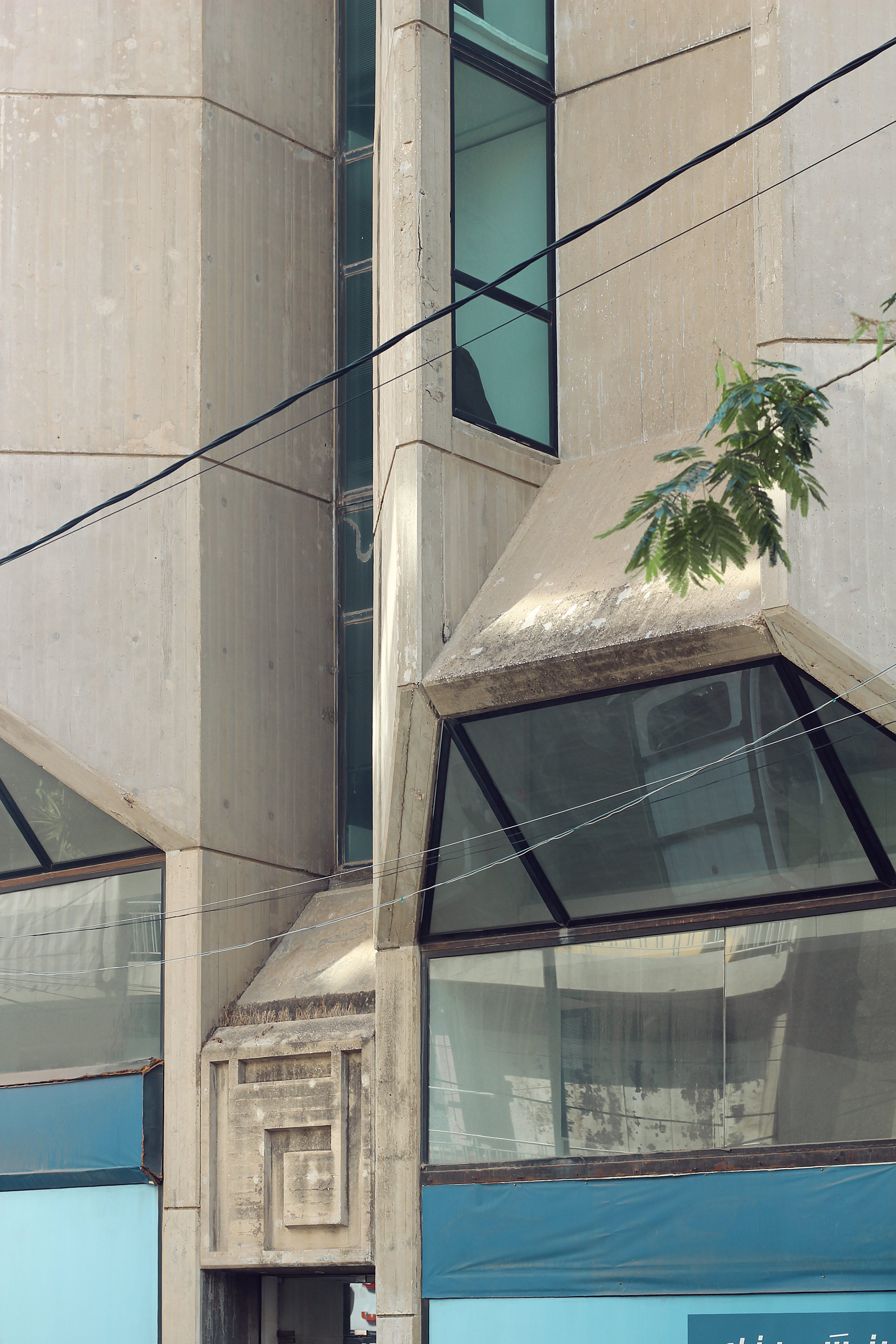
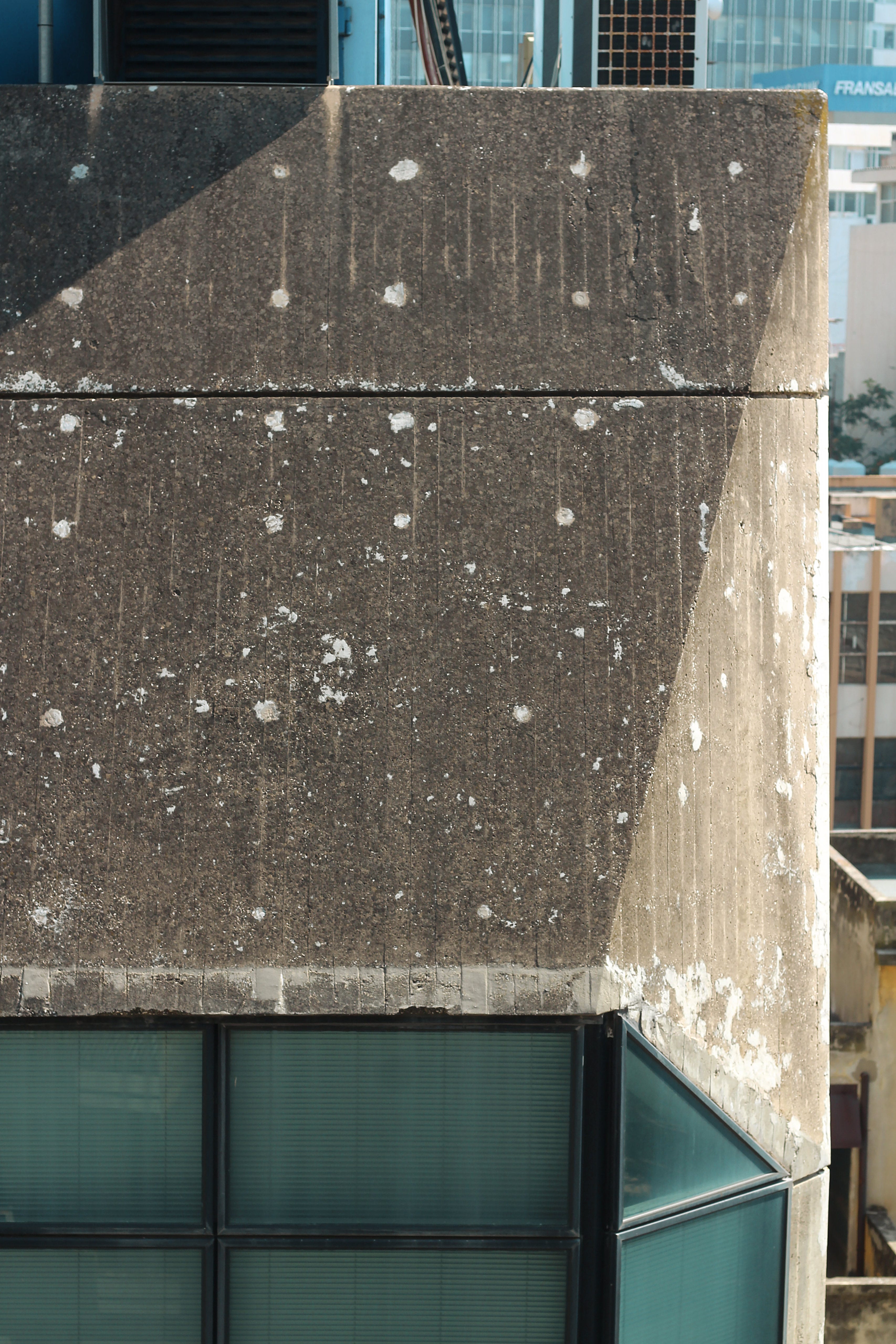
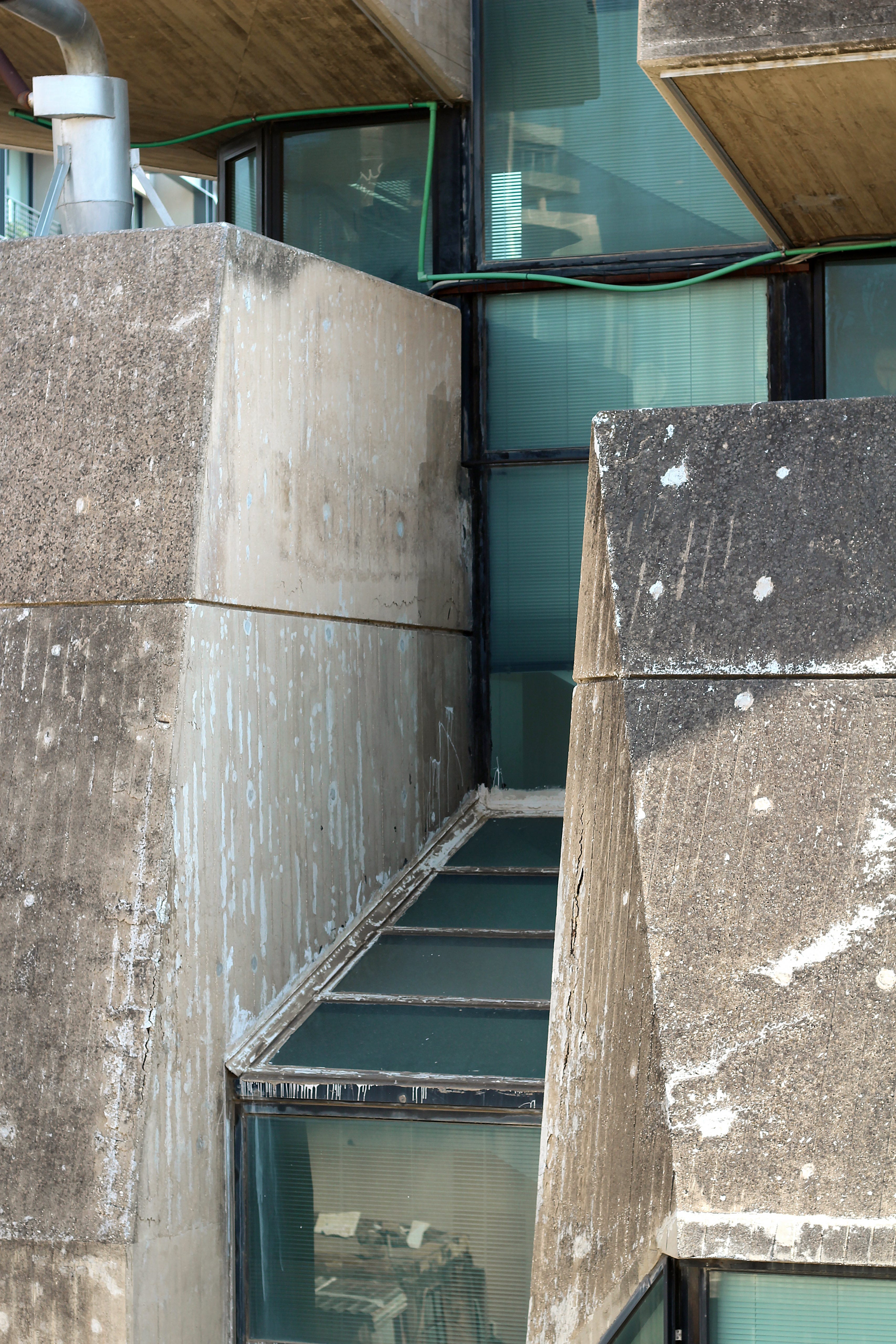
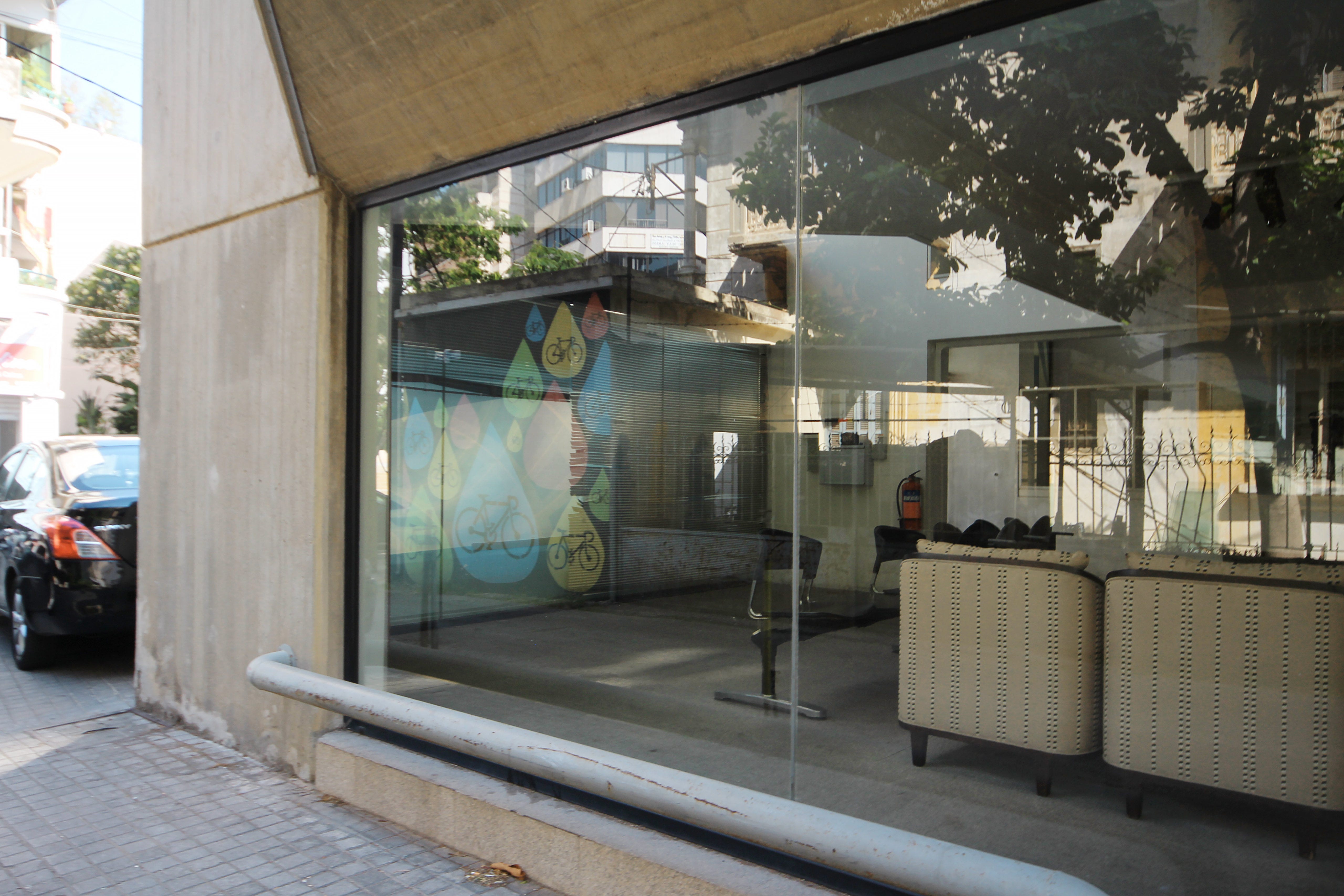
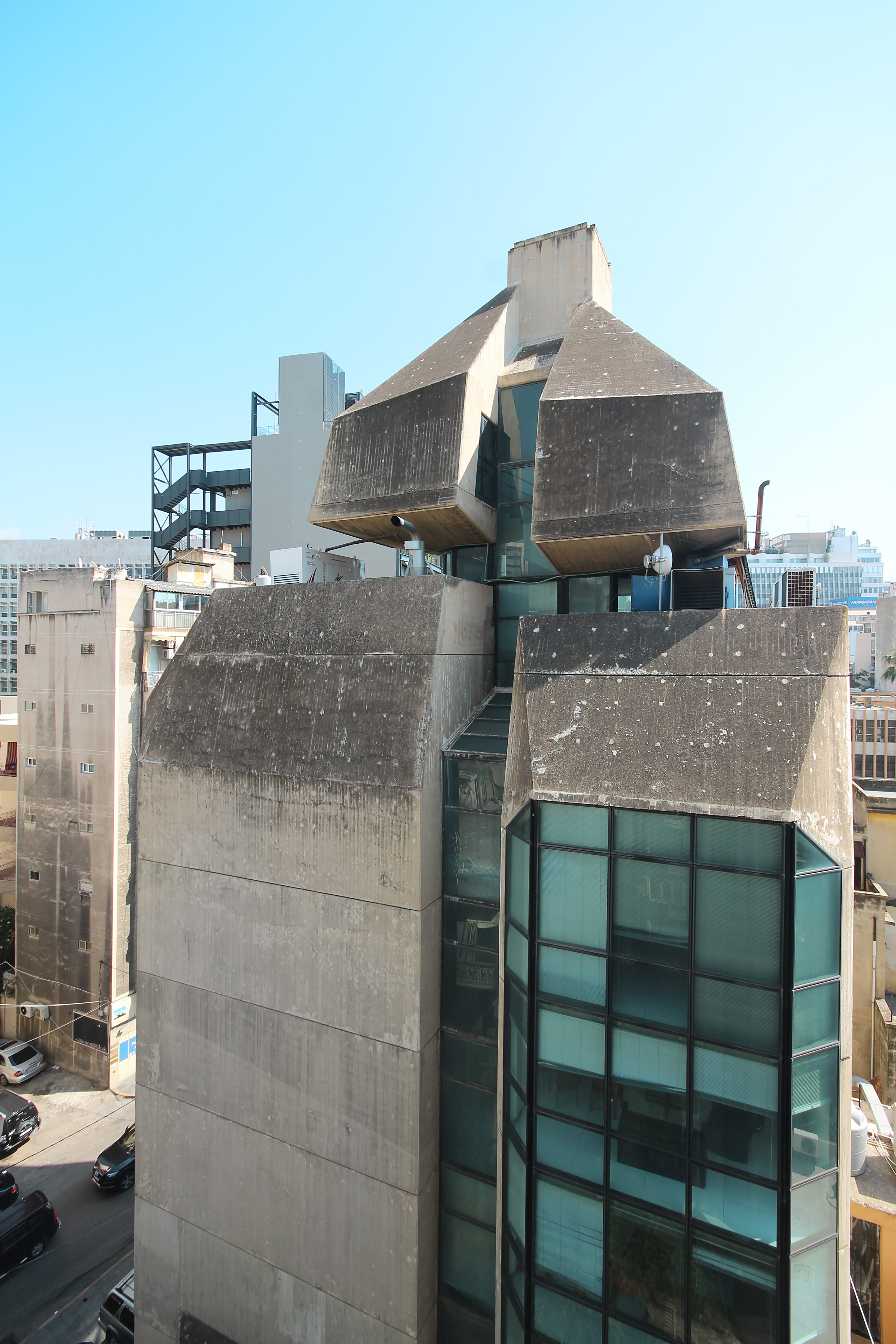
Architecturally, the Interdesign Building presents an uncompromising presence. Two concave concrete towers rise side by side, separated by a narrow vertical strip of glazing. Recessed openings obscure the interior from view, reinforcing the building’s opacity at street level. Above, a sculptural roof volume — visually detached from the main mass — houses administrative functions and was conceived as the “head” of the building. Once-active display windows at ground level remain sealed, severing the building’s original relationship with the street.
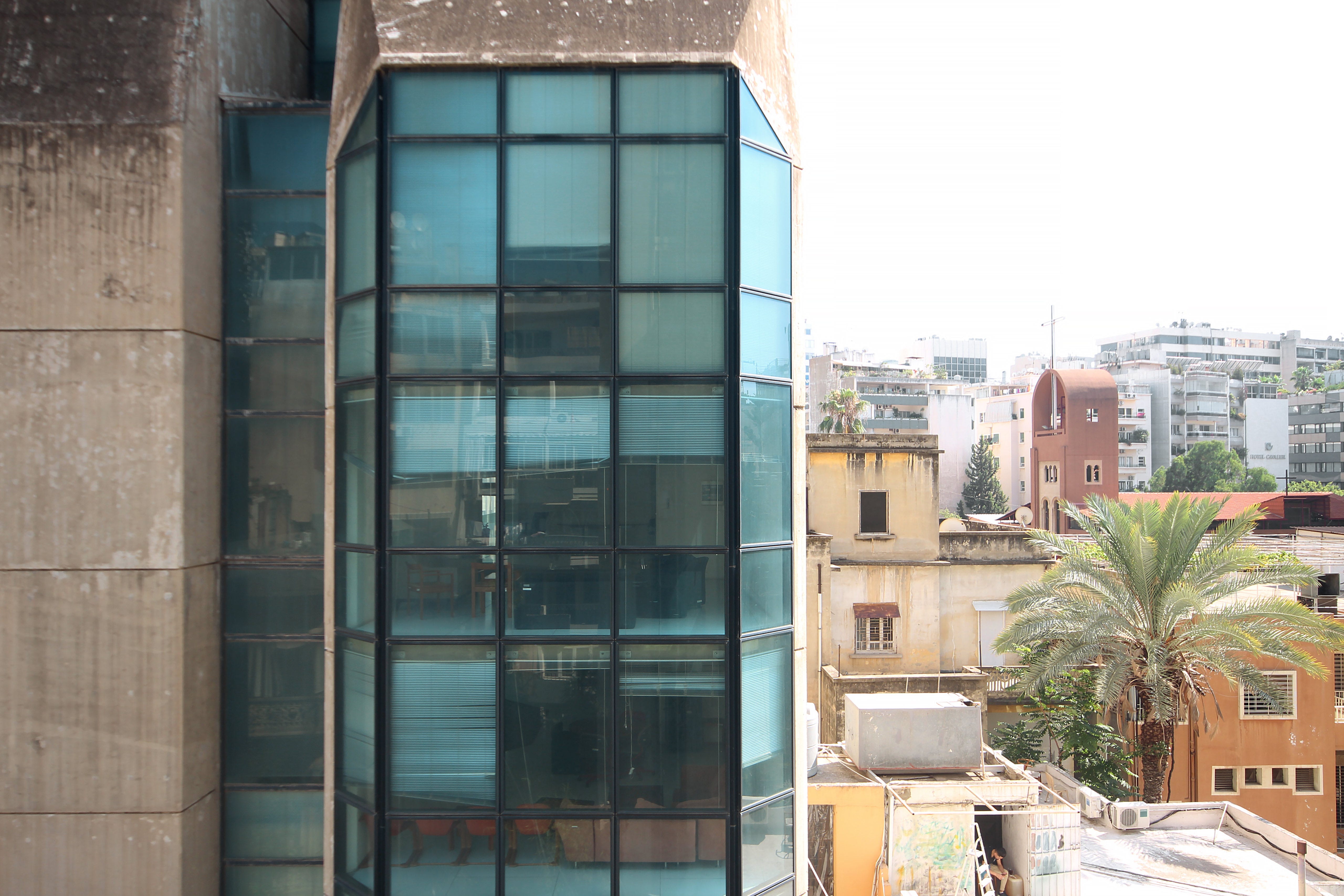
Inside, the atmosphere shifts. Across its twenty-four levels, the interior unfolds as a continuous, light-filled sequence defined by white surfaces, voids, staircases, and overlapping platforms. Movement through the building is carefully choreographed, allowing objects to be encountered from above, below, and across shifting planes. In this spatial arrangement, Khouri reverses the conventional relationship between architecture and furniture: the architecture recedes, structuring perception so that the objects themselves take precedence.
In May 2024, the Interdesign Building reopened briefly for a four-day exhibition dedicated to Khalil Khouri’s life and work, organized by his son and grandson. For the first time since its conception, the public entered the building not as consumers, but as visitors to a long-delayed project. The event did not attempt to resolve the building’s future, but rather to acknowledge its unfinished condition and reopen its questions. Today, the Interdesign Building resists simple classification. It is neither ruin nor monument, neither failure nor fulfillment. Its prolonged construction, abandonment, and partial rediscovery reflect Beirut’s broader architectural condition, where projects often remain suspended between intention and realization.
The building endures as a space where conviction outlasts utility — and where architecture continues to register the realities of building, and believing, in Beirut.