

To most people today, the name Karlheinz Stockhausen sounds like a footnote in classical music history. Yet, his ideas completely changed modern music. If you have ever listened to the tape loops on The Beatles’ albums, the spacious sounds of Pink Floyd, or the electronic rhythms of Kraftwerk and Yellow Magic Orchestra co-founder, Ryuichi Sakamoto, you have heard his influence.
Stockhausen was a radical German composer who abandoned traditional melodies. Instead, he pioneered spatial music, treating pure sound as something you could physically move around a room using loudspeakers. His face sits on the cover of Sgt. Pepper’s, right behind Lenny Bruce — a nod from Paul McCartney and John Lennon, who studied his early electronic work. Miles Davis credited Stockhausen with shaping his electric jazz period, and the founders of the rock band Can were his actual students. In November 1969, his sonic revolution arrived in Lebanon.

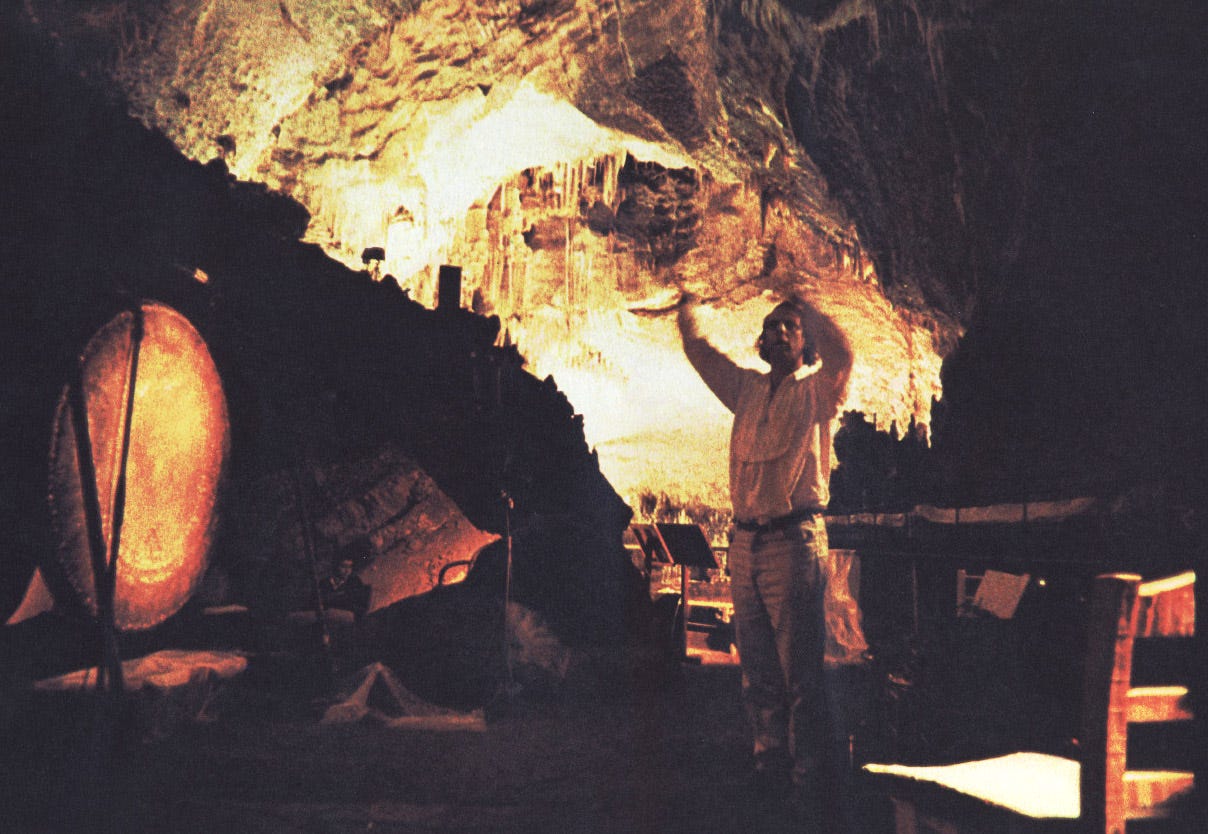
The 1969 Jeita Grotto Concerts
In the late 1960s, Lebanon was in a cultural golden age — a vibrant hub where global art met Middle Eastern modernism. The Jeita Grotto, with its stunning limestone caves north of Beirut, had recently opened its upper galleries. To celebrate, Lebanese cultural institutions began hosting bold art events, and Stockhausen saw the caverns as the ultimate natural acoustic laboratory.
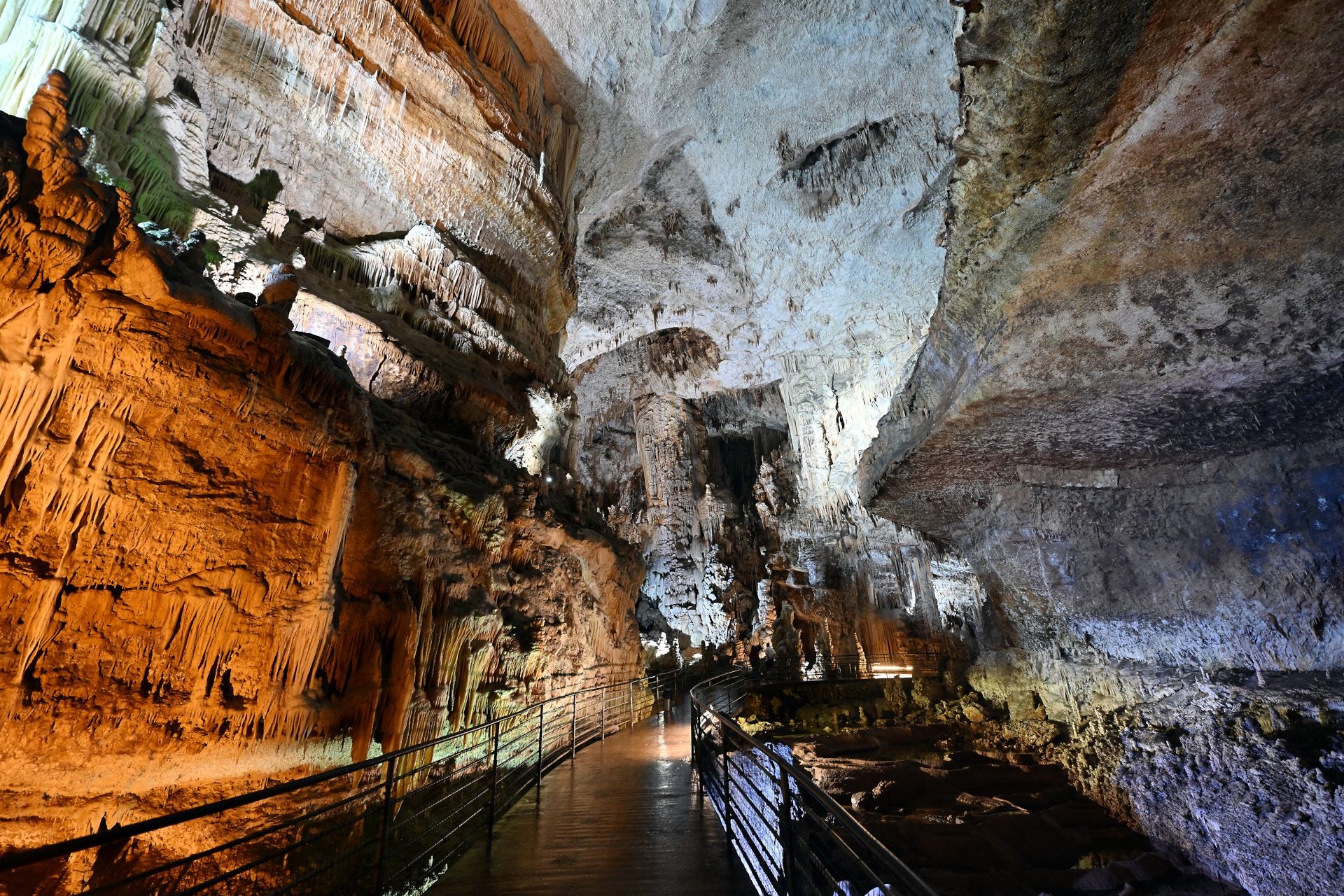
Along with a group of musicians, including the noted Hungarian composer Péter Eötvös, Stockhausen came to stage a series of concerts deep inside the earth. The site offered something no normal concert hall could: a massive, irregular space with a natural echo lasting up to eight seconds.
Stockhausen rigged the ancient stalactites and rocky vaults with a complex multi-channel speaker system. The audience did not sit in neat rows. Instead, Lebanese artists, intellectuals, and curious listeners walked through the dimly lit caves, completely enveloped by electronic tones bouncing off millions-of-years-old rock. It completely broke the rules of a traditional concert performance.
Captured on Film
This unusual meeting of ancient geology and new technology was captured in a 45-minute documentary called Karlheinz Stockhausen: In den Höhlen von Jeita (In the Caves of Jeita), co-directed by Anne-Marie Deshayes.
The film highlights the heavy physical labor required to haul primitive, sensitive electronic gear into a damp underground labyrinth. On camera, Stockhausen discusses his goals with intensity, praising Lebanon for its openness to atypical ideas and viewing Jeita as a unique place where the primordial past and the musical future could synthesize.
The Echo in Beirut’s Underground
Stockhausen’s visit was not just a temporary event; it left a lasting impression on the local landscape. Decades later, Beirut became the main hub for experimental and improvised music in the Arab world, carrying on that same spirit of pushing boundaries.
Sonic Waves from Jeita to Today
When Stockhausen sent electronic waves through the Jeita Grotto in 1969, he showed that Lebanon was at the center of global cultural innovation. Today, as Beirut’s independent musicians continue to play in unusual spaces — from underground bunkers to independent galleries — echoes of that November weekend remain legible in the city’s unique music scene.