

By Ralph I. Hage, Editor
Distance, Perception, and the Beginning of a Sound
“How are you doing, man?” Mark Speer asks me.
A simple, genuine question — the kind that people ask when they already expect a complicated answer.
“My heart goes out to the people I know who live out there,” he says, speaking about Lebanon and its current situation. I ask about them.
“I have had Lebanese friends since I was very, very young.”
The conversation moves between concern and curiosity, between the immediacy of the present and the slower work of memory.
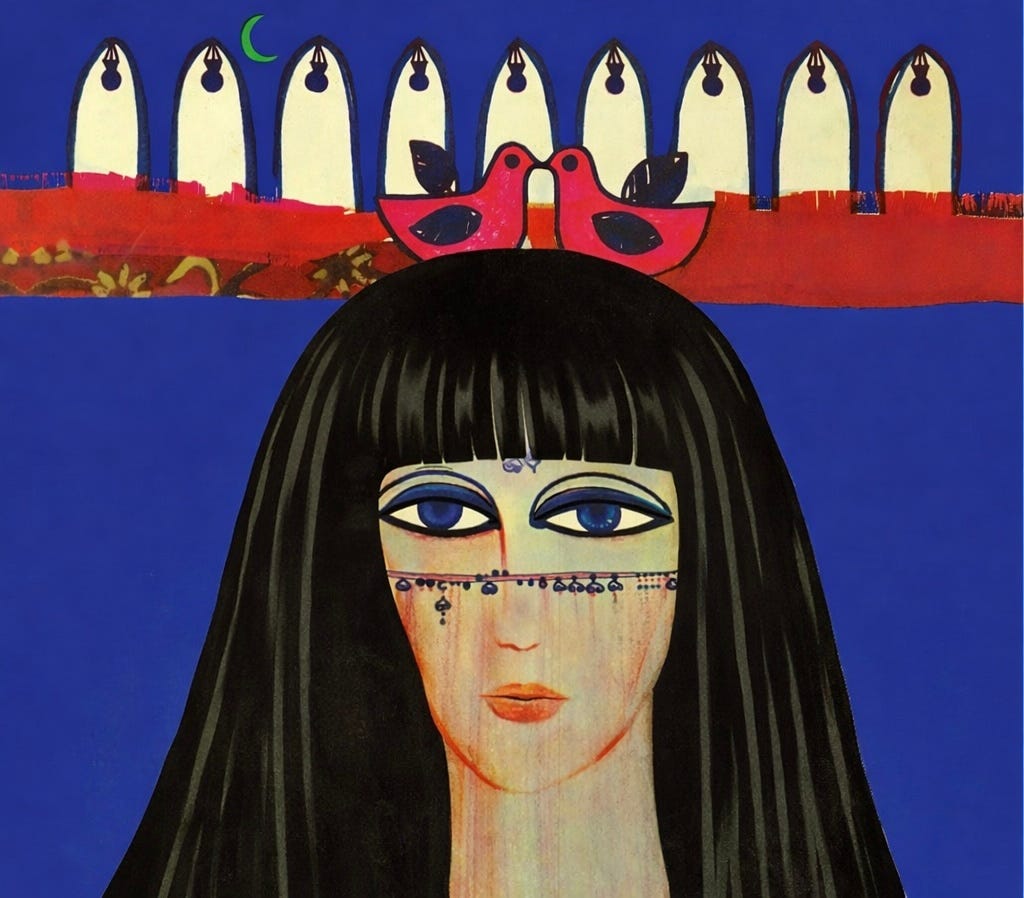
“Dance of Maria” is the starting point of the discussion. It’s a piece that Elias Rahbani — the Lebanese composer and arranger known for his richly orchestrated instrumental work and part of the broader Rahbani musical legacy — composed in the early 1970s and features on his album, Mosaic of the Orient. Khruangbin later covered it in the 2010s as part of their repertoire. But before they became a band that built a global audience over the past decade, their music was already being formed in fragments, long before it had a name.
Before “Dance of Maria,” before the touring cycles and the records, Speer’s relationship to music was already taking shape in bits — unlabeled tracks, half-remembered melodies, and sounds that would only return with meaning much later.
So, does he remember how he first came across the track?
“That’s actually a longer question. I had to go, like, remind myself actually when we did this because, you know... in my career, things just start to get kinda blurry as far as timelines… So I looked, and I was like, ‘Oh my gosh, we did this like ten years ago. But I kinda have to flash back about twenty-plus years.’”
The Warehouse and Shifts in Listening
In the early 2000s, somewhere between 2000 and 2001, Speer was living in a warehouse with friends — a space that doubled as rehearsal room, performance area, and something like a cultural crossroads. Among the people moving through it was Tamara, a Lebanese dancer who taught belly dancing classes there, and her future husband Charlie Perez, a close collaborator who would later contribute percussion to Khruangbin recordings.
“I kind of helped her set up this class area,” he recalls. “There was always music happening.”
On some days, the space would shift entirely — band rehearsals overlapping with dance sessions, the room constantly in motion.
At first, it registered as background.
“You know… ‘belly dance music.’ Sometimes it felt like wallpaper.”
But not always.
“Sometimes she’d play something — like Omar Khorshid — and I’d be like, ‘Oh man, what is this?’ It made me snap out of that idea that it’s just background… and actually dig a little deeper.”
But digging at the time was not always easy.
“Because, you know, maybe you like a CD that your friend’s dad has that he plays every time you go to their house and your friend, who’s like your age, is like, ‘Geez, Dad, this is, this music’s so corny. Why do you always play it?’ And you’re like, ‘What is this?’ The response would be, ‘this is corny,’ and I’m also like, ‘Man, this is actually really amazing.’ So you ask him what it is, and it’s this CD that you definitely cannot find anywhere. And you don’t have a CD burner ‘cause those aren’t really accessible yet.”
Also, tracks were mislabeled, downloaded from early file-sharing platforms, or burned onto CDs without context — if you had access to a burner at all.
“You’d download something and it’d just be called something like ‘Belly Dance Music #1,’” he says. “You ask what it is, and it’s just… ‘it’s from this CD I found.’”
Even access itself was limited. Recording it meant negotiating access to a home stereo, or settling for a cassette dub, if that was even possible.
For the dance classes, that was enough — the music served the movement. For Speer, the sound lingered without explanation. It was probably also here that he first heard Fairuz —the definitive Lebanese voice whose collaborations with the Rahbani Brothers blended regional folk traditions with Western classical and jazz arrangements to shape the sound of modern Arabic music.
“You know, she’s got some gorgeous songs.”
Though he would only put a name to the voice later.
Finding Music Before the Internet Found It For You
If today’s listening culture is defined by immediacy, Speer’s was sometimes defined by delay.
He recalls hearing a particular track during a cab chase scene in The Fifth Element as a teenager — something that stayed with him long after the film ended.
“I was like, ‘This is amazing. I need to get this soundtrack.’”
He bought it, but the track wasn’t there.
It was just the score by Éric Serra, “which is incredible… But I was like, “What the heck? My favorite song isn’t on here.”
What followed was a kind of analog detective work: rewinding VHS tapes, scanning credits on a tiny television, trying to decipher names that remained just out of reach.
“It took a couple decades,” he says, laughing, “to actually find that song.”
When he finally did, it led him to Alech Taadi by Cheb Khaled — and into a broader world of sound shaped by fusion, diaspora, and production styles that blurred geographic boundaries. Along the way, he began to notice the producers behind the sound as much as the performers themselves — figures like Don Was, whose work bridged post-disco, dub, and global pop.
Sound, Feeling, and the Era of Fusion
When I ask about what draws him to music from outside his own cultural background, Speer answers simply:
“It’s generally the sound… which, to me, is tied in with the feeling.”
He returns often to a specific era — roughly 1977 to the late 1980s.
“Things were cleaned up, but not overly digital yet. There’s this analog-digital crossover… everything’s tight, but it still feels human.”
What’s interesting is how that sound traveled.
“You hear producers from other countries using Western techniques… but with music that is not Western at all.”
He points to artists like Cheb Khaled, where drum machines, sequencers, and regional instrumentation coexist — not as a contradiction, but as synthesis.
“I know people don’t like the term ‘world beat,’” he adds, laughing, “but I kinda love that to describe exactly what was happening at that time, because it wasn’t purely one thing. It was literally a fusion of all these different things together.”
Houston, Laura Lee, and Shared Discoveries
If those sounds were encountered in fragments, Houston is where they cohered.
Houston, Texas?
“Oh, yeah. Houston, Texas, for sure. It’s a major oil hub… Oil and energy is all based there, and medicine. And so many people come to study medicine. There’s an Indian district, a West African district, a massive Vietnamese population… Brazilian bars… and you can’t discount the fact that it’s essentially Northern Mexico.”
It is this environment that made Khruangbin possible.
“We wouldn’t have formed if it wasn’t for the influence of growing up in that metropolitan area, for sure,” he says. “I’m essentially trying to like, pay homage and tip my hat to the people that I grew up with and around in the city that I’m from, you know?”
Within the band, that instinct quickly found common ground.
“Me and LL connected on music from Afghanistan,” he says, referring to bassist Laura Lee Ochoa. He pauses, briefly trying to recall the name of a singer often referred to as the “Afghan Elvis” — Ahmad Zahir, an influential figure whose music became part of their shared listening, even if the name momentarily escapes him.
“I’m definitely more of a nerd about it,” he adds, laughing, “but we all dig for things that we like in our own ways.”
Speer tends to disappear into “rabbit holes” — tracing sounds across regions and histories before bringing them back into the band’s language.
“I’ll get really into something kind of esoteric… so that I can bring it back and then put it into what we do, and then morph it, and then shift it and then move it into something else. You know?”
Years before Khruangbin, that instinct had already taken him abroad.
“I had been to Afghanistan… we did Kyrgyzstan, Kabul, Qatar, Bahrain…”
The experience was not touristic but functional — performing on military bases as part of an entertainment program. It added another layer to the musical journey: music not just heard, but lived.
Rabbit Holes That Lead Back to Lebanon
Years later, while touring and searching for material to expand their live set, Speer began tracing those earlier impressions more deliberately.
“I had just started using Spotify… and I was like — this is crazy. There’s so much here I could never find in a record shop.”
Record digging had its limits — rare records were either unavailable or opportunistically expensive.
“I’m just trying to listen to music,” he says, laughing, “not win the lottery.”
At that point, he decided to try and find some of these older songs that he had heard earlier in his life.
“I found a song by Madonna,” he says. “Not the Western Madonna — the one Elias Rahbani produced — called “Behlam Behlam” which I was like, “Oh, this is beautiful.”
From there, the connections unfolded: Elias Rahbani, his sister-in-law Fairuz, and others — names aligning with sounds he had heard years earlier.
“I was like, ‘Oh yeah — I remember this.’”
Building a Set, Finding “Dance of Maria”
At the time, Khruangbin had only one album under their belt, The Universe Smiles Upon You, but touring demanded more.
“We couldn’t just play for 40 minutes,” he says.
Covers became both necessity and strategy — a way of sustaining a full set, but also of keeping audiences engaged. At the time, the band was often perceived as a “chill-out” act, and maintaining energy required careful shifts in tempo and familiarity.
“If we’re in Baltimore, we play something from there. In France, we play Serge [Gainsbourg]. In Thailand, we play Thai cuts.”
Earlier sets included a wide range: “Firecracker” by Yellow Magic Orchestra, Thai funk tracks, selections inspired by James Brown, and even extended hip-hop medleys built from regionally specific references — songs chosen based on the city they were playing in, a subtle way of connecting with local audiences.
Within that process, “Dance of Maria” emerged.
“I came across it on Mosaic of the Orient… and I thought, melodically, this is incredible. I thought, how if we just treated it like a breakdance type cover, right? Like combine “Dance of Maria” with “Apache.” So that was kind of our approach. Like, we want that sort of energy, but with this melodic style.”
And then, the magic bullet:
“A lot of times, our blueprint is tough drums and bass, you know? And then just heartbreakingly beautiful melody guitar on top. That’s where it’s at, this combination of those two things.”
Interpretation as Practice
For Khruangbin, covering a song is not reproduction. So how exactly do they approach a cover like “Dance of Maria,” as opposed to an original composition like “White Gloves”?
“If we just do it exactly like the original, there’s no conversation there.”
Instead, it is interpretation.
“I look at it like this. Like, think about Frank Sinatra, or Elvis Presley. Like, those guys didn’t write music. But they’re famous, so they’re like, ‘Oh, that’s a Frank Sinatra song. That’s an Elvis song.’ You know? But what they are, are incredible interpreters of material.”
This idea extends outward into a broader lineage. He describes how a composition can move across cultures and decades — from mid-century American exotica composers like Martin Denny, to Japanese reinterpretations by Yellow Magic Orchestra, and onward into Khruangbin’s own adaptations.
With “Dance of Maria,” the challenge was translating a layered arrangement into a three-piece format.
The original recording included multiple elements — organ, woodwinds, rhythmic guitar, and additional textures — all of which had to be condensed without loss.
“I had to take all those parts… and make it into an arrangement that I can pull off and play live — and not lose anything, right?”
By the fall of 2016, it was fully part of their set.
The Guitar as a Voice Between Worlds
“I’m really trying to emulate singers,” Speer says, referring to his guitar playing.
At one point, that meant studying the phrasing of Googoosh in detail — not just her melodies, but the way she moves around them, stretching and bending notes with precision. And then, another memory:
“I saw her back in… maybe 2019, 2018, something like that. She played at the Hollywood Bowl. And it was like all of Los Tehrangeles had come out, you know? The Hollywood Bowl never smelled so good! They had us dressed to the nines. She just crushed.”
Rather than modifying the guitar itself, he works against its limitations.
Some players refret their instruments entirely — adding microtonal divisions that resemble instruments like the saz, where frets can be adjusted. Speer prefers another approach.
“If you get good at bending, you’re not bound by the fret.”
That approach is rooted not only in global listening, but in blues — a constant presence in his upbringing.
I mention that I can hear some of Dick Dale’s influence in his playing.
“We love Dick Dale. You know, who doesn’t love Dick Dale? I mean, just like, what a legend… Growing up, you hear blues all the time,” he says. “And you don’t realize that that third — that’s not quite major and not quite minor — is very specific.”
In Western music, those tonal deviations are familiar, but limited.
“We’re used to hearing the blue third… maybe a blue seven,” he explains. “But aside from that, things start to get a little funny.”
What is often presented today as something new — microtonality — is anything but.
“You see people now talking about ‘microtonal music,’” he says, laughing. “And I’m like — folks in the East have been doing this forever. Thousands of years… When you toss in something like a blue second… it’s not on equal temperament. It’s that slightly flat note that really skilled singers can just hit.”
And not just singers.
“Really skilled oud players just knock it out — no problem.”
Covers, Lineage, and the Ongoing Conversation
“The covers we pick, we try to kind of pick slightly obscure, you know? But not necessarily weird for the sake of weird. It’s more like, hey, this is an undiscovered gem that I think that you guys would really enjoy, you know?”
Covers as invitations.
“We’re not trying to fool people into thinking it’s our song,” Speer says. “The point is that they hear it and go, ‘What is this?’”
In that sense, the cover becomes less an endpoint than a prompt — redirecting attention back toward its source.
From there, the listener moves outward — toward Elias Rahbani, toward Fairuz, toward entire other musical traditions.
“It’s a conversation. Someone takes something, reinterprets it… and we keep it going… That’s how cultures change and evolve,” he says. “Through exchange.”
Returning to Distance
“My goal is to take everything that I’ve heard and put it into what we do. And at this point, because of the way the world has gotten so interconnected, that getting material to be inspired by, is not hard.”
By the time Khruangbin gained wider recognition, Speer was already considered a late bloomer.
“I had thirty years of input before this band happened.”
That accumulation, he suggests, is essential.
“I couldn’t have done this at twenty.”
Now, after years of constant touring and recording, he finds himself returning to something familiar: the need for distance again.
“I’m taking some time away from that project only so that I can be inspired and come back with some new stuff. Now I wanna learn more stuff and reinterpret it, and I just need time to do that.”
After years of releasing music at a steady pace — often every couple of years — he describes a growing need to step back.
“That doesn’t give you a whole lot of time to absorb and reinterpret,” he says. “At a certain point, you feel like you’re repeating yourself.”
The future remains open. So what’s next for Khruangbin?
“Only time will tell. As far as like what’s coming next, I really don’t know. I’m interested to see what happens when I get back in the room with my bandmates and start messing around and see what we come up with. But I’m hoping that it’s something familiar but fresh.”
Coda: The Everyday
At the end of the conversation, things drift back toward the everyday.
Family. Comfort. Cedars. Hummus comes up. Mutual wishes for health and safety. I invite him to visit Lebanon.
“Oh, I would love to.”
Maybe when things quiet down.
But music never really quiets down. “Dance of Maria” begins in the 1970s, with Elias Rahbani — arranged, recorded, released into a world where it had a name, a place, a context. Years later, it surfaces again in a warehouse in Houston, half-heard, misfiled, folded into tapes and burned CDs, passed around without attribution. Then it moves through Mark Speer, into Khruangbin, onto stages across continents, and picked up by audiences who hear it as something new. And now, back again — named, traced, and written into this conversation.
Each time music travels, it carries something different with it — a new context, a new listener, a new understanding, a new meaning. What begins as a composition becomes a fragment, then a reference, then a reinterpretation — briefly recognized before it moves on again.
By the time it reaches you, it’s already gone.