

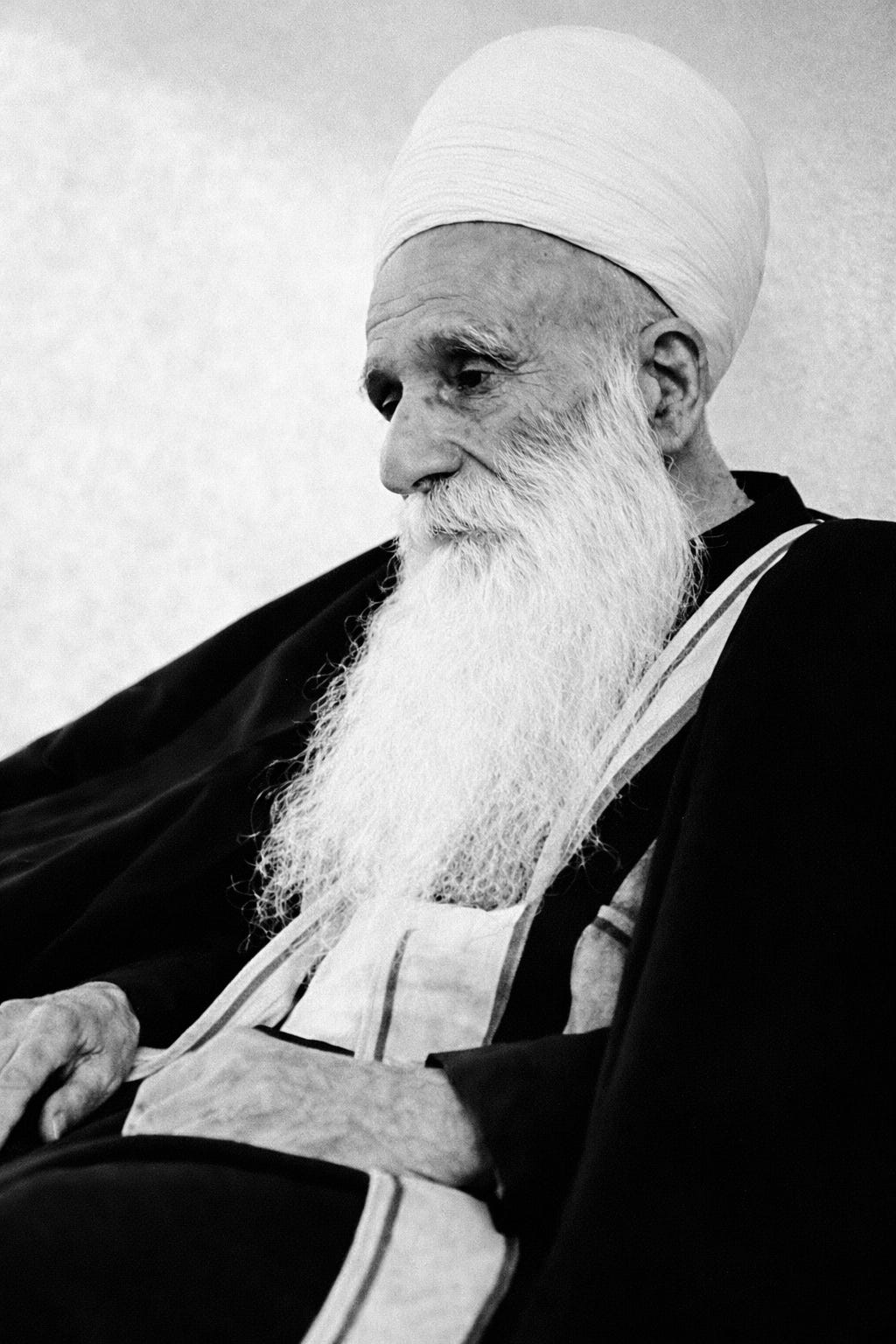
“The true human nature is gentle and divine. And if the heart is inhabited by the wisdom of goodness, it becomes a shining light.”
- Sheikh Abou Hassan Aref Halawi
Sheikh Abou Hassan Aref Halawi remains one of Lebanon’s most revered spiritual leaders. His legacy, however, extends beyond Druze moral authority. Rooted in the inner discipline of the muwaḥḥidūn (Unitarians), his vision of leadership offers an introspective model of authority with profound relevance for Lebanon’s persistent fragmentation, sectarianism, and quest for unity. In a country where authority is often measured in volume, spectacle, and force, Sheikh Abou Hassan Aref Halawi represented something rarer: restraint.
Early Life
Born in Barouk in the Shouf mountains in 1899, Halawi grew up in a landscape where spiritual tradition and communal responsibility were inseparable from daily life. The mountainous terrain that shaped Druze history would also shape his temperament: contemplative, steadfast, and inwardly anchored.

From early youth, Halawi dedicated himself to religious study and spiritual discipline. Biographical accounts describe his immersion in sacred texts and his pursuit of contemplative retreat in the hills surrounding Barouk. Such practices were not unusual within Druze spiritual formation, yet in Halawi’s case they deepened into a lifelong path of ascetic devotion. By his mid-thirties, he was invested with the white turban symbolizing spiritual maturity and piety within the Druze tradition. This elevation marked recognition not of institutional power but of inner refinement.
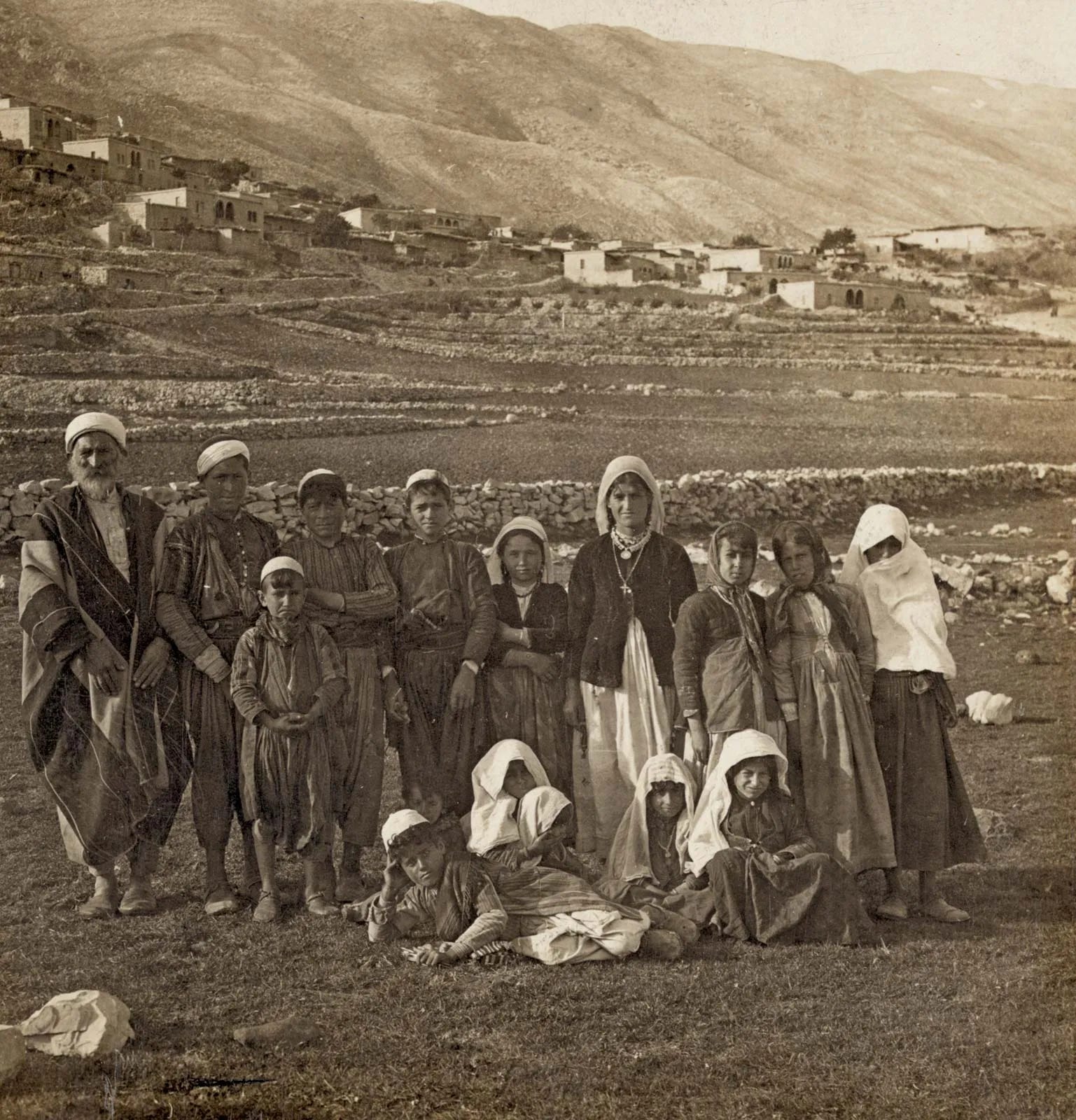
Throughout the twentieth century, as Lebanon moved from Ottoman rule to French Mandate and eventually to independence, Halawi’s presence matured into that of a moral reference for the Druze community. He was a highly respected Druze spiritual guide whose authority extended beyond Lebanon to Druze communities across the region.
Beyond Ritual to Inner Purity
At the heart of Halawi’s leadership was a deep understanding of divine unity, a core tenet of Druze theology. The faith, esoteric in nature, reserves sacred knowledge for the initiated ʿuqqāl (“the knowledgeable”), while the majority, the juhhāl (“the uninitiated”), engage primarily through communal rituals. Halawi embodied this principle: his moral clarity and restraint arose not from outward showmanship but from an interior journey toward understanding the divine.
This emphasis on self-restraint and personal purity contrasts sharply with Lebanon’s often theatrical and factional politics. While Druze leadership, like other communities, has been periodically drawn into political struggle, Halawi’s reputation rested on inner discipline rather than alignment with external power — a rare quality in a society shaped by force and spectacle.
Moral Authority in a Fractured Republic
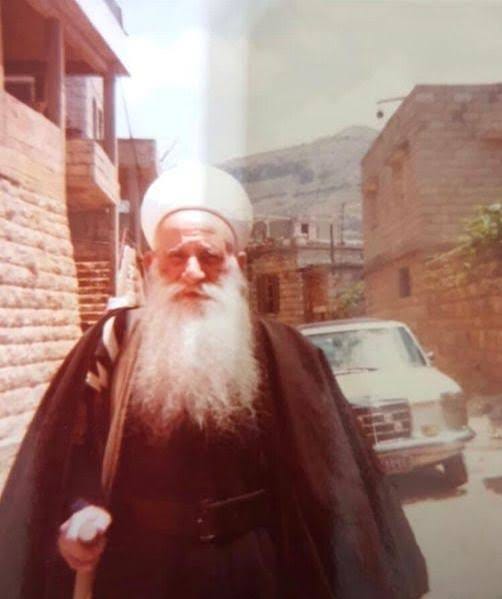
Lebanon’s spiritual leaders often operate in the shadow of political spectacle. Halawi’s influence, however, transcended partisan divides. He did not align with community leaders during the Lebanese Civil War (1975–1990), instead mediating crises within the Druze community and providing a moral compass in moments of upheaval.
This stance was not without tension. Though he avoided direct political engagement, his insistence on unity and restraint contrasted with the military factionalism of the era, raising the question of whether a leadership rooted in inner discipline can endure in a society that rewards external power.
The Israeli Druze Edict
Halawi’s authority extended beyond Lebanon. In the 1990s, he issued a religious edict forbidding Israeli Druze from serving in the Israeli military, reflecting his commitment to spiritual unity over political division. For Halawi, participation in military conflict against neighboring Arab societies, including Lebanon, contradicted communal solidarity.
Gentleness as Strength, Leadership of Presence
Halawi’s leadership was defined not by speeches or displays of power but by presence. Visitors described his austere life, detached from material ambition yet suffused with inner peace. He unified through example, a subtle yet compelling presence in a landscape dominated by political spectacle.
This approach, however, raises questions about relevance in modern Lebanon, where material success and visible power are often prioritized. In the postwar era, Halawi’s restraint contrasts sharply with the bombastic style of contemporary leaders, challenging society to reconsider what true leadership entails.
In an era also defined by rapid economic and social change, Halawi’s emphasis on interior discipline and moral steadiness resonates differently across generations. For some, it represents continuity and rootedness; for others, it raises broader questions about the evolving role of religious authority in public life.
A Model of Leadership for a Fragmented Society
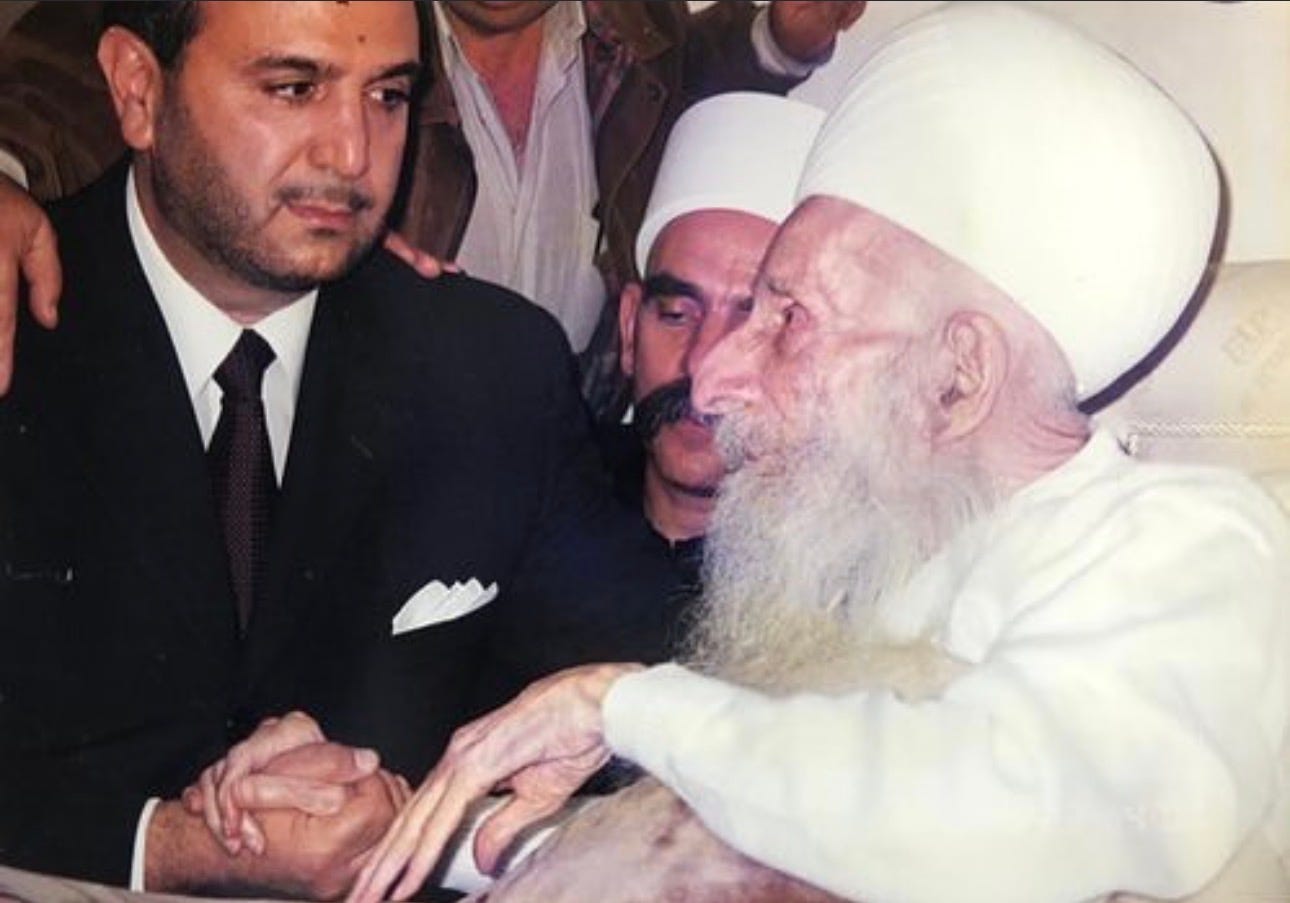
On 26 November 2003, Sheikh Abou Hassan Aref Halawi passed away in Barouk at the age of approximately 103. His death marked the completion of a century-long journey of spiritual service. Tens of thousands mourned him, underscoring the breadth of his impact.
Halawi’s legacy invites reflection on an interior mode of leadership in a fractured society. His authority emerged from moral gravity rather than institutional power.
As Lebanon navigates the tension between tradition and modernity, unity and division, Halawi’s life remains a quiet yet compelling reminder: Can a leadership rooted in restraint guide a nation captivated by the theater of brute power?