

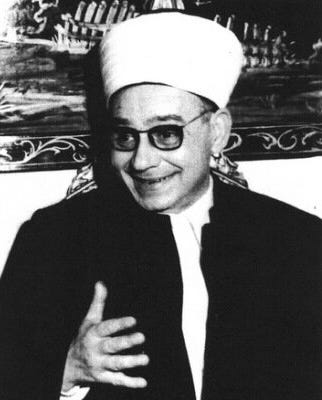
Sheikh Abdallah Al‑Alayli was a Lebanese intellectual, linguist, writer, and thinker whose work had substantial impact on modern Arab cultural thought, linguistic studies, and debates about identity and reform. Born in Beirut in 1914 and active throughout much of the 20th century, Al‑Alayli combined deep classical training with a bold engagement with contemporary issues, making him one of the most influential and controversial figures in Arab intellectual history.
Early Life and Education
Abdallah Al‑Alayli was born on 20 November 1914 in Beirut, during the final years of Ottoman rule and a time of immense social upheaval in Lebanon. His early schooling was in traditional Qur’anic schools and local primary institutions before he traveled to Cairo to study at Al‑Azhar University, one of the foremost centers of Islamic scholarship in the Arab world. There he studied under eminent teachers and immersed himself in Arabic, Islamic jurisprudence, theology, and literature.
After completing his studies in the mid‑1930s, Al‑Alayli returned to Beirut, where he began a lifelong career as a teacher, preacher, and public intellectual. He engaged widely in cultural, linguistic, and religious debates, and also took part in nationalist movements seeking cultural and social reform.
Scholarly Work and Major Publications
Al‑Alayli’s literary and intellectual output was both broad and ambitious. He believed that language, culture, and thought are inseparable from the progress of society. Much of his work focused on modernizing and critiquing traditional approaches to language and religion, and on arguing that Arab societies needed to adapt intellectually to the challenges of the modern world.
One of his earliest significant works was Introduction to the Study of Arabic Language, where he set out principles for a systematic and modern study of Arabic that bridged classical tradition and contemporary linguistic thought. His commitment to the Arabic language also led him to create The Great Dictionary, a major lexicographical work intended to expand vocabulary in a way that reflected social change and intellectual development.
In Refining the Linguistic Approach, Al‑Alayli elaborated his methodology for teaching and understanding language, advocating clarity, analytical depth, and openness to new linguistic insights. Beyond language, he tackled broader questions of culture and religion in works such as Where Is the Mistake? Correcting Understandings and the Theory of Renewal and Where Is the Mistake in Islam?, which prompted widespread debate because of their reformist stance toward traditional interpretation. He also wrote on human identity and social roles in Where Is the Human?, reflecting his holistic approach to human sciences.
His writings spanned not only academic treatises but also literary essays and poetry. Al‑Alayli published works in various genres, including lyrical and philosophical poetry collections that reflected his engagement with personal and societal themes.
Ideas and Intellectual Contributions
Al‑Alayli saw language as a living, evolving phenomenon that should reflect the needs and realities of contemporary societies. He argued that without linguistic and cultural renewal, societies remained intellectually stagnant. His approach to language combined deep respect for its historical foundations with insistence on reform and adaptation. This placed him at the center of debates over how Arabic should be studied and taught in the 20th century.
In religious and philosophical realms, Al‑Alayli called for reinterpretations grounded in context and reason. He believed that rigid adherence to tradition without openness to modern insights hindered intellectual and social development. These views, especially in Where Is the Mistake?, sparked controversy among conservative scholars at the time, leading to bans of his work in certain places.
Scholars have also highlighted his broader philosophical orientation, which included renewal in jurisprudence and contemporary readings of foundational texts, positioning him as a figure who merged classical scholarship with modern critical thought.
Recognition and Legacy
Throughout his lifetime, Al‑Alayli received both public honors and criticism. He was recognized for his service to Arabic language and culture and awarded national distinctions for his writing and scholarship. His bold critiques sometimes put him at odds with religious establishments and political authorities, yet they also ensured that his ideas remained central to discussions about reform and intellectual renewal in the Arab world.
Sheikh Abdallah Al‑Alayli died on 4 December 1996 in Beirut after a long career that left a deep imprint on Arab linguistic thought, cultural critique, and intellectual reform movements. Today he is remembered as a pioneering reformist thinker, whose work challenged readers to rethink how language, culture, and religion can evolve together in a rapidly changing world.