

Lebanon is a country situated at the intersection of Asia, Europe, and Africa — a geography that has long shaped its role as a conduit for cultural exchange. Across centuries, this terrain has fostered movement, encounter, and synthesis, welcoming traders, minorities, artists, and travelers into a social fabric marked by plurality. The result is a nation whose cultural history far exceeds its physical scale.
Despite the political and economic turbulence that has defined much of its recent history, Lebanon’s cultural memory remains remarkably intact. In contemporary discourse, particular reverence is reserved for the period between independence in 1948 and the outbreak of the Civil War in 1975 — often referred to as the country’s “Golden Age.” These decades were characterized by economic confidence, a flourishing tourism sector, and an openness to global artistic currents. Beirut, in particular, emerged as a cosmopolitan capital where leisure, experimentation, and artistic ambition were materially possible.
International musicians were frequent visitors during this period. Jazz figures such as Ella Fitzgerald, Oscar Peterson, and Duke Ellington performed in Lebanon, the latter composing “Mount Harissa” in homage to the coastal shrine overlooking Jounieh Bay. Beirut functioned not merely as a destination, but as a cultural hinge—mediating between European, American, and Middle Eastern traditions and producing hybrid forms that resisted easy categorization.
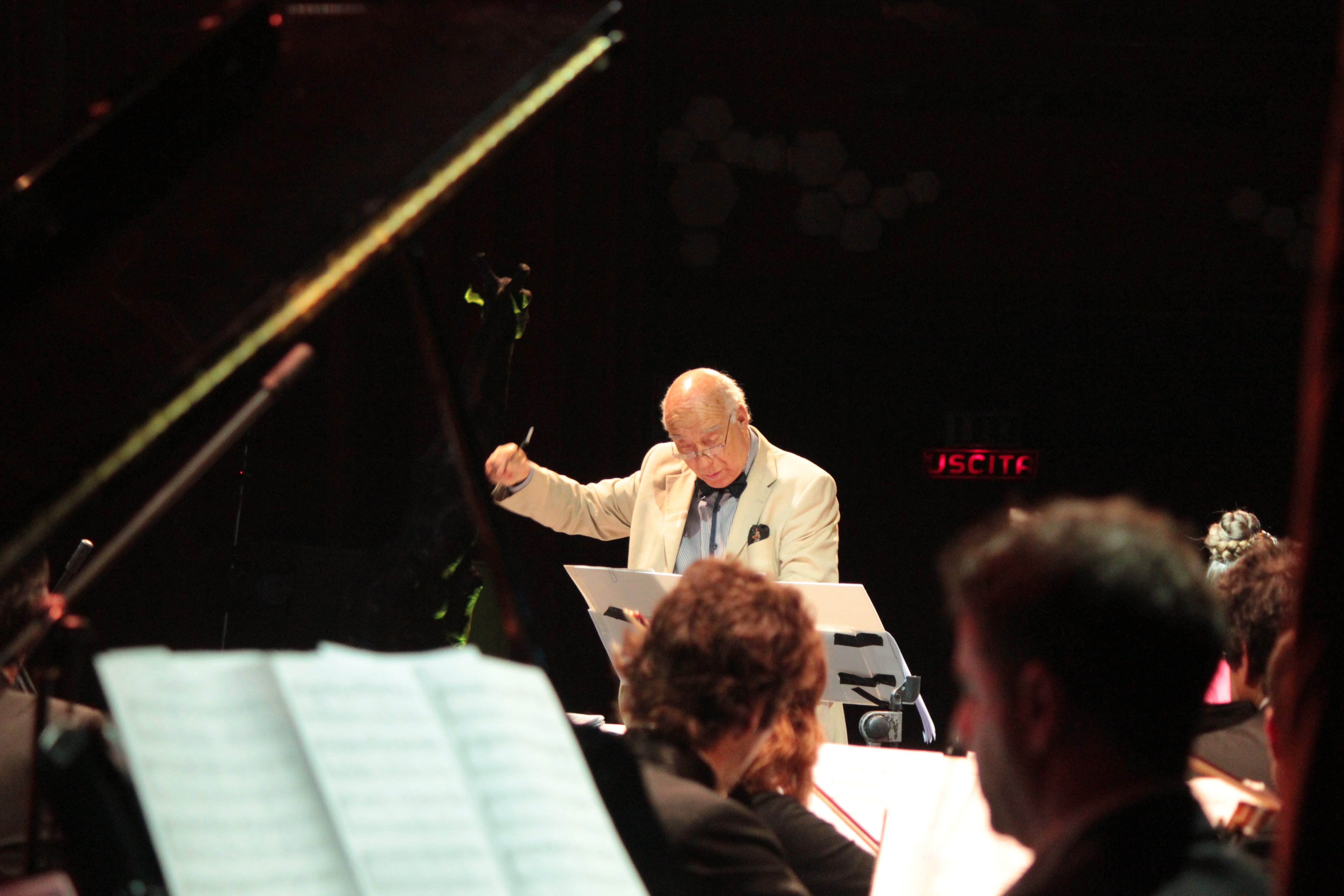
Within this broader national narrative lies a constellation of individual trajectories. One such story is that of Italian pianist, composer, arranger, and conductor Reddy Bobbio. This account draws directly from conversations and materials shared by Bobbio himself, offering a rare first-person perspective on Lebanon’s cultural life during its mid-century renaissance.
Arrival and Integration
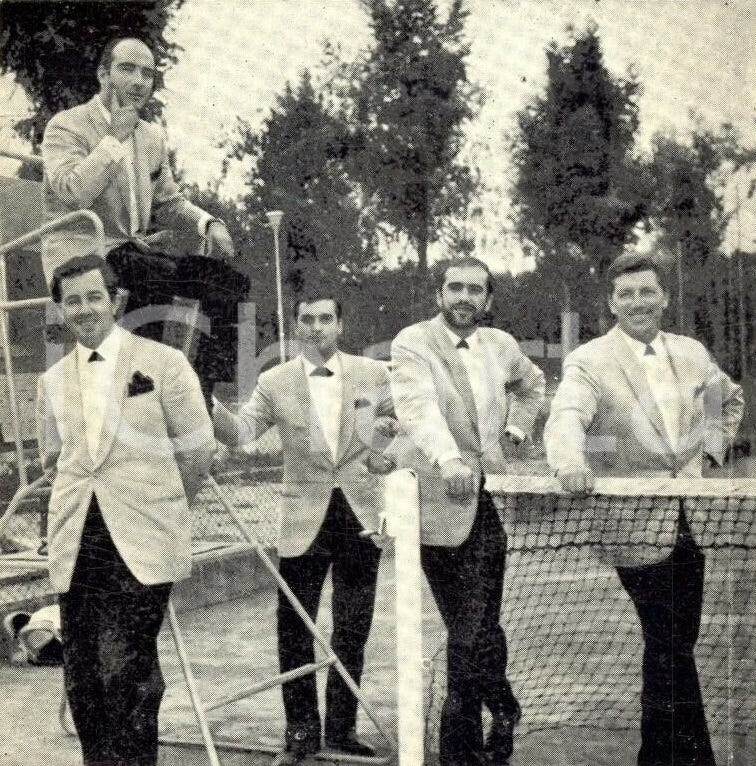
By the early 1960s, Bobbio had already established an international presence, performing with his band across France, Switzerland, Luxembourg, Beirut, and Tehran. His arrival in Lebanon coincided with a moment of heightened cultural productivity, particularly among Beirut’s Armenian-Lebanese community, which had developed a formidable ecosystem of musicians, composers, record labels, and performance venues.
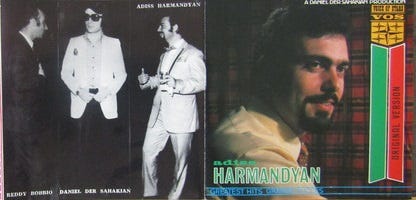
Bobbio became actively involved in this milieu. He arranged and orchestrated music for Adiss Harmandyan, including Live at the Recital Phoenicia Theatre, and released an album with his orchestra titled Holiday in Yerevan, which reinterpreted Armenian folk repertoire through contemporary orchestration. These collaborations positioned Bobbio within a diasporic network that viewed Beirut not as a periphery, but as a central node of Armenian cultural production.
During this period, Bobbio also released recordings under his own name, including Reddy Bobbio and His Multi-Sound Organ, reflecting both the technological experimentation and stylistic openness characteristic of Beirut’s recording scene at the time.
Return to Italy and Circulation Back to Lebanon
After several years in Lebanon, Bobbio returned to Italy, where he began a long and prolific collaboration with saxophonist Fausto Papetti. From the 1970s through the 1990s, Bobbio arranged numerous Papetti albums and co-composed works such as “Montenapo”, featured on 32ª Raccolta(1981).
This later phase of Bobbio’s career holds particular resonance in Lebanon. Prior to the Civil War, Papetti’s easy-listening records circulated widely across the country and were a staple of domestic record collections. Through these recordings, Bobbio’s arrangements — often anonymously — entered Lebanese everyday life, becoming part of a shared auditory landscape that survived long after the era itself had ended.
Alongside Papetti, Bobbio worked with leading figures of Italian popular music, including Gigi Proietti, Claudio Villa, and Fred Bongusto, further cementing his role as a behind-the-scenes architect of postwar European sound.
Later Work and Continuing Presence
Throughout the 1980s and 1990s, Bobbio released numerous solo and orchestral albums, including Only You, Rarefaction, To Remember, as well as a series of instrumental piano recordings that reflected a more introspective musical direction.
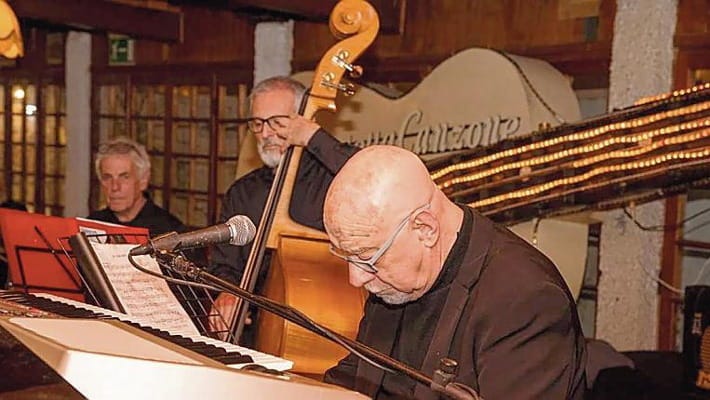
Today, in his eighth decade of music, Bobbio remains actively engaged. He serves as Vice-President of the Festival di Sanremo Symphony Orchestra and leads the Reddy Bobbio Swing Trio, alongside Mauro Parrinello on double bass and Fausto Biamonti on drums. The trio revisits the repertoire of George Gershwin, Cole Porter, Irving Berlin, and Duke Ellington, emphasizing what Bobbio describes as “the smiling side of jazz.”
This article was originally published on October 24, 2023, on Association Avec Expat and Lebanon News Online.