

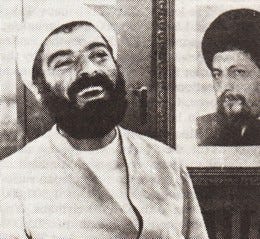
Ragheb Harb was a prominent Lebanese Shi’a cleric, political activist, and resistance figure who played a central role in mobilizing opposition to the Israeli occupation of southern Lebanon during the early 1980s. Known for his religious leadership and grassroots influence, Harb is regarded by many in southern Lebanon as a symbol of popular resistance. He is frequently cited as an early figure whose ideas and activities contributed to the emergence of organized Shi’a resistance movements in the country.
Early Life and Education
Ragheb Harb was born in 1952 in the southern village of Jibchit, a region historically associated with Shi’a scholarship and political activism. Raised in a religious household, he focused on Islamic studies from an early age, attending elementary public school in Jibchit and later continuing his middle school education in Nabatieh.
In 1969, at the age of 17, Harb relocated to Beirut to pursue advanced religious studies and engage with local clerical circles. Seeking further specialization, he traveled to the Islamic Hawza in Najaf, Iraq. There, he studied under prominent teachers, including Muhammad Baqir al-Sadr, whose intellectual framework left a lasting impact on his religious and political outlook. However, his studies in Najaf were cut short by the political suppression of clerics by the Iraqi regime at the time, forcing his return to Lebanon in 1974.
Social and Religious Role
Upon his return to Jibchit, Harb began teaching religion and leading prayers, building a local following through his communicative approach. He expanded his activities beyond his hometown into surrounding villages and established the Sayede Zeinab Islamic School under his patronage. Later, following a move to the town of Al Sharkiah, he actively participated in building a two-story elementary school for the village children.
Beyond his clerical role, Harb established social and charitable projects to counter economic hardship and state neglect in the south. His most notable initiative was “The Treasury of the Muslims,” a local financial program designed to mitigate rural poverty by providing interest-free micro-loans ranging from 100 to 500 Lebanese pounds to families in financial distress.
By 1978, Harb publicly aligned with the aims of the Islamic Revolution in Iran. He also played a foundational role in launching the Martyrs Foundation in Lebanon to support communities affected by civil conflict and external aggression. Through these community networks and religious programs, Harb actively worked to raise political consciousness and counter competing secular or nationalist ideologies among the southern Shi’a population.
Political Involvement and Resistance
Harb became closely associated with the Amal Movement, one of the first major Shi’a political organizations in Lebanon. When Israel invaded Lebanon in June 1982, Harb was attending an Islamic conference in Iran. He promptly returned to the south to organize non-cooperation and civil resistance initiatives against the occupation, utilizing Friday prayers at local mosques as a primary platform for public mobilization.
Harb explicitly rejected any formal communication or compliance with Israeli military forces, emphasizing non-recognition via his widely known phrase: “
A position is a weapon and a handshake is an acknowledgment.”
In line with this stance, local accounts state that he publicly refused to acknowledge or shake hands with Israeli officers during patrols in his village.
This persistent civil defiance drew significant scrutiny from occupation forces, leading to a series of escalating security measures against him. In December 1982, Israeli troops raided his residence but did not locate him. He was eventually detained after midnight on March 8, 1983, by an Israeli military unit. Following his arrest, Harb was initially held at the intelligence headquarters in Zebdeen, transferred to the Ansar concentration camp, and subsequently moved to Tyre.
His arrest triggered widespread civilian protests, commercial strikes, and a continuous sit-in at the local Hussayniyah hall. Due to the escalating public pressure and local instability, Israeli authorities released him after seventeen days of detention. Following his release, localized armed resistance against the occupation intensified across the region.
Assassination and Legacy
On February 16, 1984, Ragheb Harb was assassinated on a Friday night in Jibchit. The operation was widely attributed to Israeli intelligence targeting influential operational and ideological figures in the southern resistance network.
Harb’s death had a major impact on Lebanese society, particularly within southern communities where he is commemorated as a foundational figure and often termed the “Cleric of the Martyrs.” Interpretations of Harb’s final legacy continue to vary across Lebanon’s multi-confessional political landscape, mirroring ongoing national debates concerning the role of independent armed resistance, sectarian identity, and modern state authority.
His methodology, however — uniting religious authority, institutional social work, and civil non-cooperation — significantly shaped the ideological and operational framework of subsequent Shi’a resistance movements in Lebanon.