

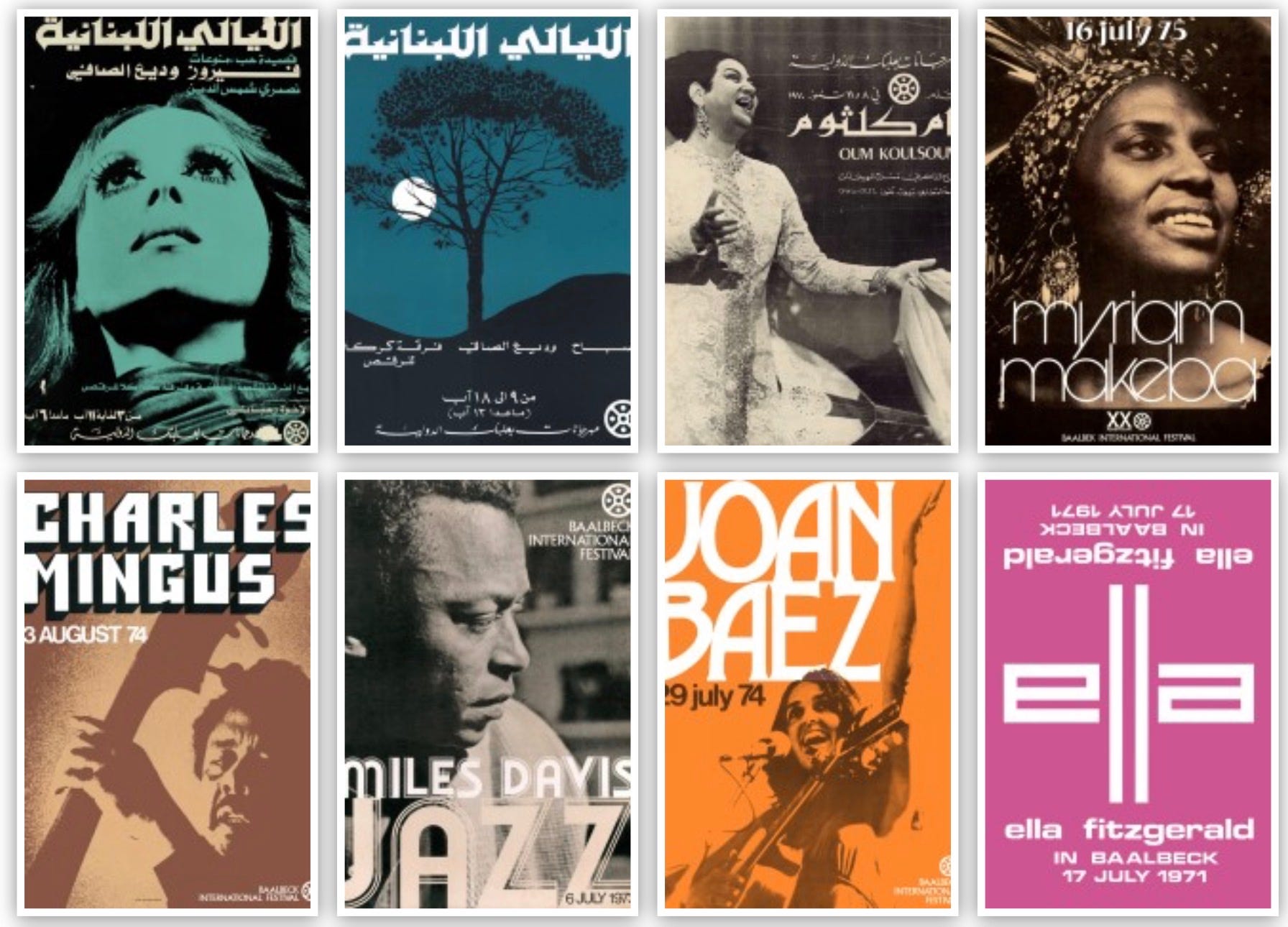
Between 1968 and 1975, the Baalbeck International Festival emerged as a powerful platform for cultural exchange, bringing together leading international and local artists in an extraordinary setting. The festival’s posters from this period, drawn from its archives, serve not only as visual records of these performances but also as bold cultural statements reflecting ambition, modernity, and diversity during the festival’s golden era just before the outbreak of the Lebanese Civil War.
More than promotional tools, these posters are artworks in their own right. Through striking imagery, bold typography, and symbolic composition, they capture the essence of a wide range of performances — from groundbreaking jazz to classical music and renowned Arab singers — embodying the creative spirit and world-class artistic vision that defined the festival and its cultural landscape.
Celebrating the Artists and Performances
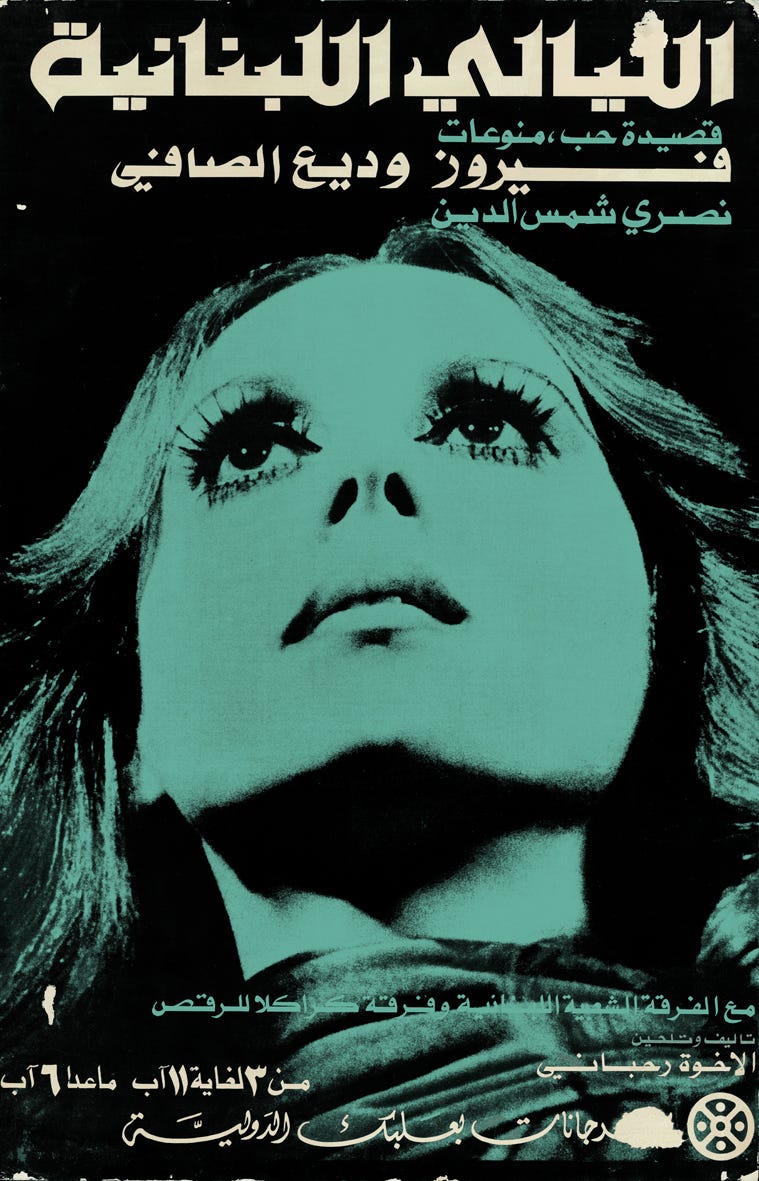
Fairuz at Baalbeck (1973)
This poster presents an upward-looking portrait of Fairuz rendered in striking monochrome tones, conveying a sense of transcendence and poetic gravity. The dramatic cropping and strong contrast elevate her into a symbol of modern Arab cultural expression, while the bold Arabic typography anchors the image firmly in its regional context.
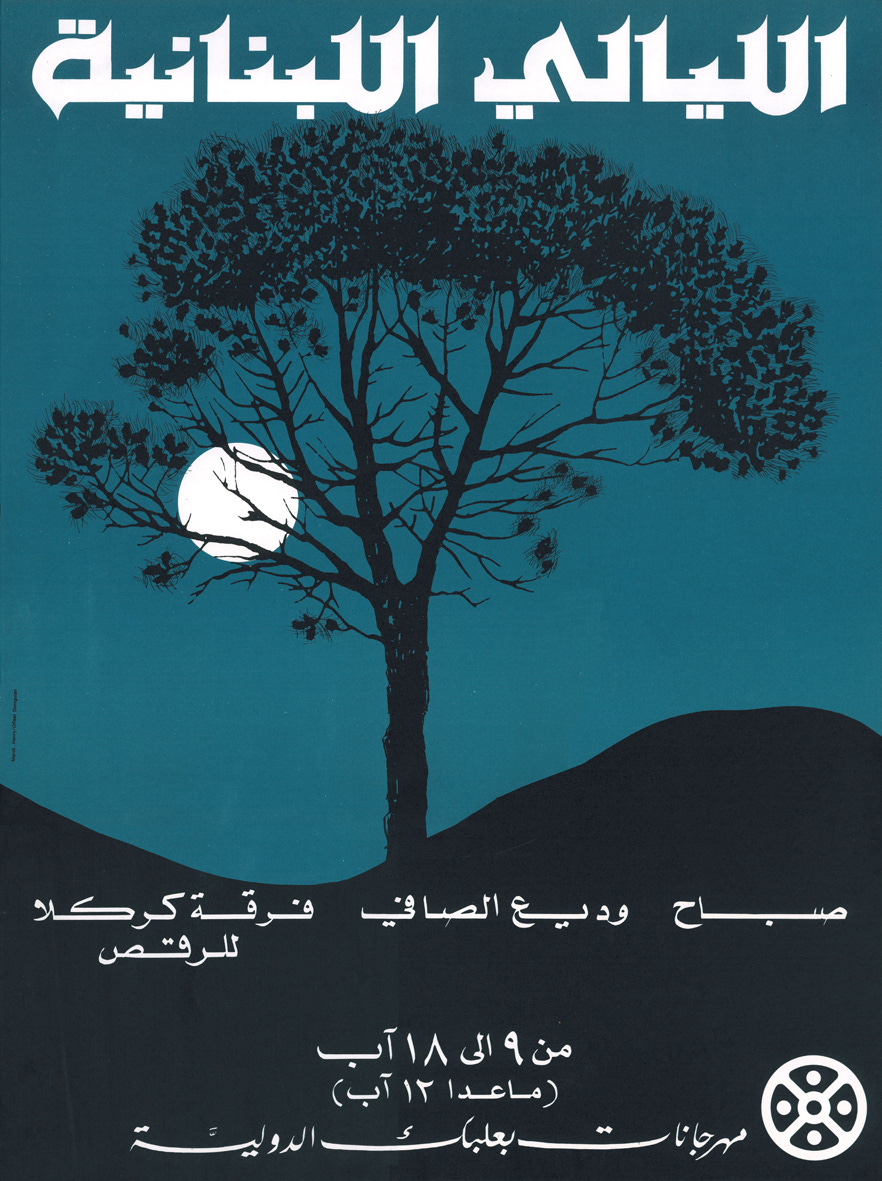
Wadih El Safi at Baalbeck (1960s-1970s)
Dominated by a solitary pine tree silhouetted against a luminous night sky, this poster employs symbolism deeply rooted in Lebanese identity. The restrained color palette and balanced composition evoke serenity and permanence, aligning nature, music, and nationhood into a single visual statement.
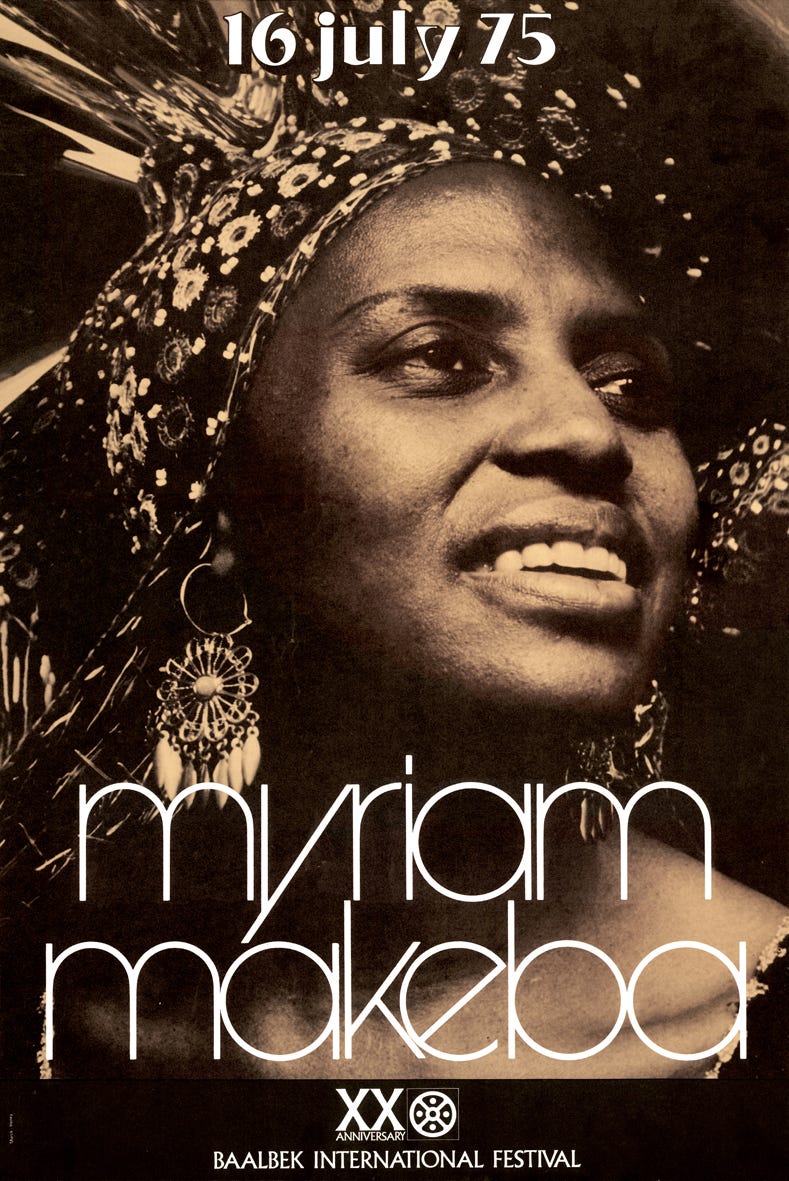
Myriam Makeba (1975)
A smiling portrait of Myriam Makeba, the South African singer and activist, appears in this poster. Makeba’s presence at Baalbeck added a layer of political and cultural depth to the festival. Her performance was not only a celebration of African music but also a statement of solidarity with the global struggle for justice.
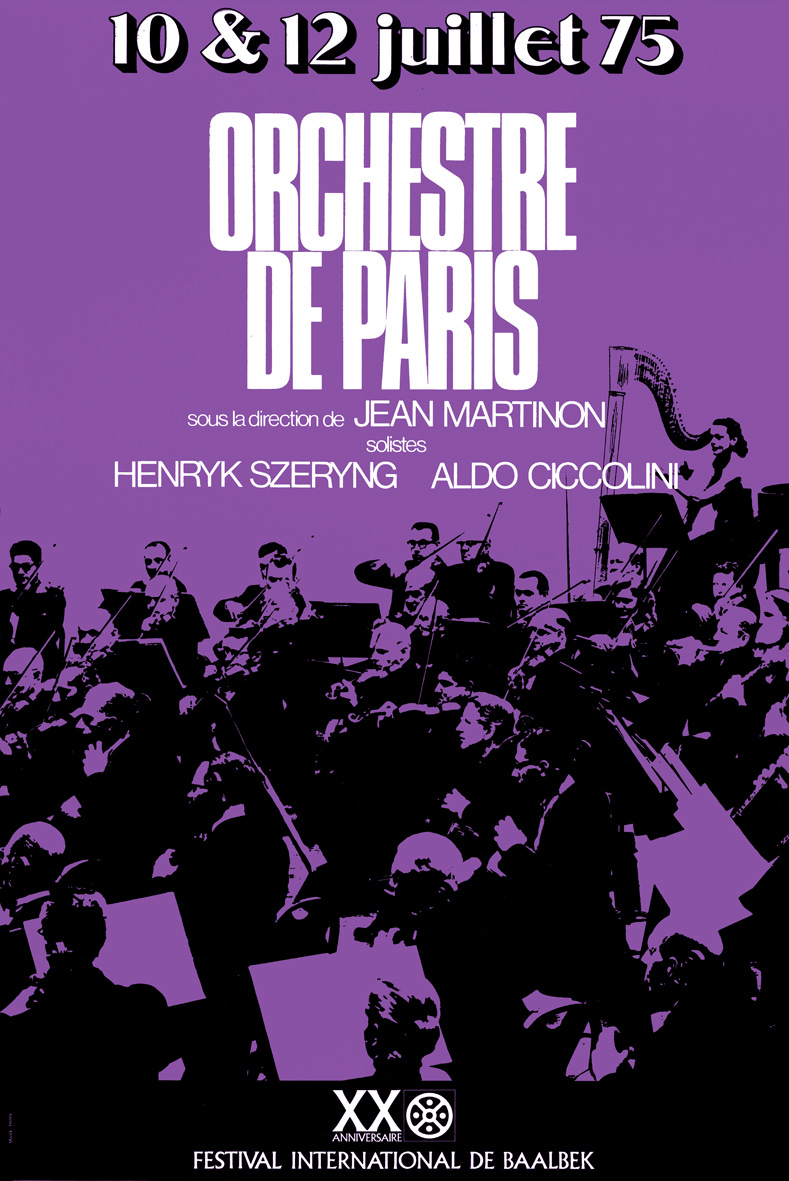
Orchestre de Paris (1975)
This design for the Orchestre de Paris performance, led by Jean Martinon, exemplifies the festival’s classical offerings. The sleek, modern design with its purple background conveys both the prestige and dynamism of the orchestra.
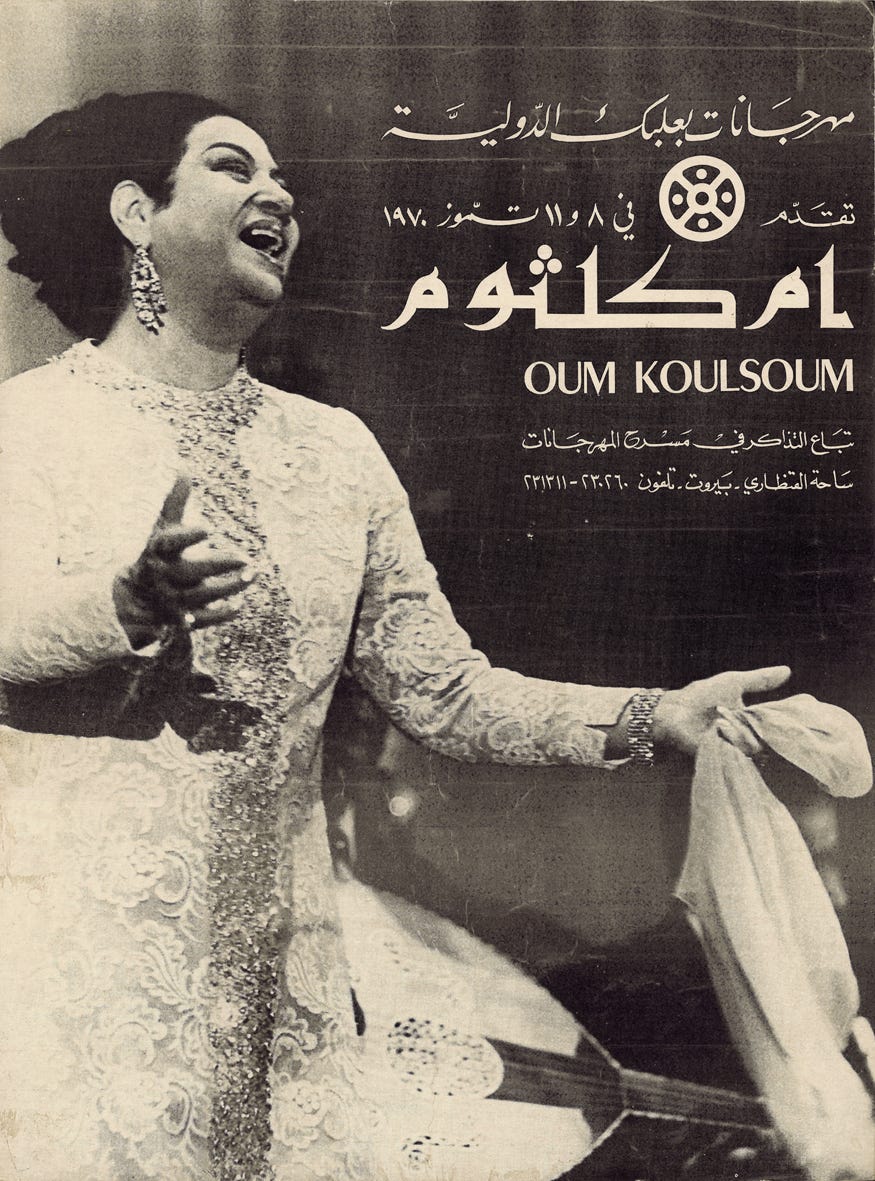
Oum Kalthoum (1973)
No collection of Baalbeck Festival posters would be complete without Oum Kalthoum, the legendary Egyptian singer whose performance in 1973 became an iconic moment in the festival’s history. The poster features a striking black-and-white portrait of Kalthoum, emphasizing her timeless presence and towering stature in Arab music.
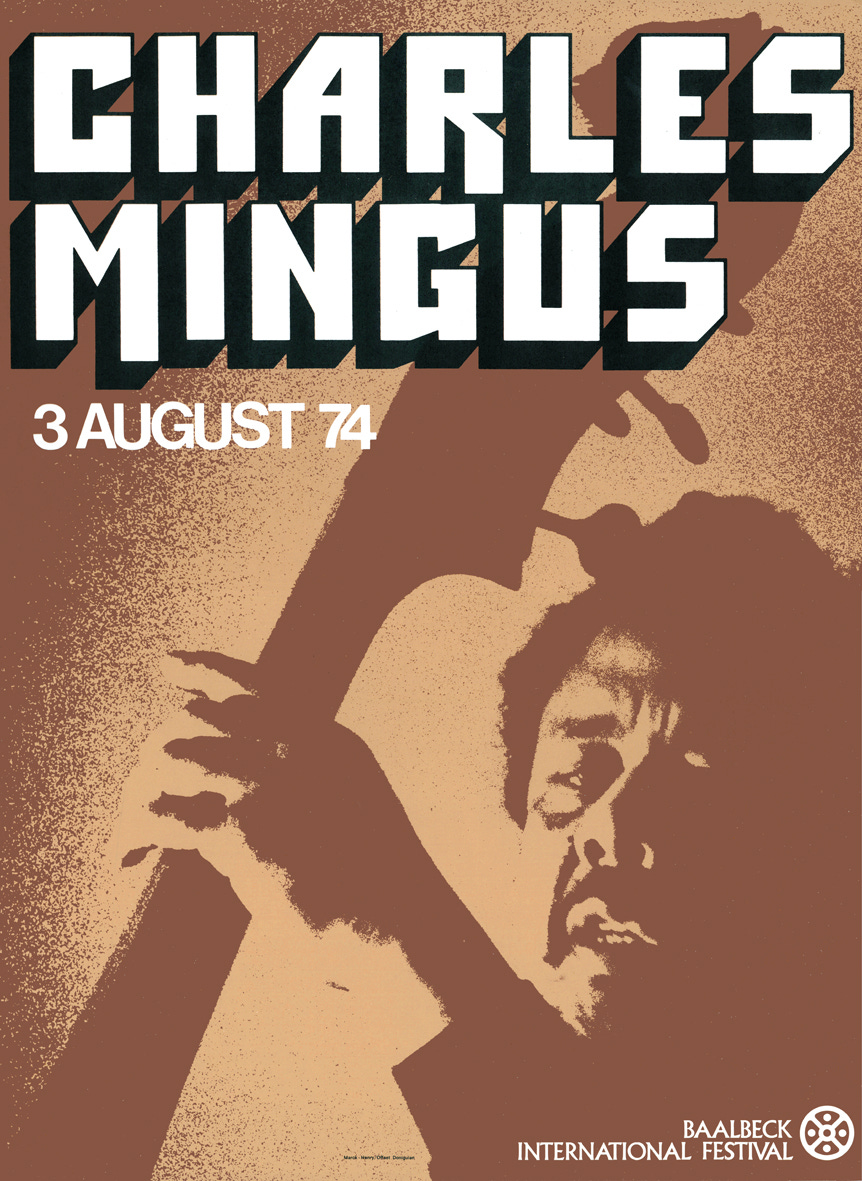
Charles Mingus (1974)
This poster for jazz legend Charles Mingus is a graphic statement in itself. The stark, high-contrast design emphasizes Mingus’s larger-than-life presence and the explosive nature of his music. The angular typography and bold, dramatic portrait of Mingus capture the complex, sometimes confrontational nature of his jazz compositions.
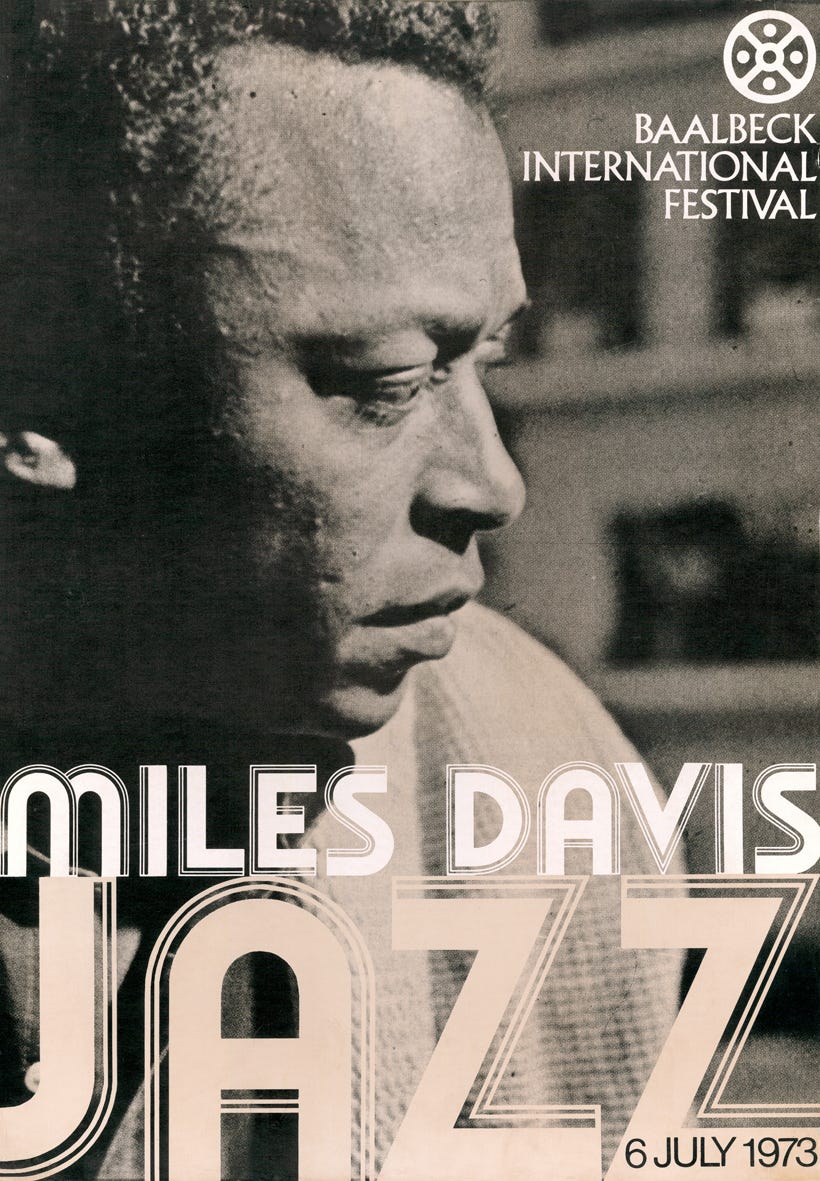
Miles Davis (1971)
Miles Davis, another central figure in jazz, is featured in a compelling black-and-white photograph on this poster. The image of Davis, shrouded in mystery, captures the essence of his genre-defying fusion music. The poster’s minimalist design reflects Davis’s own groundbreaking approach to jazz.
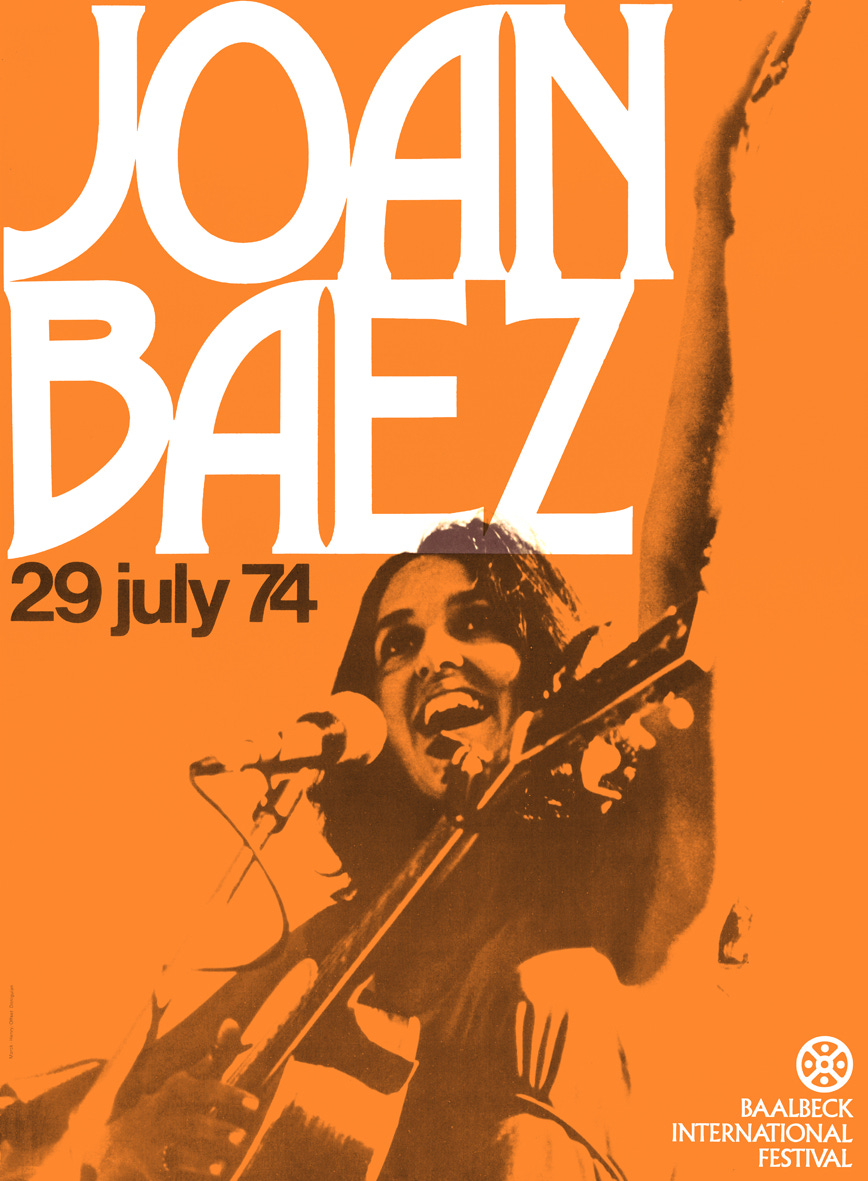
Joan Baez (1974)
The folk notable Joan Baez was another major figure at the Baalbeck Festival, and her poster evokes the vibrancy and political engagement of her music. The choice of bright orange — a color associated with energy and activism — reflects Baez’s presence and her role in the political movements of the time.
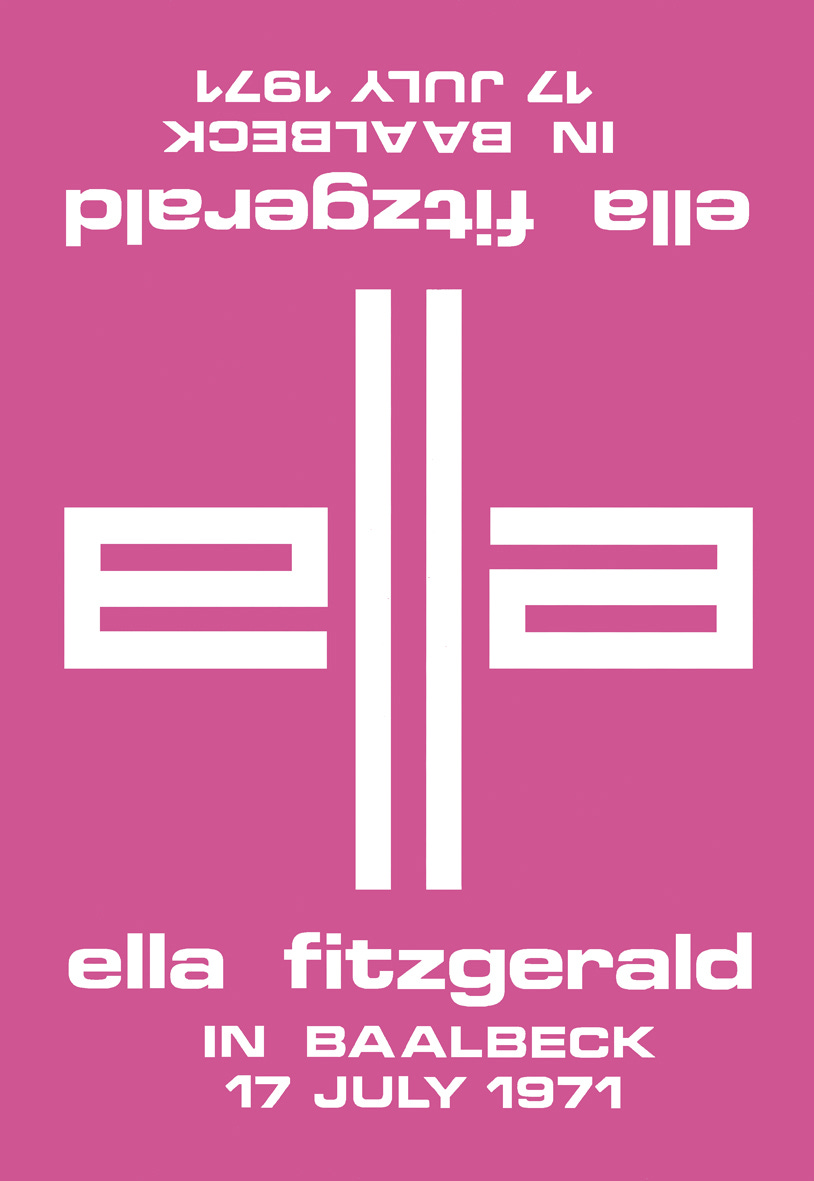
Ella Fitzgerald (1971)
Finally, the poster for Ella Fitzgerald’s performance in 1971 captures the elegance of the “First Lady of Song.” The modernist design with contrasting pink and white colors, along with sleek typography, underscores Fitzgerald’s grace and timeless appeal. Her performance at Baalbeck represented the epitome of jazz vocal artistry.
Cultural Dialogues and Lasting Impressions
Encompassing Arabic music, jazz, classical music, and more, Baalbeck affirmed what it had already become: Lebanon’s most audacious cultural stage, where international currents met local traditions on equal footing. International figures appeared alongside cultural figures such as Fairuz and Wadih El Safi, as well as institutions like the Caracalla Dance Theatre, affirming the festival’s function as both a cultural crossroads and a generator of modern Lebanese artistic identity.
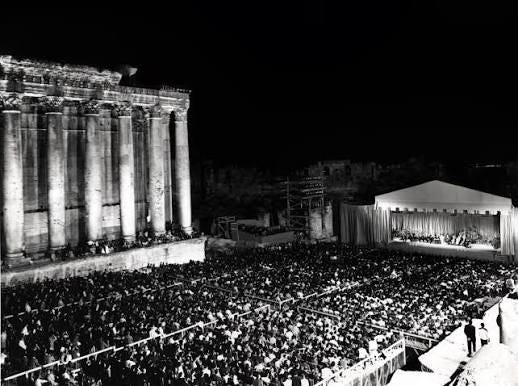
The posters’ visual language reinforces this ambition. Conceived for circulation in streets, cafés, and public spaces, they operated as cultural manifestos as much as promotional tools. Bold color palettes, modernist typography, and graphic experimentation situate Baalbeck at the forefront of regional visual culture during a moment of profound artistic confidence. Though the Lebanese Civil War would fracture this era, the posters remain eloquent witnesses to Baalbeck’s enduring legacy — as a site of imagination, openness, and cultural leadership that continues to define Lebanon’s artistic narrative today.