

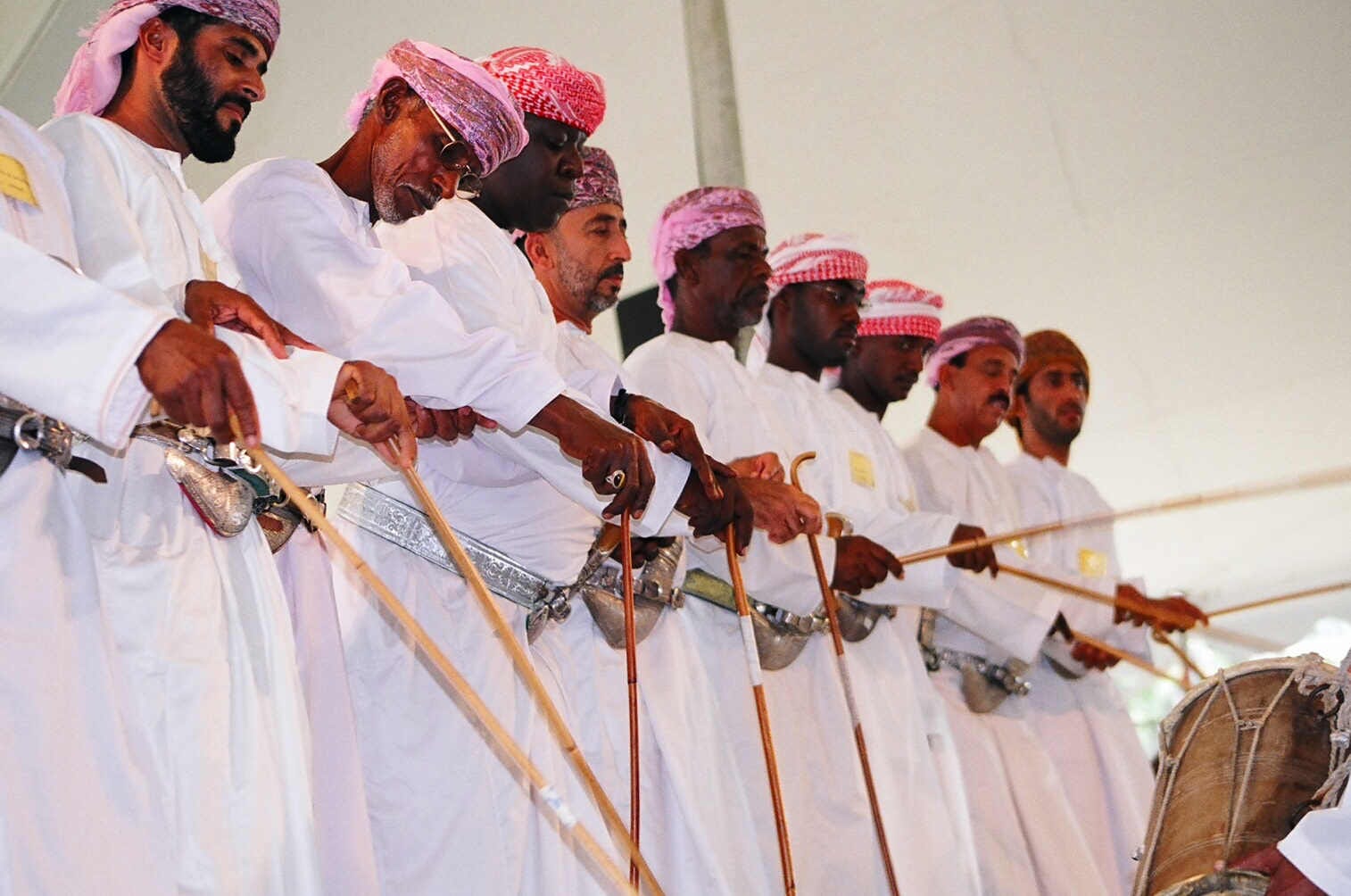
Omani traditional arts constitute a living expression of the country’s social life, values, and collective memory. Through poetry, movement, music, and dress, these practices articulate identity, pride, and belonging. Central to many of these performances is traditional attire, which functions as both ornament and symbol, reinforcing the ceremonial and cultural weight of each occasion.
Al Razha
Al Razha is one of the oldest traditional arts in Oman and is practised across much of the Sultanate. It combines swordplay with poetic exchange among skilled poets. Performers appear in full traditional dress, wearing the khanjar and carrying swords and shields, emphasising the art’s martial character and historical depth.
Al Azi
Practised in all governorates, Al Azi is an art of praise, pride, and poetic recitation. Led by a principal poet — also known as the Al Azi — the performance celebrates faith, ancestry, moral values, and leadership. Traditional dress is essential, with the khanjar worn prominently alongside the sword and shield.
Al Tariq
Meaning “the melodious tune,” Al Tariq is a vocal Bedouin art performed without musical instruments. Sung individually and then repeated by others, it is traditionally associated with camel travel. The melody remains constant, while the poetry reflects memory, tribal pride, and admiration for endurance. Performers wear the dishdasha and khanjar as part of the formal presentation.
Al Wanah
Al Wanah is a Bedouin group performance traditionally sung near tents or around fires. Often described as the art of memory, it is marked by introspective gestures and emotional restraint. Verses are sung by a lead performer and echoed by the group, conveying themes of longing, travel, and remembrance.
Al Taghrooda
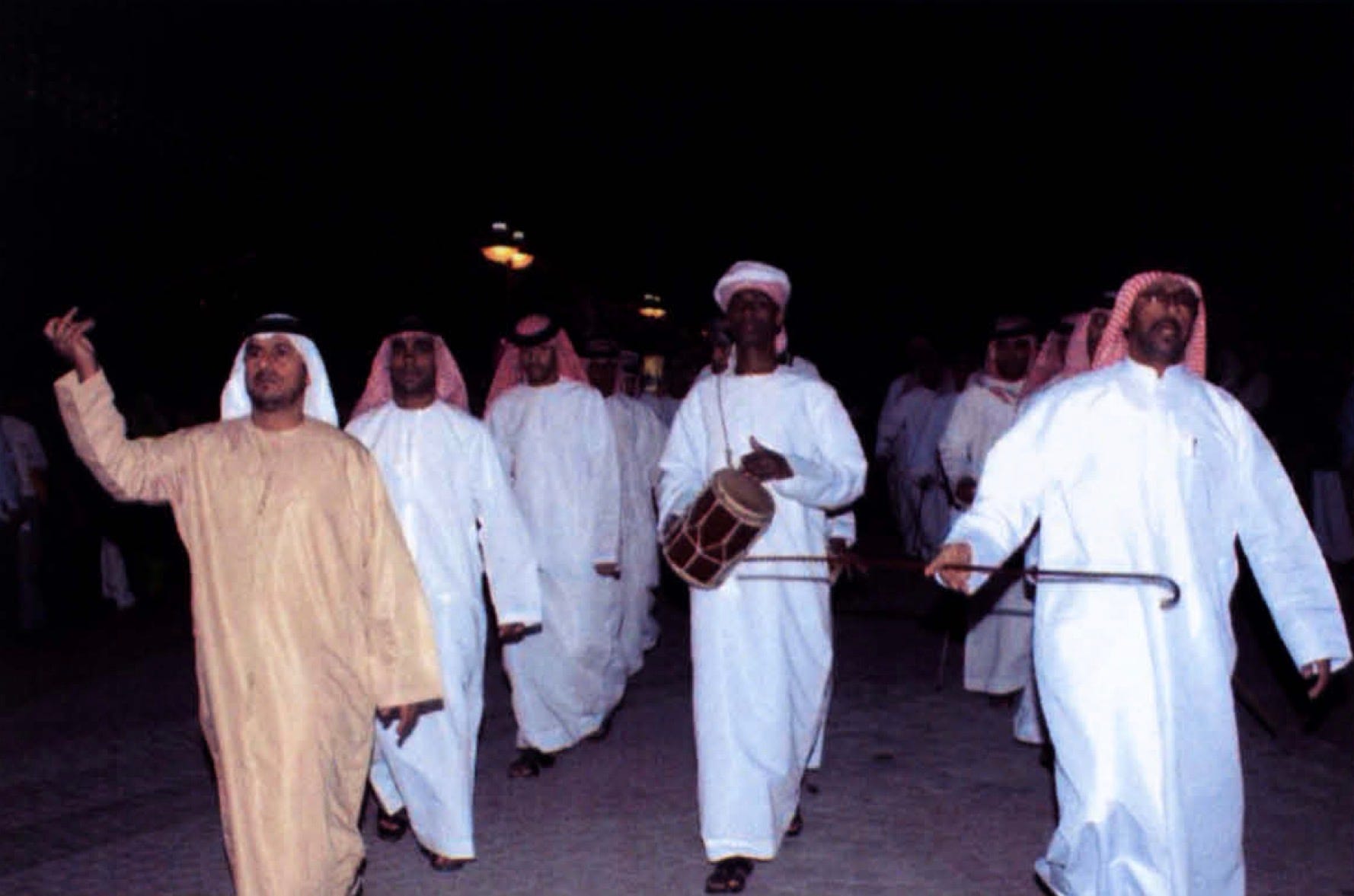
Al Taghrooda is a Bedouin art associated with horses or camels. In horse Tagrood, energetic chants and poetry encourage riders and celebrate bravery, chivalry, and prized animals. Performers often wear the khanjar to intensify the ceremonial and spirited atmosphere.
Al Habot (Al Medan)
Al Habot is widely performed at weddings, social gatherings, and official celebrations, particularly in southern regions. It is performed without musical instruments and relies on poetic exchange. Performers wear formal attire, carrying swords and sticks, with the khanjar serving as a key visual and symbolic element.
Al Rabobah
Al Rabobah is a musical ensemble performance involving both men and women. It features dancers, a lead singer, chorus vocals, and percussion, alongside the rababah, a bowed string instrument with deep resonant tones. Traditional dress and jewellery play an essential role, with male performers wearing the khanjar during the dance.
Al Madar
Al Madar is traditionally performed in Dhofar and appears in two main forms. In one, large groups process together, led by men wearing khanjars and carrying swords and sticks, followed by women adorned with jewellery and accompanied by percussion. In the other, men and women stand in opposing lines framed by musicians.
Al Bara’a
Al Bara’a is practised in Dhofar and parts of eastern Oman. It features one or two dancers at a time, accompanied by repeated vocal lines and percussion. Unlike many other southern arts, Al Bara’a emphasises movement rather than poetry, with choreography defining the structure of the performance.
Al Razfah
Al Razfah is performed by Bedouin men across Oman. Two facing lines exchange poetic verses in rhythmic repetition. Musical instruments are generally absent, except in Musandam, where leather drums are used. The performance highlights unity, discipline, and collective voice.
Al Hambal (Al Maserah)
Al Hambal is performed on horseback or camels during social and national occasions. Riders sing in unison without instrumental accompaniment, focusing on poetry that praises horses, courage, and lineage. The khanjar, worn alongside bamboo sticks, reinforces the ceremonial presence of the riders.
Taken together, Omani traditional arts reveal a culture in which poetry, movement, and dress are inseparable.