

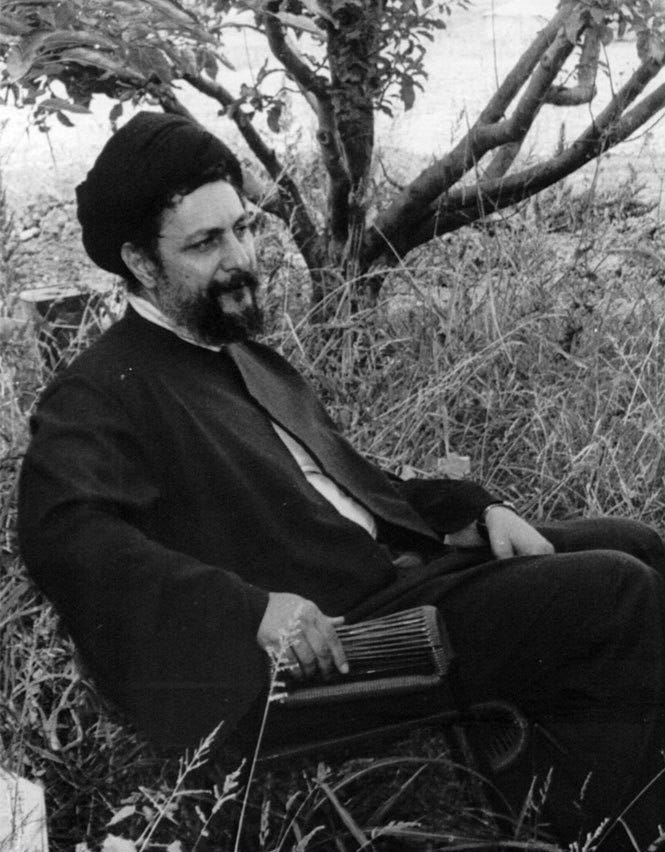
“It is the merchants of politics who fan the flames of sectarianism to preserve their existence, under the pretext of preserving religion.”
There are figures in Lebanese history who belong to a sect, a party, or a fleeting political moment. And then there is Imam Moussa al-Sadr — a man who seemed to belong to the idea of Lebanon itself: wounded, plural, aspiring, and unfinished.
Nearly half a century after his disappearance in Libya in 1978, al-Sadr remains less a memory than a presence. His absence is political; his voice, contemporary. In a country accustomed to the recycling of leaders and the erosion of institutions, he endures as something rarer: a moral reference point and institution builder.
Cleric Beyond the Pulpit
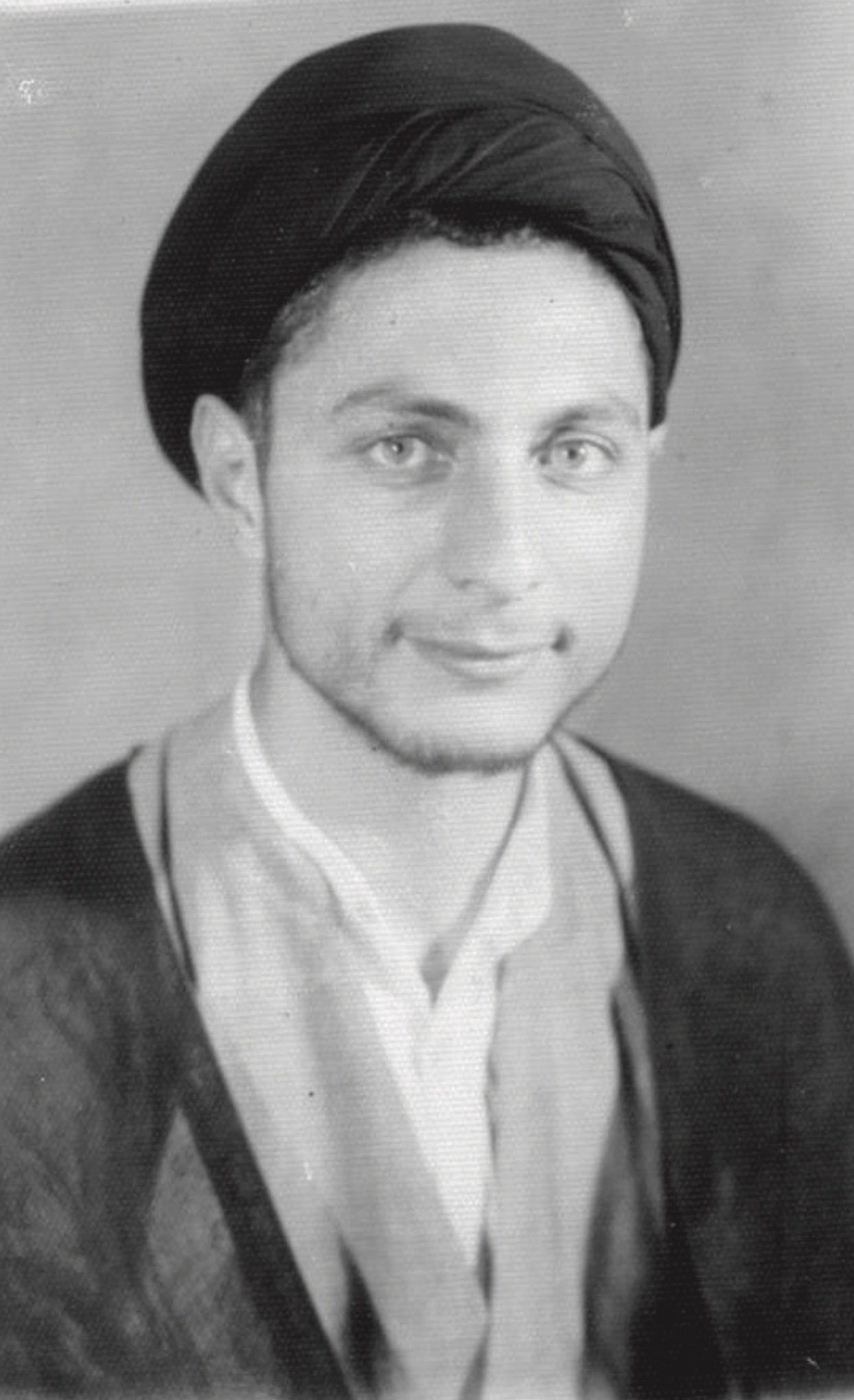
Born in 1928 in Qom to a distinguished clerical family of Lebanese origin, al-Sadr arrived in Tyre in 1959 at a time when Lebanon’s Shi‘a community lived on the margins of the state — economically deprived, politically underrepresented, and socially neglected. The South and the Beqaa were not only peripheral geographically; they were peripheral in the national imagination.
What he encountered was not just poverty, but structural abandonment. Roads were unpaved, schools underfunded, hospitals scarce. The promise of the Lebanese state — so vibrant in Beirut and its suburbs — was dimmed at the country’s edges. Al-Sadr understood that sermons alone could not address such realities.
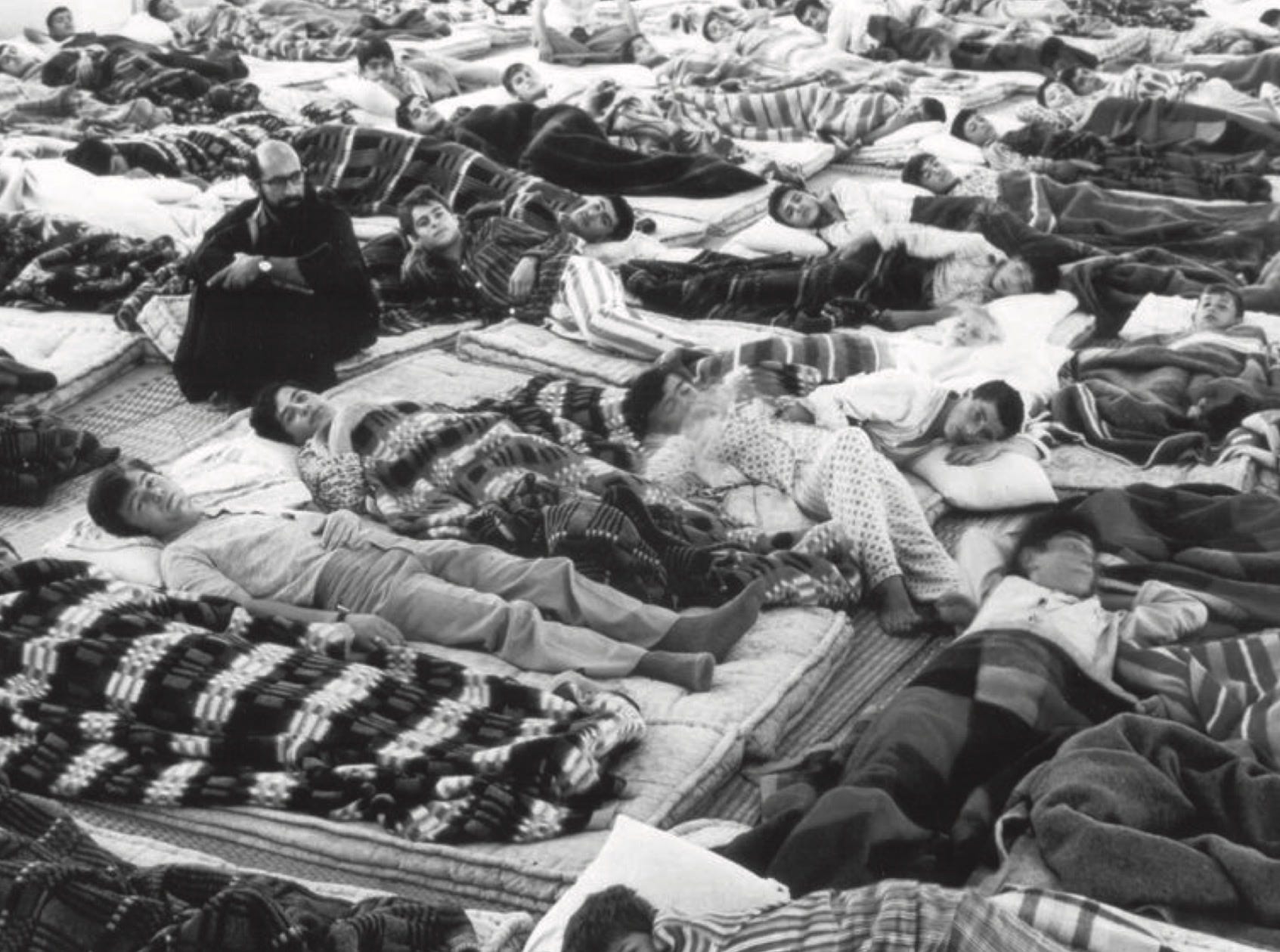
He responded not only as a religious scholar, but as an institution-builder. He founded schools, vocational centers, charitable associations, and social networks that sought to restore both material stability and collective dignity.
In 1969, he became the first head of the Supreme Islamic Shi‘ite Council, formalizing Shi‘a representation within Lebanon’s confessional framework. This was not a withdrawal into sectarianism; it was an insistence that all citizens required recognition.
Yet even as he consolidated communal leadership, he resisted the language of grievance as destiny. He insisted that dignity for one community could not come at the expense of another. His was a language of empowerment without isolation — a rare dialect in Lebanon’s political grammar.
Movement of the Deprived
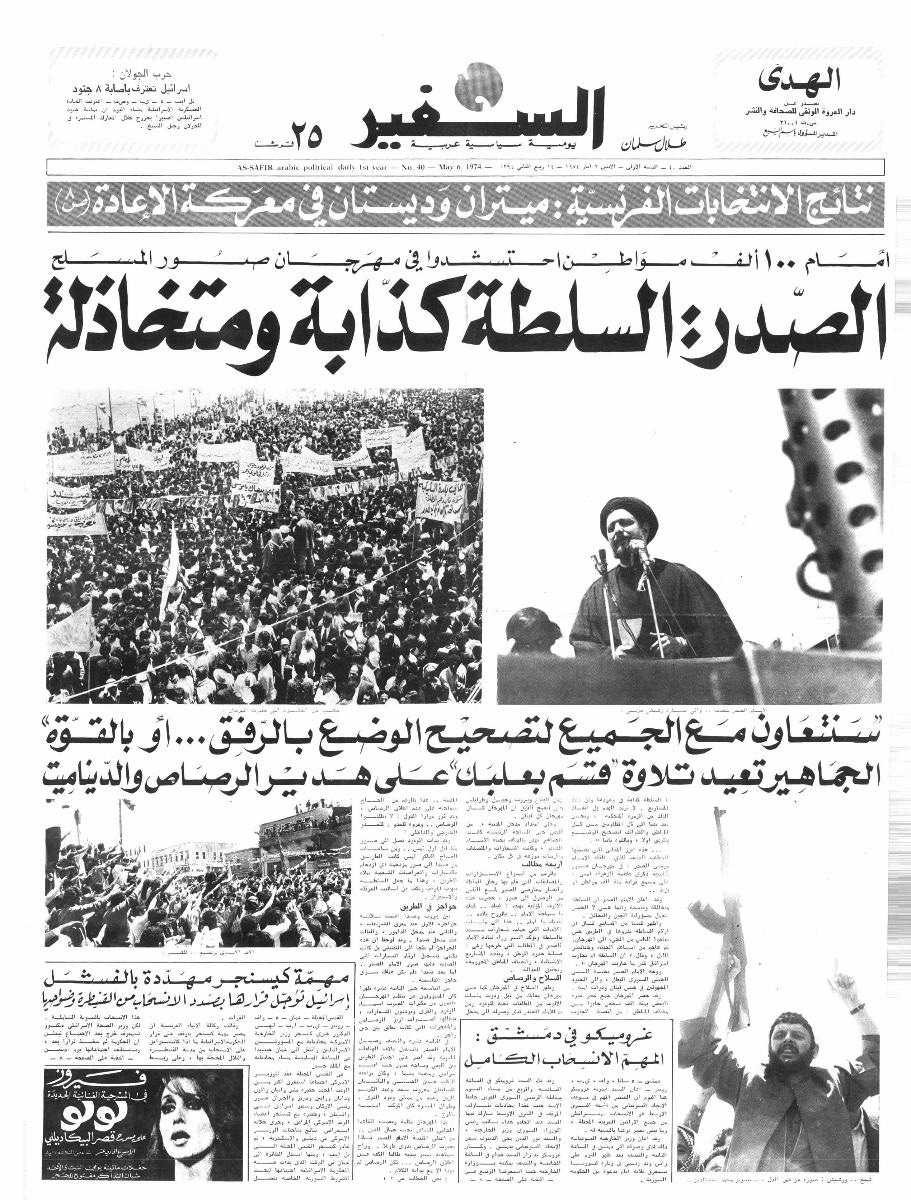
In 1974, al-Sadr launched the Movement of the Deprived (Harakat al-Mahrumin), a socio-political initiative aimed at confronting structural inequality across sectarian lines. The name itself was deliberate: it framed injustice as a national, not exclusively Shi‘a, condition. From this movement emerged the Amal Movement, which would later become a central actor in Lebanese politics. But at its inception, Amal was conceived less as a militia than as an instrument of communal self-defense and social organization.
“I shall fight until there remains not one of you oppressed, whether Shia or not, and until every inch of land is recognized and liberated.”
Al-Sadr at a rally in Baalbek, announcing the establishment of Movement of the Deprived (Harakat al-Mahrumin), Al-Nahar, 18 March 1974.
Al-Sadr’s rhetoric during this period was both urgent and measured. He condemned sectarianism even as he maneuvered within its constraints. He defended Palestinian resistance to Israeli occupation while warning against Lebanon becoming a substitute battlefield for regional conflicts. He called for reform of the state — equitable development, stronger institutions, national unity — not its disintegration.
In one of his most cited declarations, he affirmed: “Lebanon is a final homeland for all its sons.” At a time when ideological currents — Arab nationalism, Palestinian armed struggle, rising Islamism — were pulling the country in competing directions, al-Sadr articulated a vision that was simultaneously rooted and reconciliatory. Lebanon, for him, was not a temporary arrangement nor an arena; it was a covenant.
Theology of Coexistence
What distinguished al-Sadr most was not only his political activism, but his theological imagination. He cultivated close relations with Christian leaders, and frequently appeared in churches as well as mosques. In a gesture that still resonates symbolically, he delivered addresses during Christian commemorations, framing Islam and Christianity as co-guardians of Lebanon’s pluralism.
“Every bullet that is shot at a Christian village is as if it is shot at my home, my heart, and my children.”
He spoke of coexistence not as tolerance — a word that implies hierarchy — but as partnership. Sect, in his vocabulary, was not a fortress to defend against others, but a living tradition capable of contributing to a shared civic horizon.
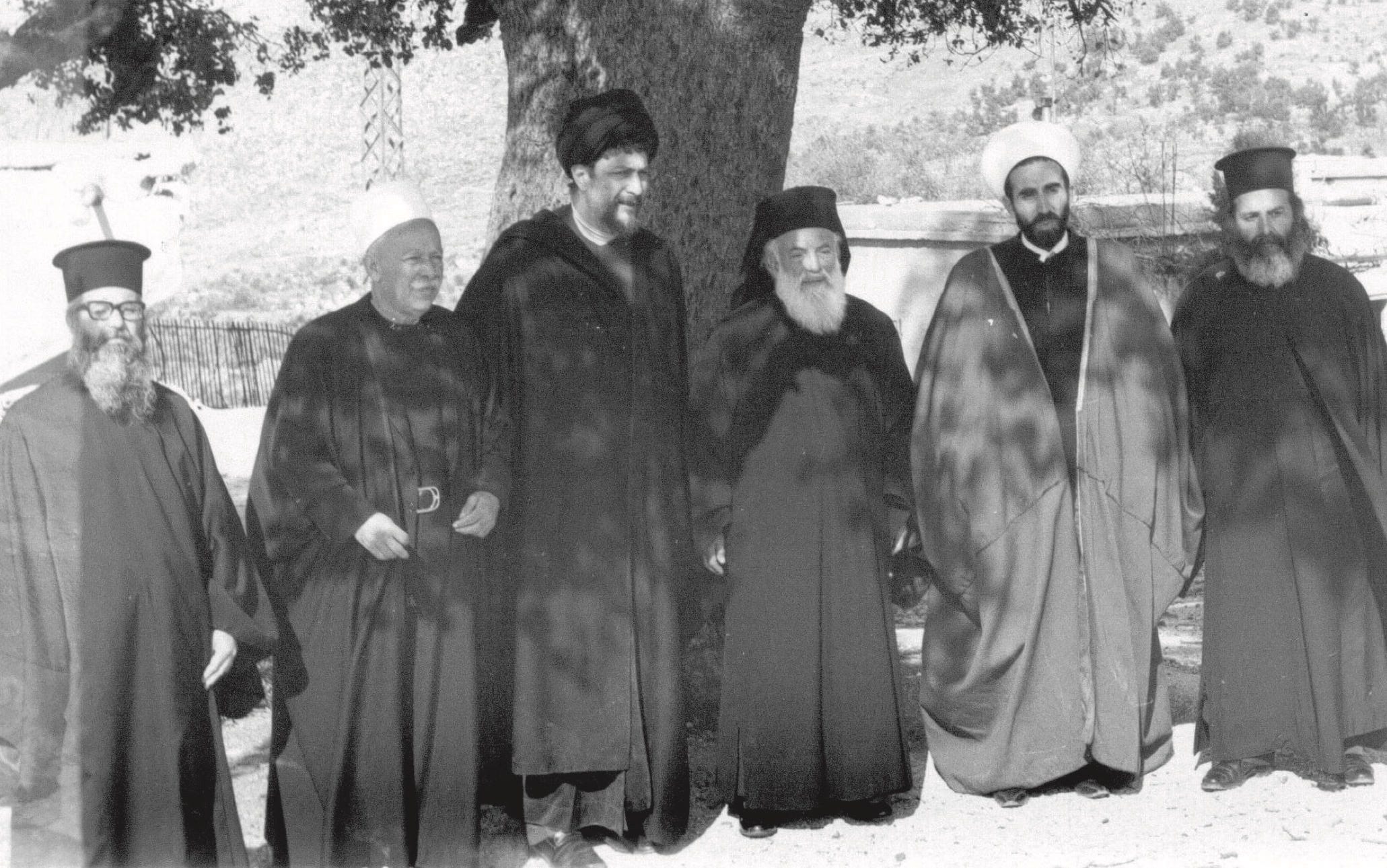
At a time when communal anxieties were intensifying, al-Sadr’s discourse challenged both Muslim-Christian suspicions and intra-Muslim tensions. He did not deny difference; but he sought to discipline it within a national ethic. His sermons often invoked justice as a divine imperative that transcended faction. Religion, in his hands, became an argument against fragmentation. In retrospect, his language appears almost revelatory; Lebanon would soon descend into civil war.
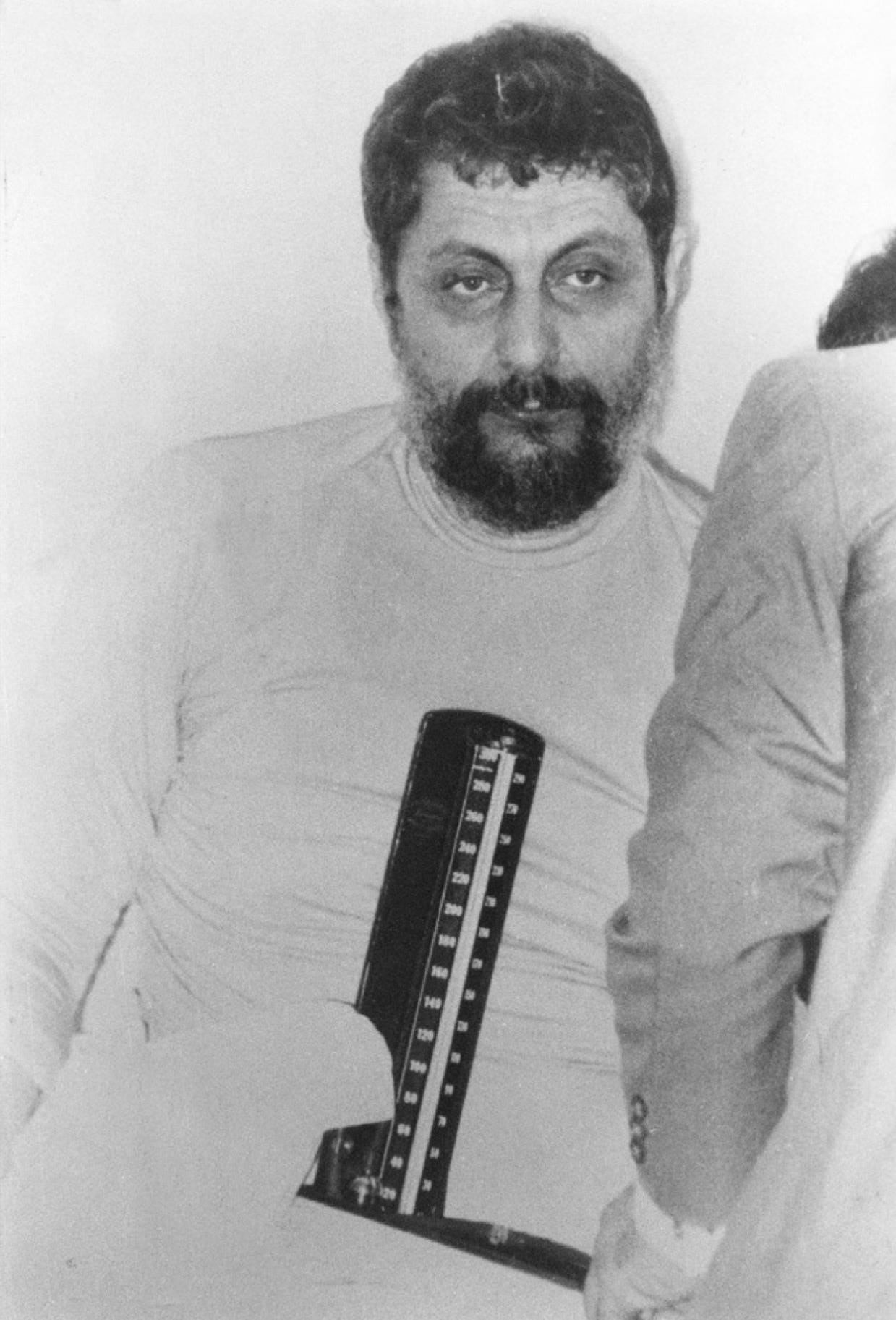
Militias would proliferate. Foreign interventions would multiply. The grammar of coexistence would be replaced by the logic of survival. And then, in August 1978, during an official visit to Libya, he vanished.
The Disappearance That Became a Symbol
Al-Sadr’s disappearance under the regime of Muammar Gaddafi transformed him into something more than a political leader. He became a symbol — of injustice unresolved, of truth deferred, of a leadership interrupted at the threshold of catastrophe.
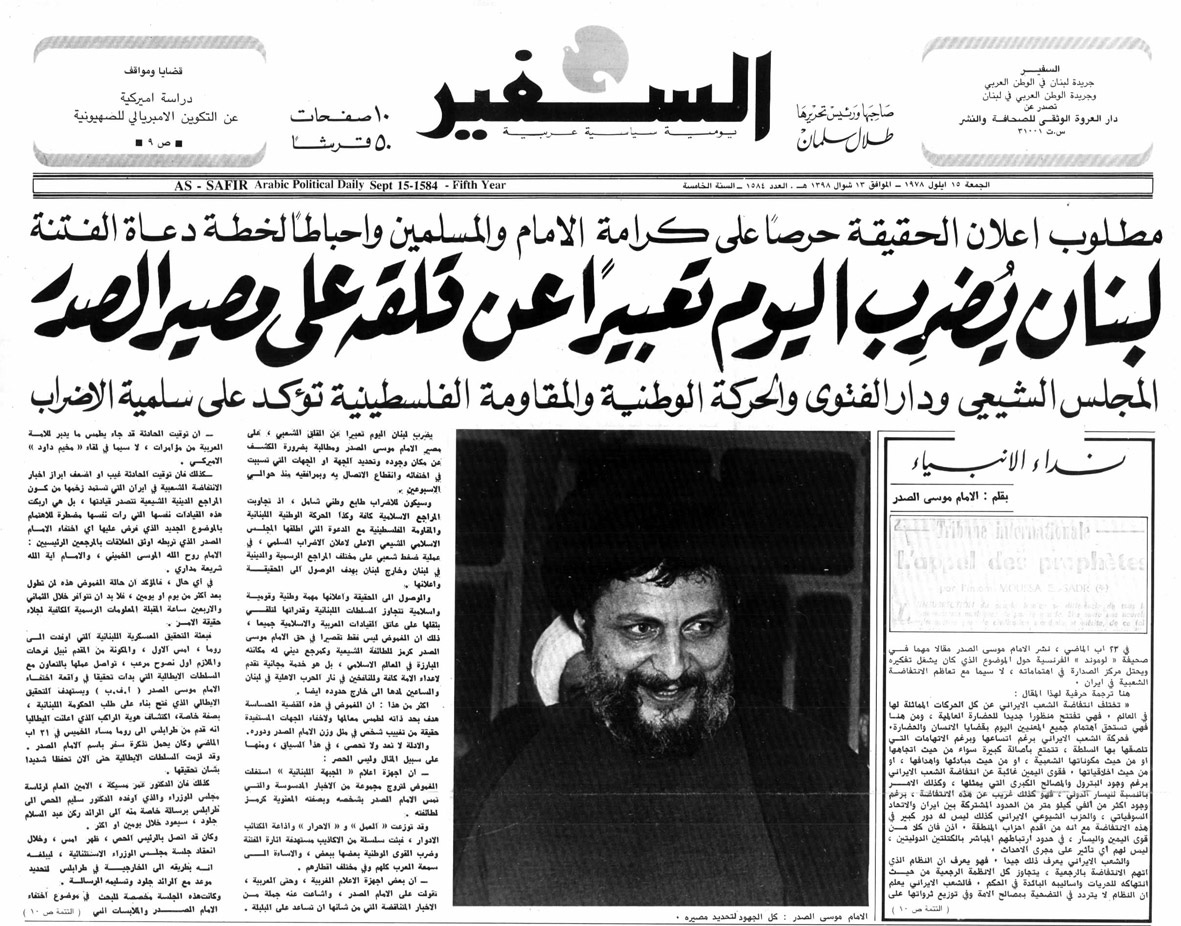
For the Shi‘a community, he was an absent father figure. For many Lebanese across sectarian lines, he was the lost mediator — a figure whose moral authority might have tempered the descent into total war. His disappearance froze him in a moment of possibility. Unlike other leaders whose legacies were reshaped by wartime compromises, al-Sadr remained suspended in promise.
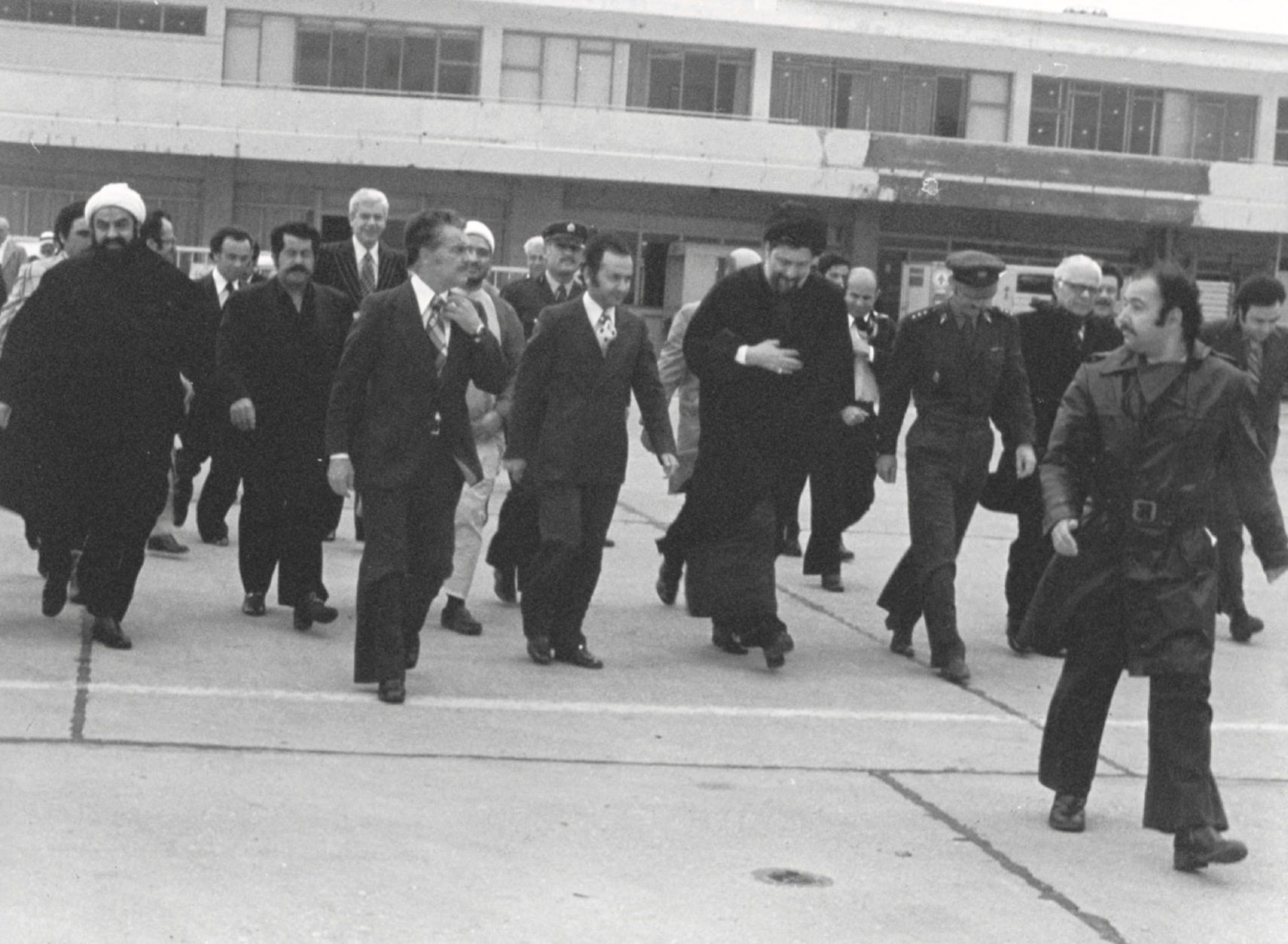
The Lebanese state has periodically revived investigations into his fate, and his case remains officially open. Yet beyond legal proceedings lies a deeper inquiry: what political culture might have emerged had he remained present? Would his insistence on state reform have survived the centrifugal forces of war? Or was his very moderation destined to be eclipsed by the militancy of the era? These unanswered questions have become part of his mythos.
The Unfinished Project
To revisit al-Sadr today is not to indulge nostalgia, but to confront the incompleteness of the Lebanese experiment. He sought social justice without revolutionary nihilism, sectarian representation without sectarian supremacy, resistance without state fragmentation, and faith without fanaticism.
These formulations remain strikingly relevant in a Lebanon grappling with economic collapse, institutional paralysis, and renewed sectarian anxieties. The margins he championed have expanded; deprivation has become national. His language of “the deprived” now echoes beyond any single community.
Yet his legacy is not immune to contestation. Like all political founders, he has been appropriated, reinterpreted, and sometimes simplified. His thought was more complex than the slogans later associated with his name. He navigated contradictions — between clerical authority and civic nationalism, between communal defense and national unity — with a pragmatism that defies easy categorization.
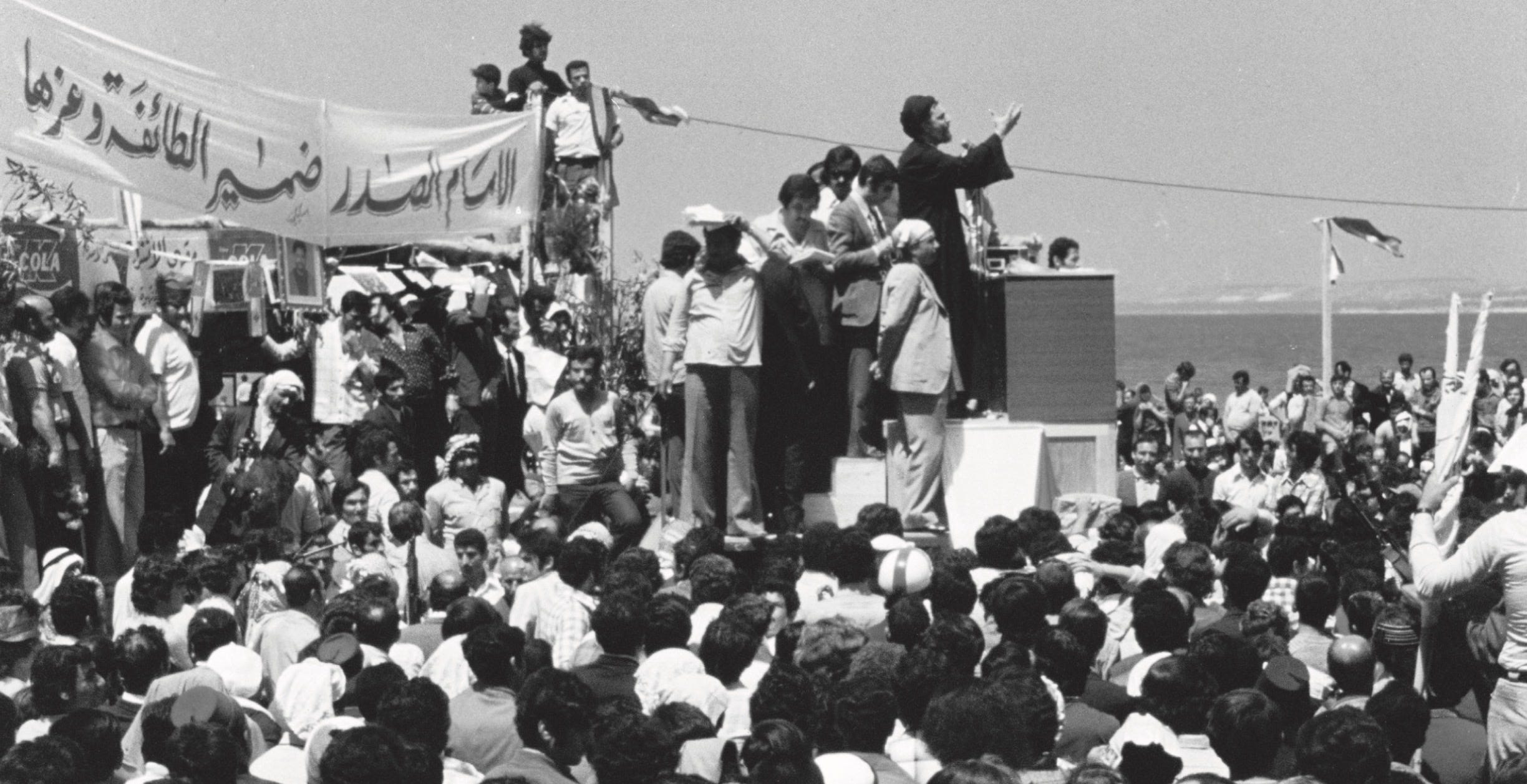
Perhaps that complexity is precisely why he endures. He did not offer Lebanon a utopia. He offered it a disciplined hope — one anchored in institutions, dialogue, and moral accountability.
Imam Moussa al-Sadr was not free of political compromise; no Lebanese leader is. But his legacy persists because it gestures toward a possibility Lebanon has yet to realize: a state that protects its margins, a society that transcends its fractures, and a political class that understands leadership as stewardship rather than inheritance.
His disappearance remains a national wound. His vision remains an open question. And in a country where history is often cyclical and futures provisional, that question — of justice, coexistence, and national dignity — may still be the most urgent inheritance he left behind.