

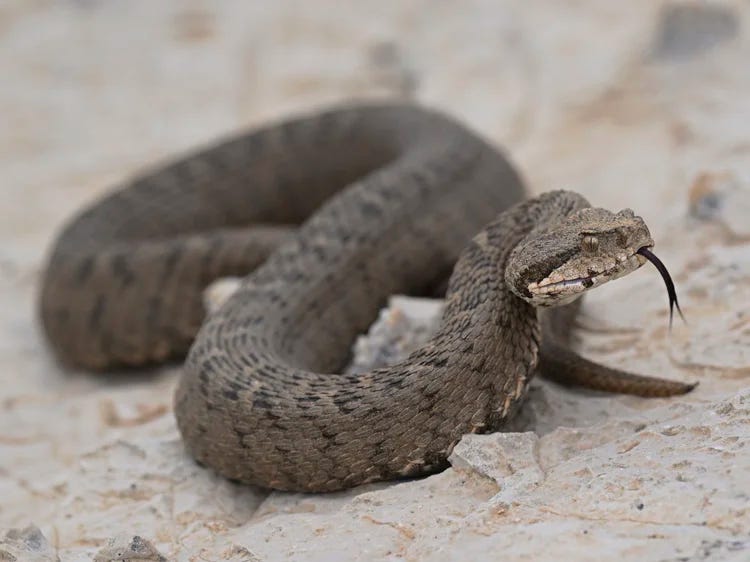
Lebanon’s national symbols are well established. The cedar occupies a central place in the country’s cultural imagination, while its mountains have long been celebrated in literature, politics, and tourism. Far less familiar is a species that inhabits those mountains at elevations where few people spend much time: Montivipera bornmuelleri, the Lebanon mountain viper.
Endemic to the high mountains of Lebanon and parts of the Anti-Lebanon range, M. bornmuelleri is one of the Levant’s most distinctive reptiles. It is also among the region’s least known. Restricted to rocky habitats at high elevations, the species has adapted to environmental conditions markedly different from those experienced across most of the eastern Mediterranean. Its distribution, ecology, and evolutionary history make it a valuable indicator of the health of Lebanon’s alpine ecosystems.
A High Mountain Snake
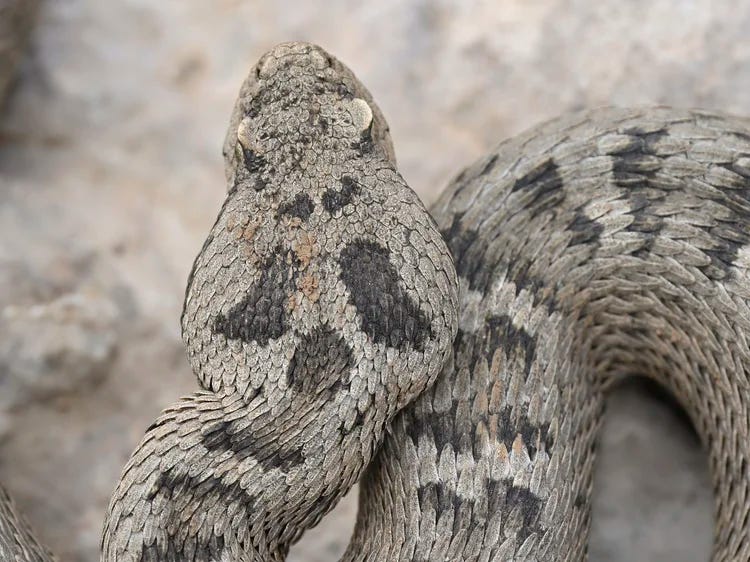
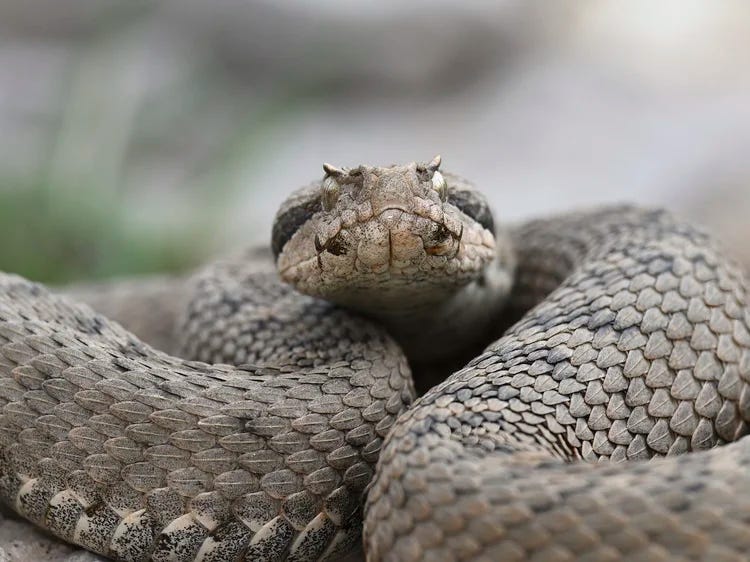
First described in 1898, the species belongs to a genus of mountain vipers distributed across parts of the eastern Mediterranean and western Asia. Adults are relatively small by viper standards, typically measuring less than 75 centimetres in length. Their colouration — various shades of grey, brown, and black — provides effective camouflage among limestone outcrops and alpine vegetation. Although highly venomous, the Lebanon mountain viper is not considered aggressive and is seldom encountered outside the remote alpine environments it inhabits. Encounters with humans are uncommon, largely because the species occupies remote terrain and is generally inactive during periods of intense daytime heat.
What distinguishes Montivipera bornmuelleri is not its rarity alone but the environment it inhabits. Most records come from elevations between approximately 1,700 and 2,400 metres, where winters are severe and snow cover can persist for months. These high-altitude habitats support a concentration of endemic plants and animals that have evolved under ecological conditions found nowhere else in Lebanon.
An Indicator of Alpine Ecosystem Health
As with many mountain specialists, the species faces pressures that extend beyond direct human persecution. Habitat disturbance, expanding recreational activity, infrastructure development, and climate change all pose potential risks. Because the viper occupies a relatively narrow ecological niche, even modest environmental changes may have disproportionate consequences. Warming temperatures are of particular concern. Species adapted to cool, high-altitude conditions often have limited opportunities to shift their range upward when climatic conditions change.
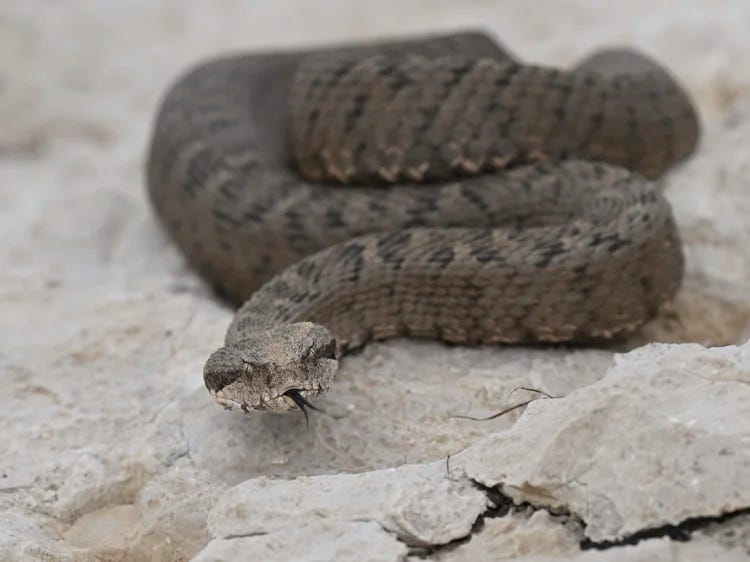
The conservation significance of M. bornmuelleri extends beyond the species itself. Its presence reflects the ecological integrity of Lebanon’s alpine zone, an environment that remains comparatively understudied despite its biological importance. Protecting these habitats contributes not only to the survival of the viper but also to the preservation of a broader assemblage of endemic flora and fauna.
Beyond Fear: Scientific Value
Scientific interest in the species has increased in recent decades, particularly in relation to its venom. Research has identified biologically active compounds with potential pharmaceutical applications, including anti-inflammatory and antimicrobial properties. While such findings remain primarily within the realm of laboratory investigation, they underscore a broader point: biodiversity often acquires practical value only after it has already become threatened.
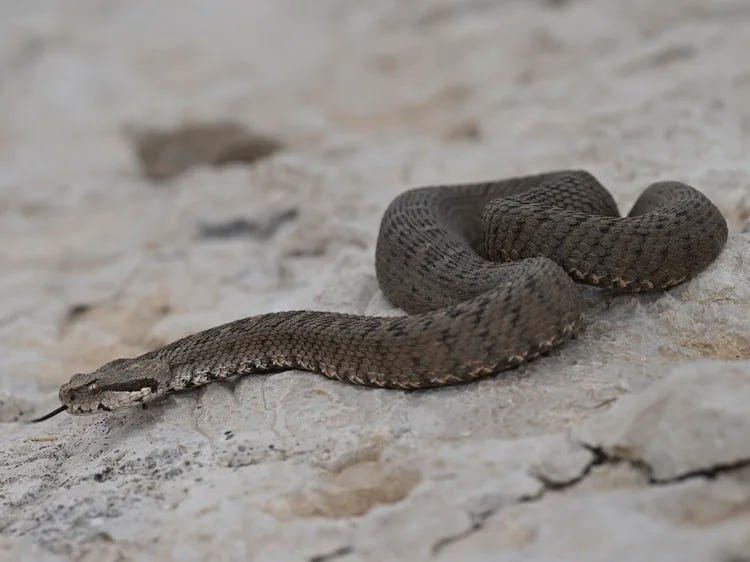
The species also challenges common perceptions of snakes in the region. Public attitudes towards reptiles are often shaped by fear or misunderstanding, leaving little room for appreciation of their ecological role. Yet predators such as M. bornmuelleri form an important part of mountain ecosystems, helping maintain natural balances within fragile habitats.
Conservation in a Changing Climate
In Lebanon, discussions of environmental conservation tend to focus on forests, coastlines, and urban development. The country’s high-mountain ecosystems receive less attention despite their ecological distinctiveness. The Lebanon mountain viper offers a useful reminder that some of the country’s most significant biological assets exist far from population centres and outside the landscapes that typically dominate public debate.
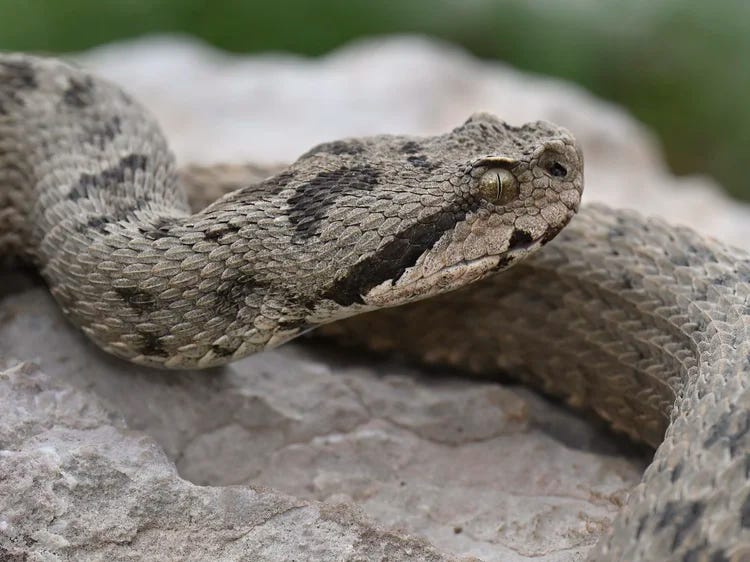
Climate change has added urgency to this conversation. Alpine species are often among the first to experience the effects of rising temperatures, and their restricted ranges leave them particularly vulnerable. For Montivipera bornmuelleri, the future of Lebanon’s mountain habitats may prove inseparable from its own.
A Place in Lebanon’s Natural Heritage
Whether Montivipera bornmuelleri ultimately becomes a conservation success story will depend on how Lebanon manages its alpine environments in the coming decades. What is already clear, however, is that the species occupies a unique place within the country’s natural heritage. Not because it is charismatic or widely recognised, but because it represents an evolutionary lineage found in few places on earth and adapted to one of Lebanon’s most demanding landscapes.
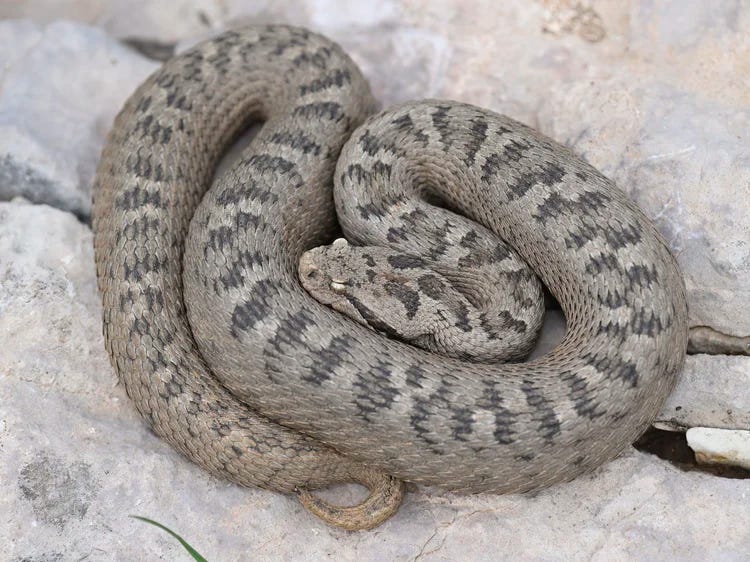
At a time when questions of environmental stewardship are becoming increasingly urgent, the Lebanon mountain viper serves as a reminder that national heritage is not limited to monuments, archaeological sites, or iconic trees. It also includes the lesser-known species whose continued survival reflects the health and resilience of the landscapes they inhabit.