

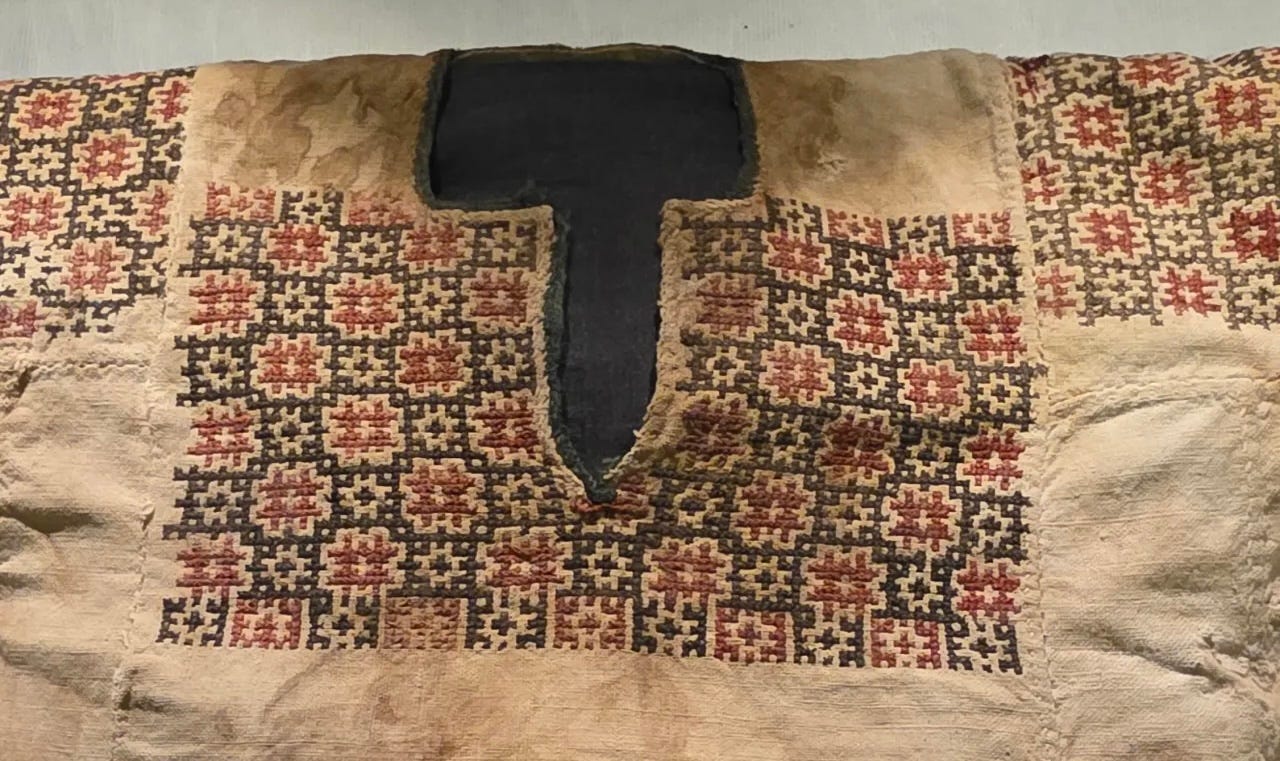
In the cliffs of Lebanon’s Qadisha Valley, where monasteries cling to the mountainside and centuries of Maronite history survive in stone, one of the country’s oldest textile traditions lay hidden for more than seven hundred years.
In 1990, archaeologists excavating the cave of ‘Asi al-Hadath near Hadath al Jibbeh uncovered a remarkable discovery: the naturally mummified remains of villagers who had sought refuge during the Mamluk campaigns of the late thirteenth century. Alongside the mummies were manuscripts, leather shoes, wooden objects, seeds, and an extraordinary collection of textiles preserved by the cave’s unique conditions. Rarely does fabric survive so long in the eastern Mediterranean. These garments thus offer an exceptional glimpse into the everyday lives of medieval Maronite communities.
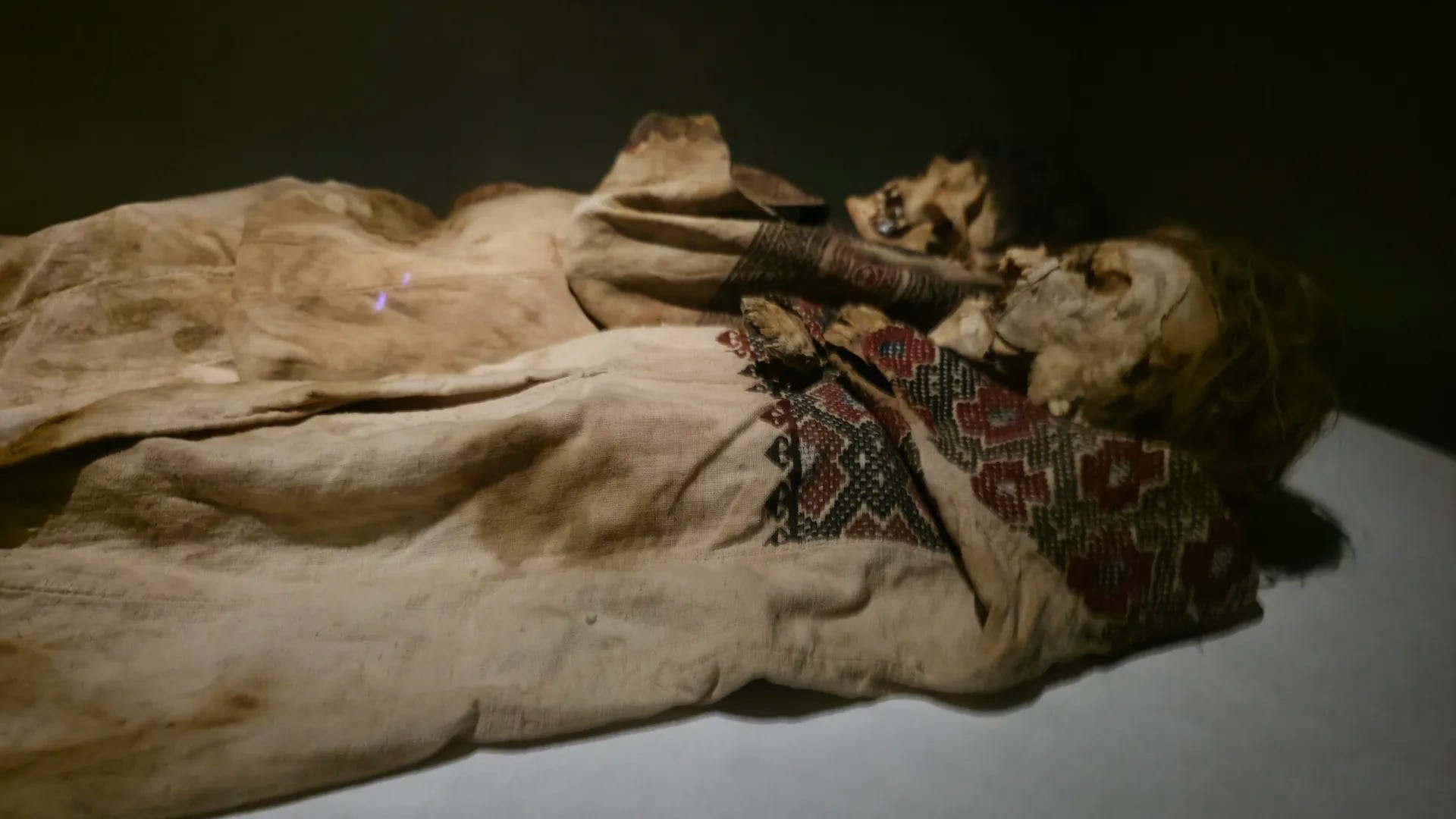
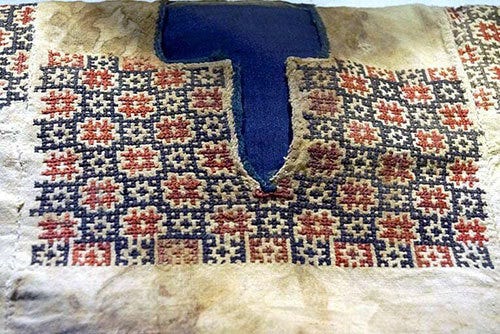
Among the discoveries were embroidered linen garments whose subtle beauty belies their historical importance. Overshadowed by Lebanon’s celebrated monasteries and illuminated manuscripts, these textiles preserve another dimension of the country’s heritage: the artistry of domestic life. Together, they represent the earliest known surviving corpus of Maronite embroidery and one of the oldest surviving collections of medieval counted-thread embroidery in the Levant.
Expressions of Thread
The embroidery was stitched directly onto linen using counted-thread techniques comparable to modern cross-stitch. By counting the fabric’s weave with remarkable precision, medieval embroiderers created balanced geometric compositions that united technical skill with artistic expression. Their work was more than decorative. Every motif reflected a visual language shaped by faith, identity, and tradition.
Although time reduced the garments to fragments, enough survives to reveal nine distinct decorative motifs. These include cross-centered compositions, diamonds and lozenges, stepped borders, lattice patterns, stylized birds, angular quadrupeds, floral-inspired forms, and symmetrical border ornaments. Designed as repeating units, the motifs once extended seamlessly across sleeves, collars, cuffs, and hems, giving rhythm and coherence to each garment.
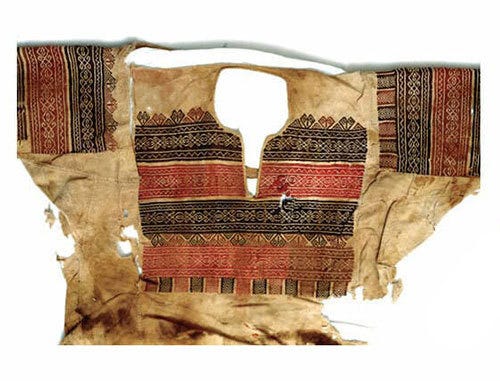
Some of the most captivating designs depict birds and four-legged animals rendered in striking geometric forms. Rather than pursuing naturalistic representation, the embroiderers reduced living creatures to their essential shapes, reflecting a broader artistic tradition found throughout medieval Eastern Christian art, where symbolism often took precedence over realism.
Geometry, Devotion
Geometry lies at the heart of these embroideries. Crosses rarely appear as isolated emblems; instead, they emerge from diamonds, latticework, and repeating borders, becoming inseparable from the overall composition. The resulting patterns blur the distinction between ornament and devotion. Repetition suggested continuity and eternity, while symmetry expressed harmony and divine order. Every stitch contributed to a carefully balanced whole in which faith found expression through geometry.
Reconstructing a Lost Tradition
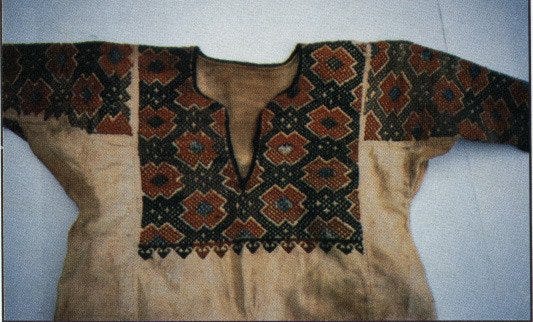
Reconstructing these damaged designs required more than artistic interpretation. Surviving stitch sequences, thread counts, repeating units, and axes of symmetry provided the evidence needed to restore missing sections with confidence. Only those elements supported by the underlying geometry were completed, ensuring that the reconstructed patterns remain faithful to the archaeological record rather than modern imagination.
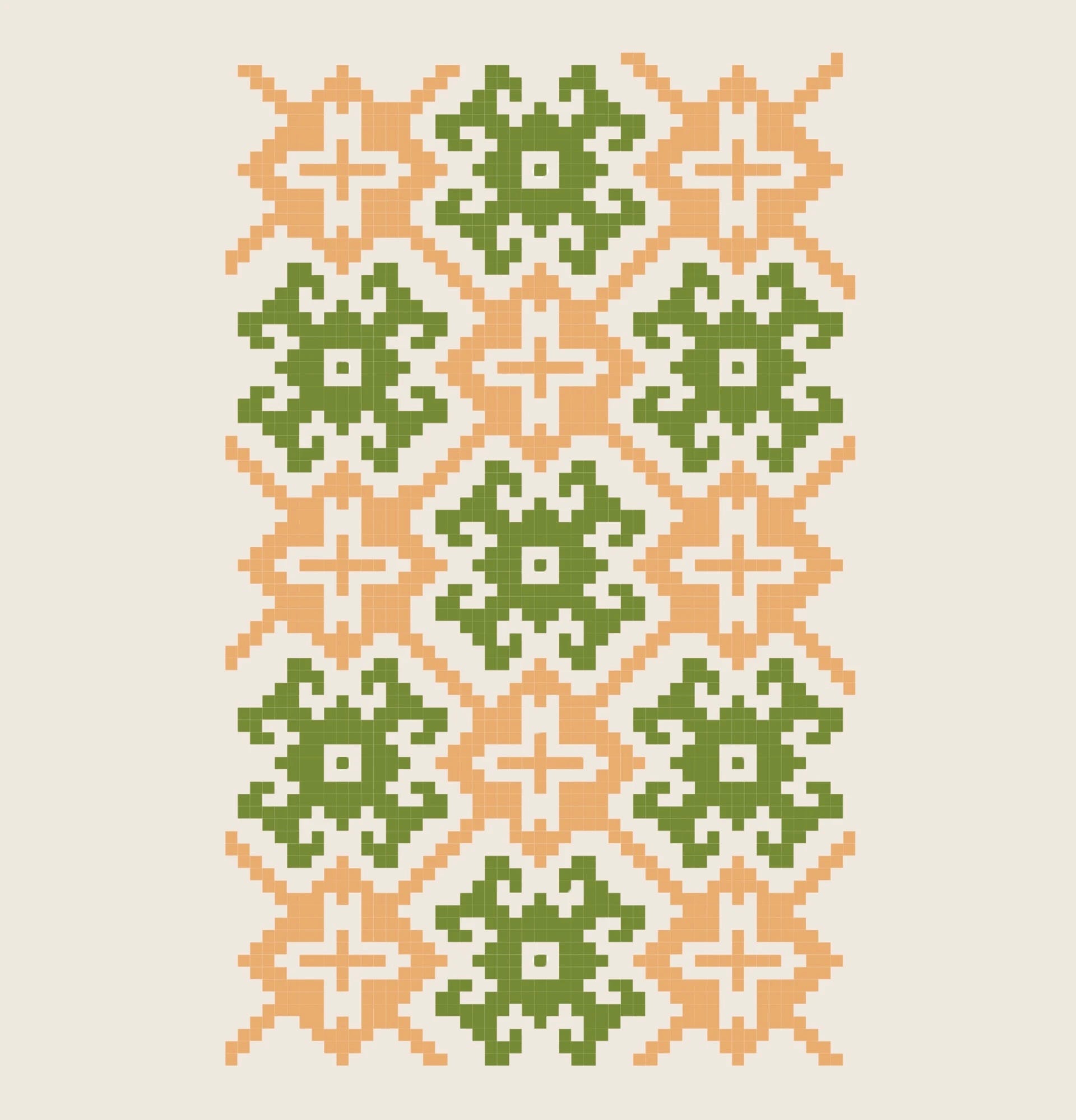
The result is the first complete reconstruction of all nine known medieval Maronite embroidery motifs from Hadath al Jibbeh. By transforming fragile textile fragments into historically accurate digital cross-stitch charts, Lebanese fashion researcher Joe Chalitta has made it even easier for these designs to be studied, exhibited, and stitched once again after centuries of silence.
A Living Heritage
Perhaps the most remarkable aspect of the Hadath embroideries is how familiar they still feel. Diamonds, stepped borders, latticework, and cross-centered compositions continue to appear in traditional Lebanese embroidery, particularly in mountain communities where geometric ornament remains central to local textile traditions. While these traditions evolved over the centuries, they preserve echoes of the same visual vocabulary.
Unlike monuments or manuscripts, embroidery survived through practice. Patterns passed from one generation to the next, adapting gradually while retaining their underlying structure.
Threads Across Seven Centuries
The embroidered garments of Hadath al Jibbeh remind us that Lebanon’s history is preserved not only in monasteries, churches, and manuscripts, but also in the artistry of everyday life. Every geometric border, stylized bird, and carefully balanced cross bears witness to artisans whose names have long been forgotten, yet whose work continues to speak across seven centuries.
Today, these reconstructed motifs are more than archaeological evidence. They restore a lost chapter of Lebanon’s artistic heritage and return a medieval visual language to contemporary hands. Once confined to fragile fragments preserved in a mountain cave, these designs can again be studied, stitched, and appreciated, ensuring that one of the country’s oldest surviving embroidery traditions remains a living part of its cultural memory today.