
Inside Beirut’s 1960s Music Scene with Angelo Galvani
An Italian pianist’s memories of a cosmopolitan city, its vibrant nightlife, and the music that defined a bygone era

By Ralph I. Hage, Editor
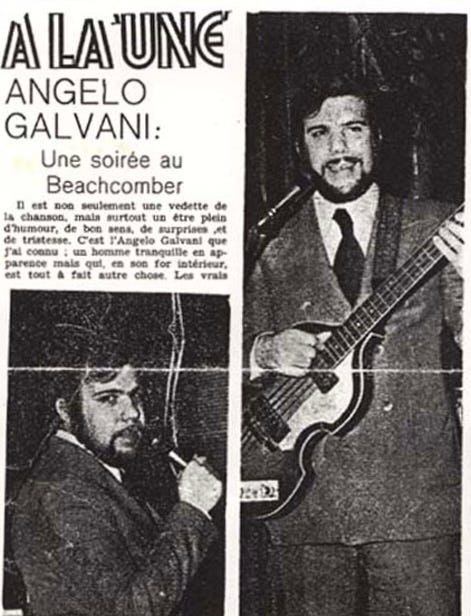
In the golden age of Beirut — when the city pulsed with music, glamour, and an effortless cosmopolitan charm — artists from across the world found a stage and a home. Among them was Italian musician Angelo Galvani, a performer whose journey through the great hotels and piano bars of Europe and the West Asia mirrors the story of the era.
Born in Italy in 1943, Galvani trained seriously in music and voice at the conservatories of Bologna and Ferrara. A multi-instrumentalist, he mastered both the piano and the contrabass, but it was the piano that would carry him across continents. By the 1960s, he was already on the move, performing with his band “Angelo e i Loris” before evolving into a solo entertainer with a large, multilingual repertoire.
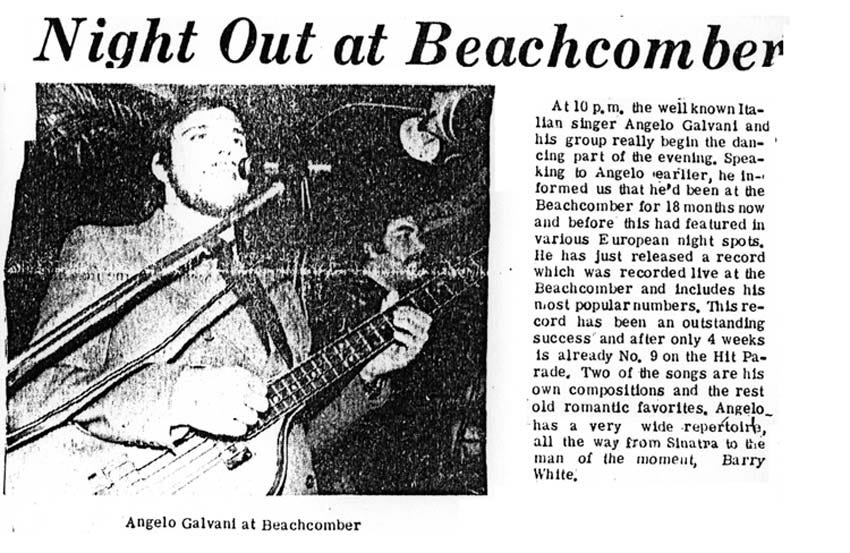
Beirut, 1965: A City Alive with Music
Galvani arrived in Beirut in 1965, drawn by a contract at the famed Coral Beach Hotel. What was meant to be a professional stop quickly became something more permanent. “At the end I stayed in Beirut because I got married to a Lebanese woman,” he recalls. “My son was born in Beirut.”
At the time, Beirut stood as one of the Mediterranean’s most vibrant cultural capitals. “It was a fantastic place to stay and live,” Galvani says. “Full of restaurants, bars with live music, many tourists — very cosmopolitan and lots of fun.”
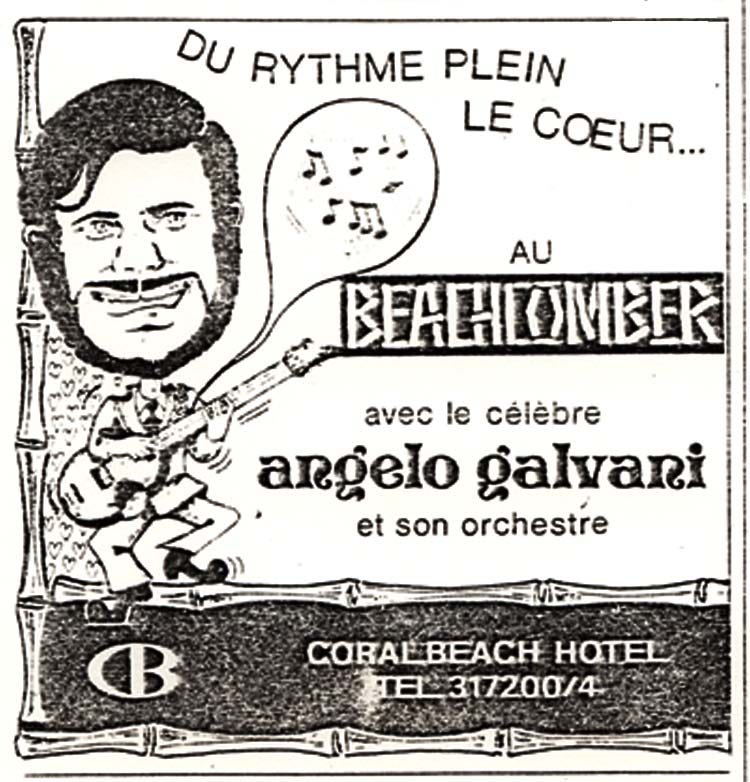
His days were simple yet idyllic: swimming in the hotel pool, enjoying long meals, and preparing for his nightly performances. “My show was nightly at 9 o’clock,” he says — a rhythm that defined his life in a city that came alive after dark.
Music, Memory, and the Beachcomber Sessions
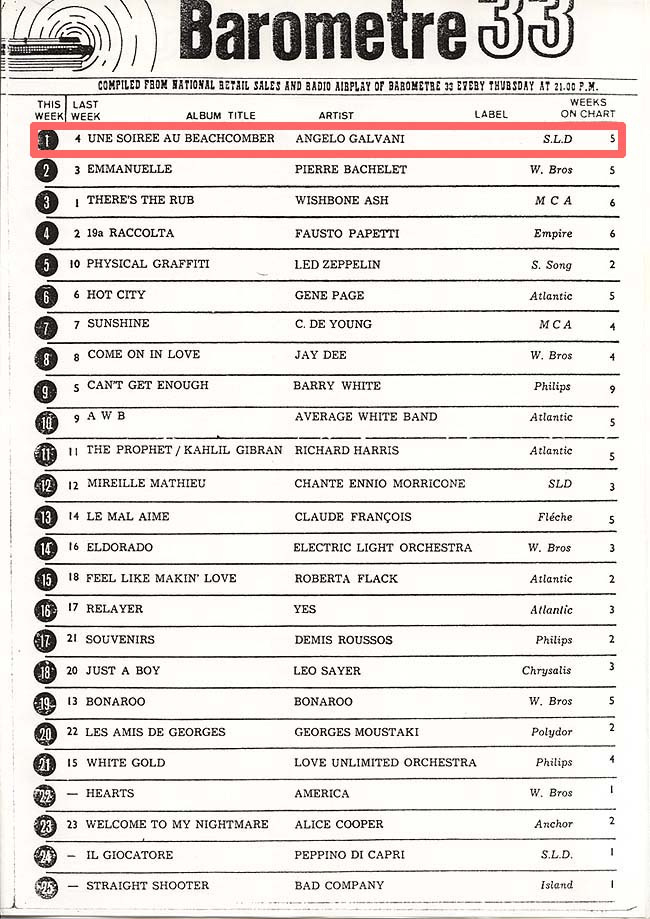
One of the more intriguing moments of his Beirut years was the recording of an album at the Beachcomber venue — an artifact of the city’s thriving live music scene. The project came together spontaneously. “The company who produced the album got in touch with me and asked to do this album live one night,” he explains. Some of the tracks on the album include songs popular at the time such as “And I Love You So,” “For The Good Times,” “Tie A Yellow Ribbon,” and “Karoun Karoune.”
Influenced by artists like Frank Sinatra, Galvani’s style blended international pop standards with the intimate, conversational tone of piano bar performance. It was music designed not just to be heard, but to accompany life — conversations, romance, celebration.
Departure and Displacement
That life came to an abrupt end in 1976, when the outbreak of the Lebanese Civil War forced Galvani to leave. Like many who had built lives in Beirut, his departure was less of a choice than a necessity.
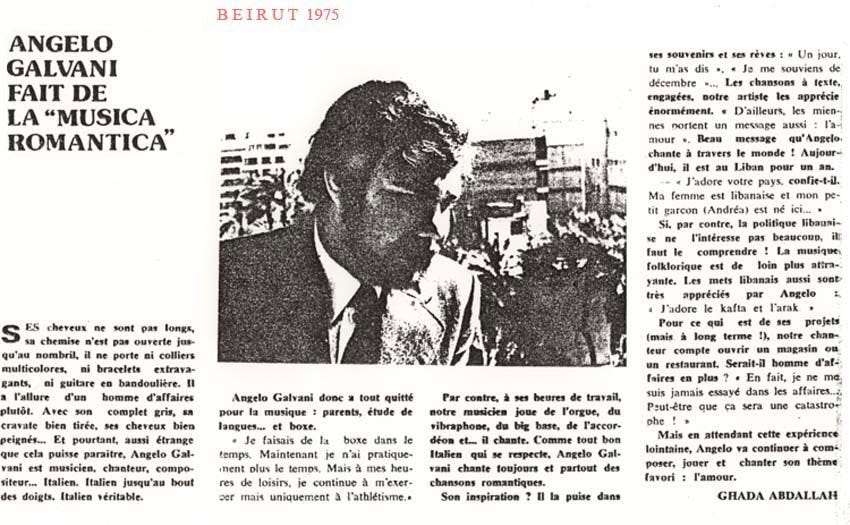
From Lebanon, his journey continued to Istanbul, then to Berlin in 1978 — a city that would become his second home. There, in the early 1980s, he opened his own piano bar, “Pianoforte,” near Wittenbergplatz. For years, it attracted an international clientele, echoing, in some ways, the cosmopolitan spirit he had known in Beirut.
A Life in Music
Today, he no longer performs publicly. “I am not playing anymore,” he says, “just at home for myself.” Yet his story remains intertwined with a particular moment in Beirut’s cultural history — one where a pianist could build a life, a family, and a nightly ritual of music by the sea there.