

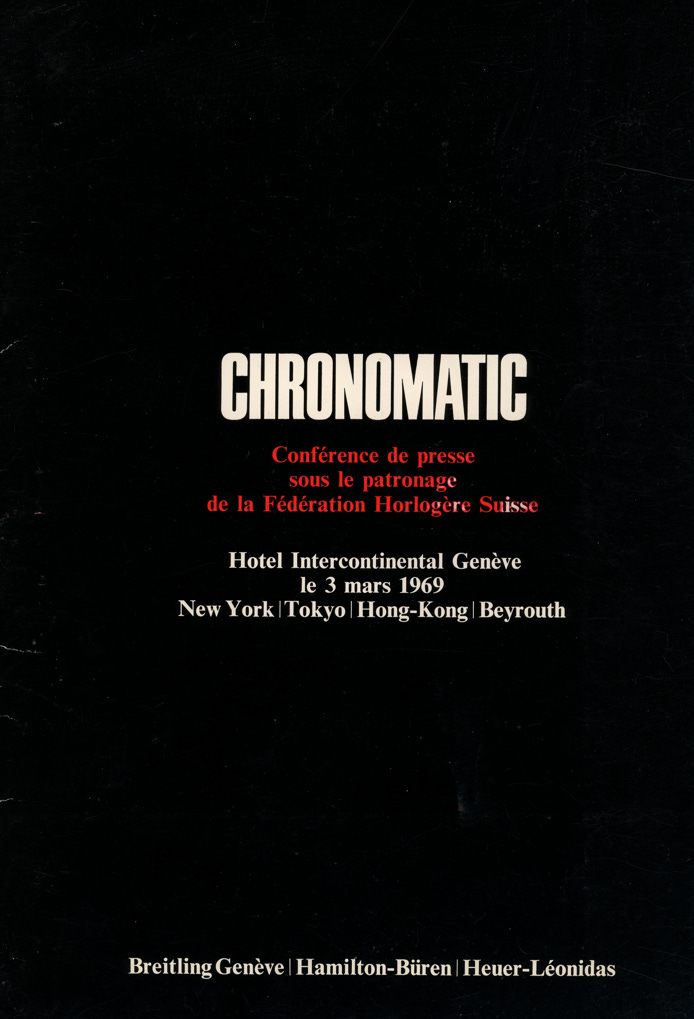
It’s Spring 1969, in Beirut, Lebanon. Charles Helou is president, Apollo 9 is in space, and the Rahbani brothers and Fairuz are soon to release ‘Jibal As-Sawan.’
At this time, the world of horology was also witnessing an important release. On March 3, 1969, five press conferences were held — in Geneva, New York, Tokyo, Hong Kong, and Beirut — to unveil what would become one of the most celebrated achievements in watchmaking history: one of the world’s first automatic chronographs.
This feat was claimed by several watch companies at the time including Zenith (the El Primero), Seiko (the Calibre 6139), and the joint venture of Heuer, Breitling, Hamilton-Buren, and Dubois-Dépraz (the Caliber 11). This article won’t take a position on who really was the first but will focus on the release of the Caliber 11, a modular automatic chronograph movement nicknamed the ‘Chronomatic’.
The Race for the Automatic Chronograph
The earliest wrist chronographs emerged in the early 20th century, powered by hand-wound movements. However, the concept of a self-winding chronograph was long considered out of reach. Time-only mechanical watches could be automatic, using the motion of the wearer’s wrist to wind the mainspring, while manual chronographs could measure elapsed time with split-second precision — but the combination of the two still eluded engineers.
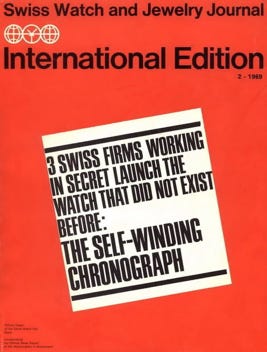
In 1966, a secret collaboration between four major Swiss watchmakers set out to tackle this challenge. The goal was ambitious: design a compact, reliable automatic movement with a chronograph module, and bring it to market before any competitors. By March 1969, the solution — the Calibre 11 — was ready for the world. It featured:
Automatic winding through a micro-rotor, keeping the movement powered by the wearer’s motion.
Chronograph functionality for timing events with split-second precision.
Innovative modular construction, allowing the chronograph mechanism to be attached to a base automatic movement.
A distinctive “left crown” design on many models, signaling the new technology.
The unveiling was not just a technical achievement; it was a carefully orchestrated marketing coup. The simultaneous, multi-city launch emphasized the movement’s global significance and positioned the Chrono-Matic as a milestone of modern watchmaking.
Beirut: The Forgotten Launch City
While Geneva, New York, and Hong Kong were natural choices for international press, Beirut’s inclusion speaks volumes about the city’s prominence in the 1960s. Its cosmopolitan nature and role as a regional trade hub made it a strategic venue. The event itself brought together journalists, dealers, and collectors who had never before seen a fully automatic chronograph in action.

The Beirut launch also highlighted the Swiss consortium’s global vision: the movement was not only for Western markets but designed to appeal to collectors across continents. Beirut was a symbol of this international ambition, representing the Eastern gateway for European luxury horology.
The Legacy of the Chrono-Matic
The 1969 multi-city debut of the Chrono-Matic Calibre 11 set a precedent in both engineering and marketing. Technically, it proved that self-winding chronographs were feasible and reliable, paving the way for future innovations. Commercially, the Beirut launch demonstrated the importance of international exposure, even in cities often overlooked by mainstream histories of watchmaking.
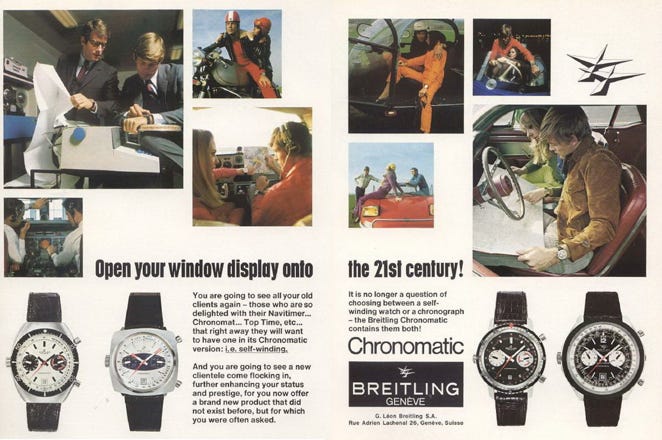
Today, collectors and historians alike celebrate the Calibre 11 not just for its mechanical ingenuity, but for the story behind its launch — a story that spans continents, from Geneva to Beirut, New York to Hong Kong. Beirut’s March 3, 1969 event remains a testament to the city’s prominence, its connection to global luxury markets, and its role in one of horology’s defining moments.
(So, Who Actually Won the Race?)
Zenith’s automatic chronograph, the El Primero — Spanish for “the first,” was the first to be revealed publicly, introduced at a press conference in January 1969. But the story isn’t that simple. To complicate matters further, the El Primero wasn’t the first model to reach the market. Debate continues over which company truly created the first automatic chronograph, since both Seiko and the Chronomatic consortium announced their own versions later that same year.
In the end, though, the question of who came first has faded in importance. What truly matters is the lasting influence these pioneering movements had on watchmaking history — and Beirut’s role in cementing the automatic chronograph as one of the most celebrated horological complications ever made.