
Fraas's Lizard (Parvilacerta fraasii) — A Specialist of Lebanon's High Mountains
By Ralph I. Hage, Editor

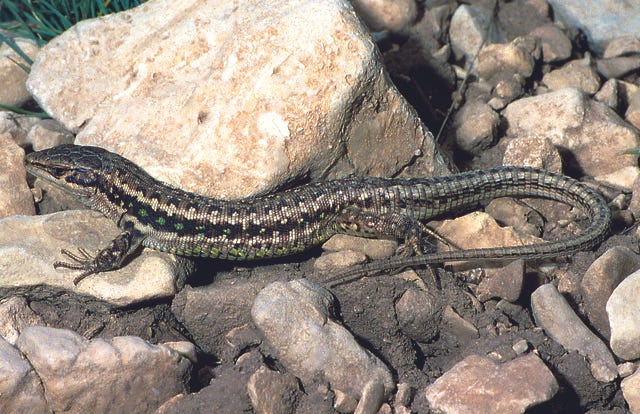
Hidden among the rocky slopes of Lebanon’s highest mountains lives one of the country’s most distinctive reptiles. Fraas’s lizard (Parvilacerta fraasii) is a small lacertid that has adapted to cool, high-altitude environments where few other reptiles can thrive. Although seldom encountered because of its secretive habits and restricted range, it represents a unique component of Lebanon’s biodiversity and an important part of the eastern Mediterranean’s natural heritage.
Taxonomy and Discovery
Fraas’s lizard belongs to the family Lacertidae, commonly known as the true lizards. It is one of only two recognised species in the genus Parvilacerta, a lineage that differs sufficiently from other lacertid lizards to warrant its own genus. The species was first described in 1910, and later taxonomic and genetic studies confirmed its distinct evolutionary relationships.
The specific name fraasii honours the German palaeontologist Eberhard Fraas, whose geological expeditions in the Levant contributed significantly to the scientific exploration of the region.
Distribution and Habitat
The species is endemic to Lebanon, with a distribution centred on the country’s central and northern mountain ranges. It inhabits rocky limestone slopes, alpine meadows, and sparsely vegetated hillsides, generally between 1,200 and 2,550 metres above sea level.
These elevations experience cool summers and long, snowy winters, creating conditions unlike the warmer Mediterranean lowlands. Fraas’s lizard is particularly associated with exposed rocks, scree slopes, and stone outcrops, where countless crevices provide shelter from predators, harsh weather, and temperature extremes.
Appearance and Behaviour
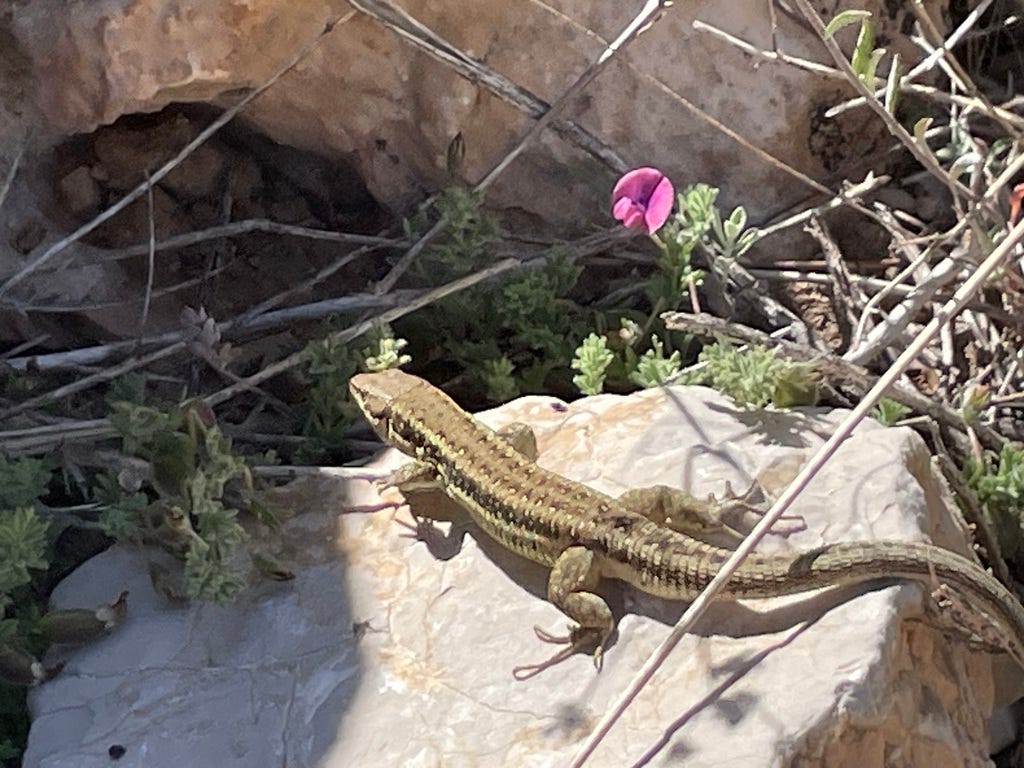
Adults are relatively small and slender, with a body length of only a few centimetres excluding the tail. Their colouration consists of shades of brown, grey, and olive, often marked with darker flecks or longitudinal patterning that blend remarkably well with weathered limestone.
Fraas’s lizard is a diurnal species, becoming active during the warmest hours of the day. Like most lacertids, it relies on basking to regulate its body temperature, alternating between sunny rocks and shaded refuges as conditions change. When threatened, it disappears rapidly into narrow cracks between stones, where its flattened body allows it to evade predators with remarkable efficiency.
Diet and Ecology
An agile predator, Fraas’s lizard feeds primarily on insects, spiders, and other small terrestrial invertebrates. By controlling populations of these animals, it contributes to the ecological balance of Lebanon’s mountain ecosystems. In turn, it provides food for snakes, birds of prey, and other native predators, making it an integral part of the alpine food web.
Because reptiles are highly sensitive to changes in temperature and habitat quality, the species also serves as a valuable indicator of the health of Lebanon’s high-altitude environments.
Reproduction
Fraas’s lizard is oviparous. During the breeding season, females lay small clutches of typically three or four eggs beneath stones or in sheltered patches of loose soil where warmth and humidity favour successful incubation. The hatchlings emerge fully independent and begin hunting tiny invertebrates soon after leaving the nest.
The species’ relatively short active season, imposed by the long mountain winter, means that feeding, breeding, and growth must all occur within just a few months each year.
Conservation
Fraas’s lizard has a naturally restricted distribution, making it particularly vulnerable to environmental disturbance. It is currently classified as Endangered on the IUCN Red List. Habitat degradation resulting from quarrying, road construction, tourism infrastructure, and other forms of development threatens many mountain habitats, while climate change may gradually shift suitable environmental conditions to ever higher elevations.
Continued research, habitat protection, and effective management of Lebanon’s mountain landscapes will be essential for ensuring the long-term survival of this specialised reptile.