

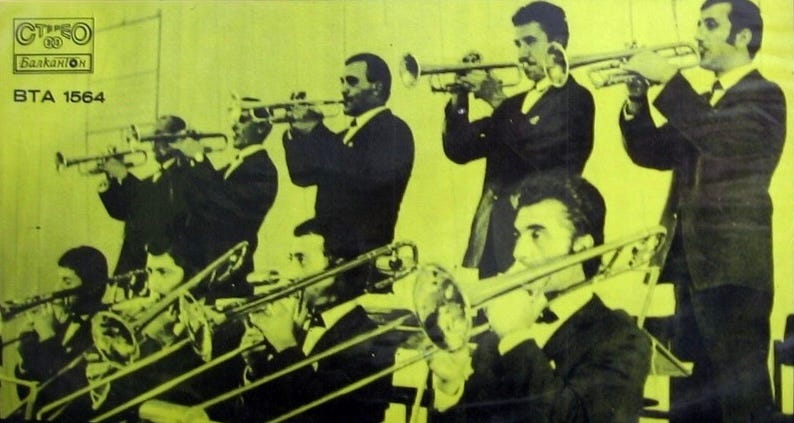
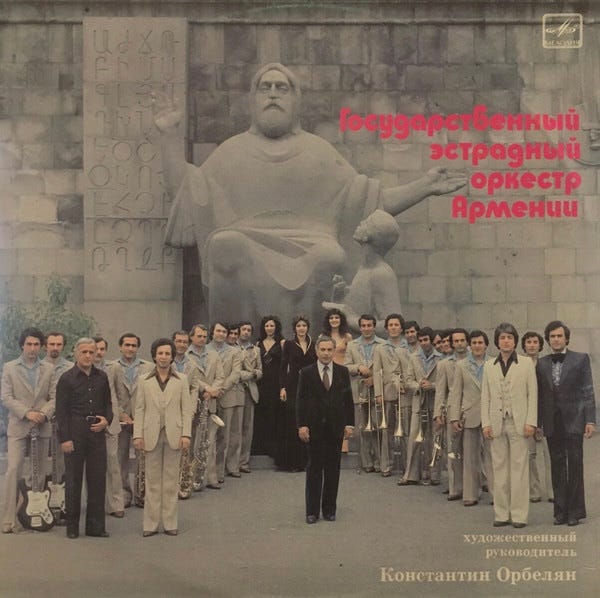
During my university years, I spent several Sunday mornings at Beirut’s flea markets, searching through antique furniture, books, posters, and music. One day, I came across a box of Soviet-era records. They didn’t seem to attract much attention, so I bought a large collection for next to nothing. At home, I pulled out one of the albums from the selection — The State Variety Orchestra of Armenia. Known under various names over the decades, the Armenian State Pop (or Variety) Orchestra served as the republic’s official bridge between popular music and jazz.
The cover portrayed a confident, late-Soviet vision of Armenian culture where modern popular music and national symbolism met. Set within a bold turquoise frame, the design features strong geometric lines and clean typography typical of 1970s–1980s Soviet graphic style. At the center, a photograph shows the orchestra assembled on monumental stone steps beneath a soaring memorial column. Dressed in coordinated pastel jackets and light trousers, the musicians project discipline, unity, and optimism — an image of cultural professionalism meant for both domestic pride and international presentation.
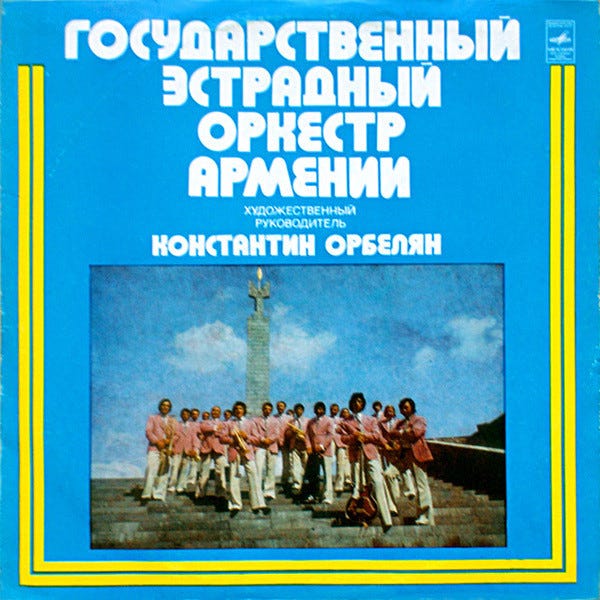
I flipped it over to check the track listing. The titles were written in black ink in Russian, with Armenian translations in pencil — most likely added by a member of the Lebanese-Armenian community.
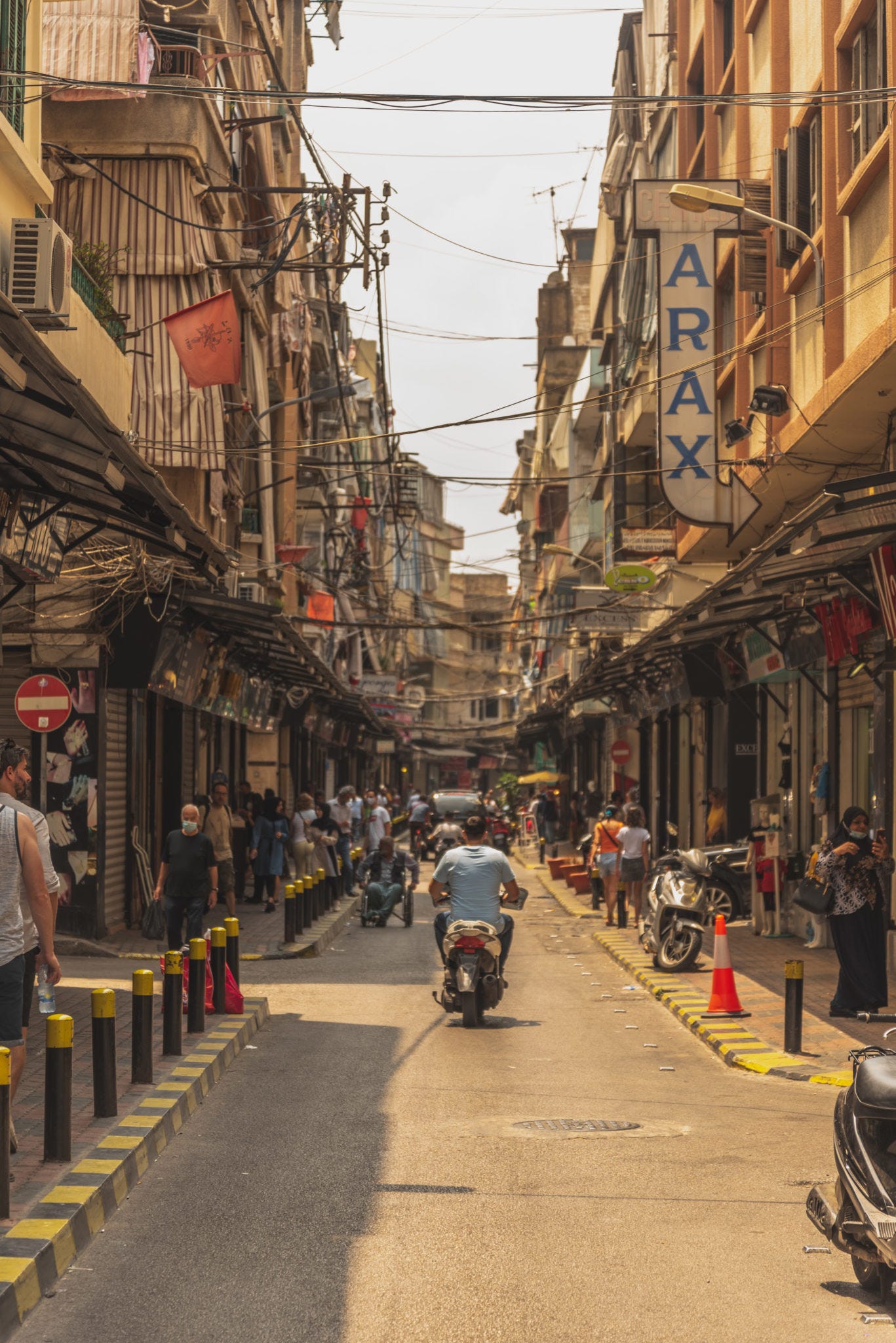
Bourj Hammoud, the Armenian district in Beirut, has long been a cultural hub. Record shops, labels, and family networks there have helped spread Armenian music throughout the diaspora. It made sense that these same networks would import records from Armenia, keeping ties alive with their Soviet cousins.
I placed the record on the turntable and dropped the needle, unsure of what to expect. Given the orchestra’s name, I initially assumed it might be some form of patriotic Soviet music. Instead, I was surprised by what I heard: a lively, jazz-infused sound, blending funk with Eastern rhythms. I later learned that the creative force behind this ensemble was Konstantin Orbelian, a musician whose role in the development of Armenian jazz in the 20th century was as important as it was emblematic of the period.
The Life of Konstantin Orbelian
Orbelian was born on July 29, 1928, in Armavir, a town in the North Caucasus. His musical talent was evident early on, earning him a spot at the prestigious Baku Conservatory. However, his education was interrupted by the political climate of the time. In the late 1930s, during Stalin’s purges, Orbelian’s father was arrested and executed, and two years later, his mother was exiled for five years. This period of upheaval marked Orbelian’s childhood, leaving him and his brother labeled as “children of enemies of the people.”
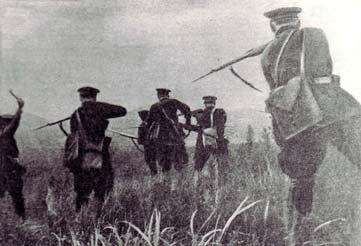
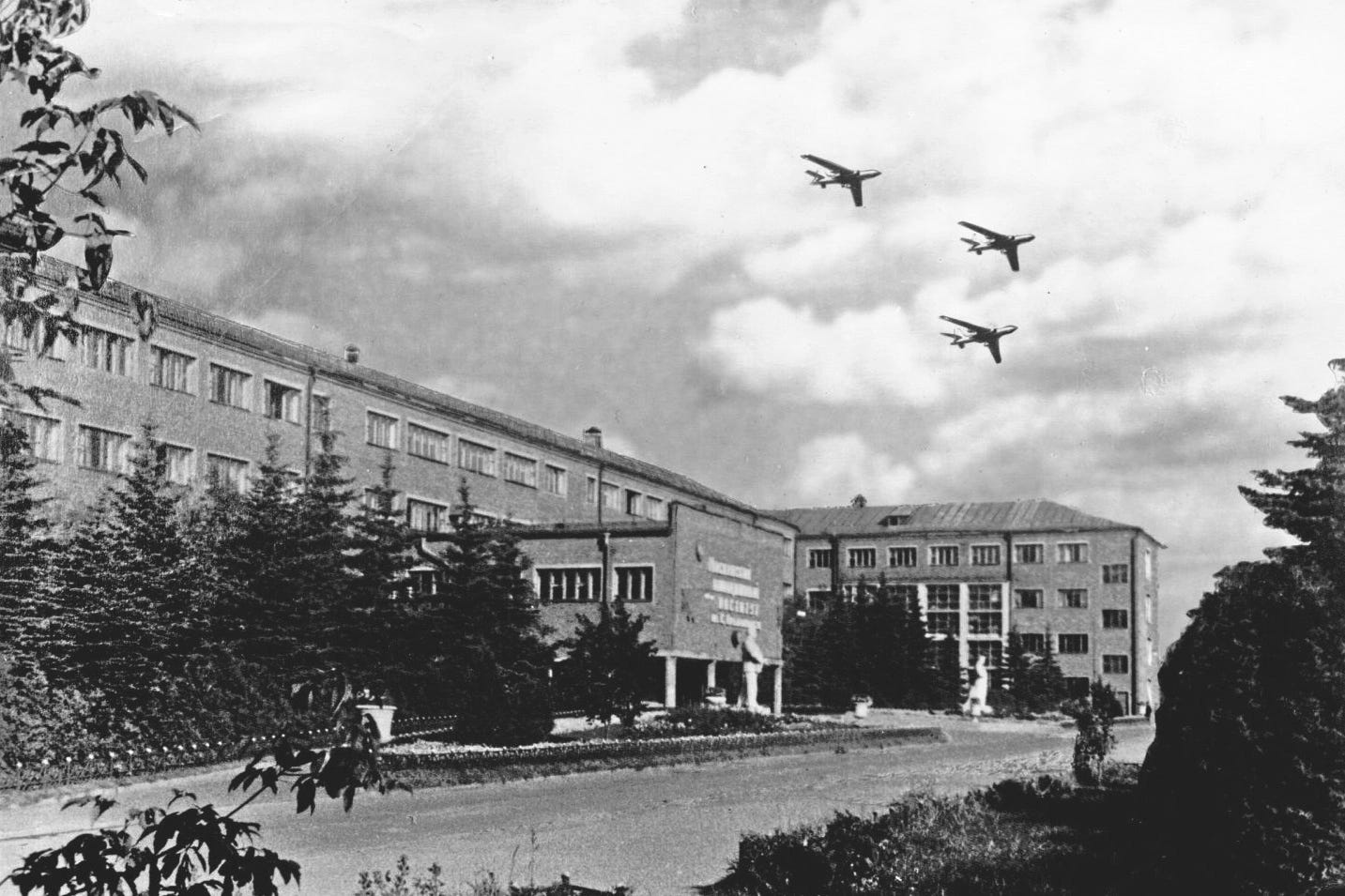
At the age of eleven, Orbelian was expelled from the conservatory and forced to earn a living by working as an accompanist for gymnasts. In 1942, he joined the jazz orchestra at Moscow Aviation School No. 8 as both a pianist and accordion player. His improvisational abilities quickly caught the attention of Armenian jazz musicians.
By 1945, Orbelian was arranging Armenian folk melodies for the orchestra and composing original pieces, which helped establish his reputation as a leading musician. In 1952, he left the orchestra to study composition at the Romanos Melikian Musical College in Yerevan, where he continued to develop his style. Over the years, he composed works for film and ballet, winning recognition both within the Soviet Union and internationally.
In 1956, Orbelian’s career took another leap forward when he became a member of the Soviet Composers’ Union and was appointed conductor and artistic director of the Armenian State Pop Orchestra — widely regarded as one of the Soviet Union’s finest jazz ensembles — a role he would hold for 36 years. During this time, he expanded the orchestra’s repertoire and began experimenting with jazz interpretations of Armenian folk songs. Listening today, one can hear how the orchestra fused swing rhythms with Armenian melodic structures:
By the late 1960s, Orbelian’s influence was global. The Armenian State Pop Orchestra performed across Eastern Europe and the Middle East, and in 1975, it became the first Soviet jazz ensemble to tour the United States. Their performances in major cities like New York and Los Angeles received praise from American critics, paving the way for further international tours.
Orbelian’s contributions to Soviet and Armenian music were recognized with multiple honors, including the title of People’s Artist of the USSR in 1979. His work also extended beyond jazz, incorporating elements of jazz-rock and classical music. In 1992, he moved to San Francisco and later settled in Los Angeles, though he remained deeply connected to Russian and Armenian music scenes. Orbelian passed away on April 24, 2014, and was laid to rest in Yerevan.
Crossings
When I learned that Orbelian eventually moved to San Francisco, it first struck me as unexpected. A central figure in Soviet music, why would he leave Yerevan behind? But as I reflected on it, I realized how familiar this trajectory was. For Armenians — like many in the Middle East — culture has often moved alongside patterns of exile and migration.
In this sense, Orbelian had been a part of the diaspora long before leaving the Soviet Union. His music crossed boundaries even when people could not, making its way into record shops in places like Bourj Hammoud, where Soviet pressings shared space with Lebanese, Egyptian, and American releases. Beirut, then, wasn’t just a passing moment in the story — it was a crucial listening post, where these sounds found new life and meaning.
Dropping the needle on that record years ago, I wasn’t just hearing Soviet Armenian jazz. I was hearing a conversation — between Yerevan and Beirut, between state orchestras and flea markets, between American jazz and Armenian interpretation. Orbelian didn’t simply relay jazz to a Soviet audience; he transformed it, carried it, and sent it back into the world — until decades later, it passed through Bourj Hammoud and into a Beirut flea market.