

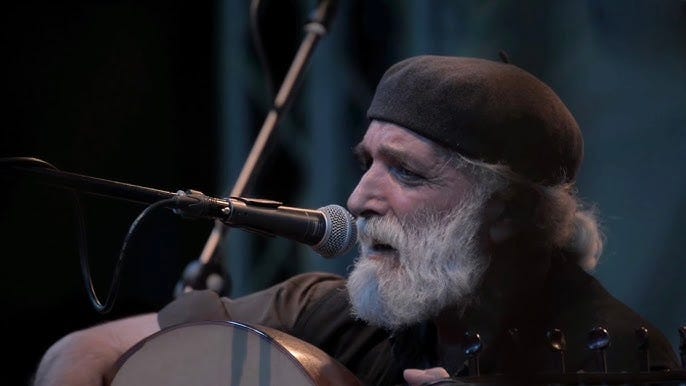
Sami Hawat is a renowned Lebanese singer, songwriter, and actor with a career that spans several decades. His work includes several personal albums such as Shreet Ghayr Houdoudi, Enno Ya’ni, Fi Shi Ma Shi, and Al Ra’I Al ‘am, in addition to notable collaborations with other artists. He has also acted in several stage plays, including Sahriye, Nazl Al Sourour, and the famous role of Reda in Benesbe La Bokra Shou? He shared some of his insights with me over coffee by the Corniche.
-
Where Were You Born?
They say I was born in Beit Chabeb although my family is originally from Jbeil, and way back before them, we were from Thessaloniki in Greece. I grew up in many places – Jbeil, where I grew up with my grandfather that I loved very much – where I always used to run away to. My dad was an Arabic teacher and that’s where he met my mother Therese. She was his student. I was always between Jbeil and Metn, when eventually at 16-17 years old, I came down to Ras Beirut and continued my life here.
Did You Choose To Move To Beirut?
Well, it was due to the political situation at the time. I didn’t choose really. It was 1975 and the war was starting. That was about the time when I was introduced to leftism. One should not choose a political idea simply because it sounds alluring – it’s a life choice and a complete package. So I am of the kind of people who do and then say, not say and then do. I live the lifestyle I chose. I would go back and forth between my village Zebdine and Beirut – and it was in that time when we were working on Benesbe La Bokra Shou and so on.
How do you know the Rahbanis?
Well, we lived close by to one another, they were living in Rabieh. So there was a familiarity before we really met again in Beirut. In Beirut, I was exposed to many different people. Thus began the cultural, literary, artistic, and musical period in Hamra. Many of causes were pushed forward by the leftist community at the time. But I would like to point that I don’t appreciate when communists also act superior to others and try to force their beliefs upon them. I mean I’m leftist, I chose this life, and should I make you feel bad that you’re not? Of course not! I chose this path, so like me and respect me as I am, or not at all. I respect all people, no matter where they’re from and whoever they are. The problem is that people these days have many negative preconceived notions with regard to one another. All of these things are present, and despite this, we must always look for the good in people – that’s the real issue.
Did You As A Group - You, Marcel Khalife, Ziad Rahbani And So On - Affect One Another?
We did affect one another because we were convinced of what we believed in – which was that we didn’t discriminate against others.
When Did Your Stage Life Begin?
We were in the Antelias Church choir and sang church songs. And then when we moved to Hamra, where I worked on Sahriye, Nazl Al Sourour, and Benesbe La Bokra Shou? We were then introduced to many different people. One was a playwright, another a musician, another a filmmaker, and so on… the artistic environment was absolutely brilliant. This period produced many notable artists.
You Were Young!
Yes, very young! We started off at 16-17 years old. For example, in Benesbe La Bokra Shou? we were really just kids! At least though, we were content. We had real causes, and the main cause was that of humanity. Now the main cause is that of money. I am proud of what I have done and of my achievements in the past and this helps me keep planting. We must always speak of planting… planting wheat… and the dream and hope are you, you young people – that’s the truth. And to know you guys, having a give and take, is what gives me hope.
When Did You Start With Music?
Well, music is related to my family. My mother, Therese’s family, were a musical family. I remember listening to music since I was young. My mother pushed me towards the arts. So, of course it was my mom and her family who pushed me the most. And though I have two brothers, Ghassan and Ghazi, I was the only one who delved into the arts.
Who Were Your Musical Influences?
There was nothing in specific really. I was always interested in comparing different kinds of music. So I used to mix between Egyptian and Syrian, Kurdish, Greek, and all other types of music. In short, you can say I like music between the Buzok and the Oud. The Oud is Egypt, and the Buzok is the whole other area of Greece, Russia, Armenia, and so on. They are all very close with different subtleties. In those areas, music is like a river that’s always flowing, it doesn’t stop. These things make me happy. It’s like an everlasting spring, in nature, in people, and in the future generations.
Do You See This Spring In Lebanon?
I do for sure, despite the political situation. I blame the older generation, not the youth, for selling themselves to corruption. For example, see what’s happening in Yerevan, and see how the Lebanese Armenians are in solidarity, it’s great.
Do You Think the Situation In Lebanon was Better Before the Civil War?
It was much better. There was more humanity and people’s main concern was not just money. And even the politicians had a higher level of humanity. Even if they were from different backgrounds, they used to converse. In contemporary times, this divide is much sharper. Despite all of this, I am always hopeful. I am hopeful because I am here. And as long as I am here I will plant. I will keep planting. And even if not all seeds grow, some will surely sprout.
And Your Beret? Are the Rumors True?
Yes. Fidel Castro gave me one in Cuba. We went on a trip to Cuba and Santa Clara. I met Fidel Castro and saw where Che Guevara used to live.
Are You Working On Anything Now?
Now? Yes. In the present moment I am working on a project concerning children and children’s songs. The songs deal with issues for children, as well as for their parents. I mean, I am addressing children and their parents in order to remind them that they were once children. Let me tell you something. If something does not have the honesty and simplicity of children, it will not last.
When Does It Come Out?
Soon. Between now and a month. And I am finishing up my theatre in Zebdine. I built it myself over two and a half years with help from a few guys. We finished it in 2011, and since then have held many festivals. Many artists have played there; such as Abu Saleem, Amir Keserwani, Marcel Khalife, and many more. It has the capacity to fit a thousand people.
Is Anything Happening In The Summer?
Yes definitely!
After the interview, we finished our Nescafé by the seaside and walked back to Upper Campus. Sami mentioned that he’s expecting big things for the theatre this summer, so make sure to check out its Facebook page for updates and news on upcoming events. Also, keep an eye out for Sami’s new album, coming soon!
-
This interview was originally published in AUB Outlook on April 19, 2016.