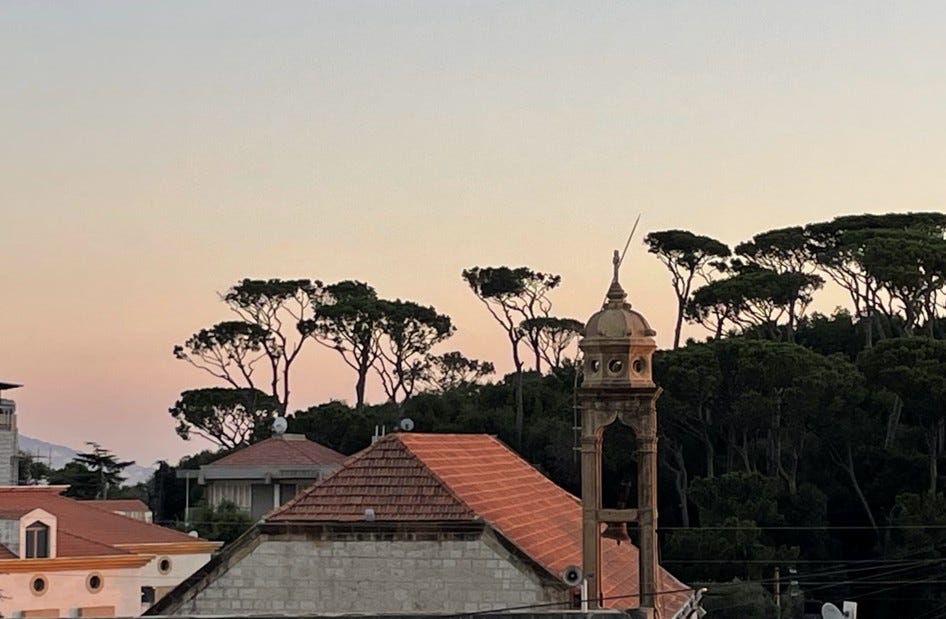
The streets are alive with people, chattering and laughing, weaving between stalls piled high with food, souvenirs, and handmade crafts. The air smells of sizzling treats and fresh pastries, and everywhere you look, there’s something colorful to catch the eye. Above it all, the church bells ring nonstop, tossed back and forth by village men and boys who are determined to outdo one another. Inside, the church never empties — its wooden pews always crowded with worshippers lost in prayer. You’re in the heart of at the Mar Sassine Church festival in Beit Meri.
A Mountain Parish with Deep Roots
Nestled above Beirut at well over 700 meters, the church of Mar Sassine in the village of Beit Meri rises quietly into the air. The name Beit Meri tells its own story: derived from Syriac Beth Marya, “House of God”, it reveals the sacred dimension of the place.
A place of faith, shared life and community. For more than two centuries, it has witnessed the seasons of the mountain village: baptisms and weddings, funerals, harvests and festivals, quiet Sunday liturgies, and the laughter of children in its gardens.
Who Was Mar (Saint) Sassine?
Saint Sassine is the figure to whom the church is dedicated, and his story has been passed down mostly through tradition. According to one account, he was the bishop of Cyzicus, an ancient metropolis situated on the southern coast of the Sea of Marmara (ancient Propontis), near the modern towns of Erdek and Bandırma. He refused pagan worship, was tortured and later executed around 328 AD. But his legacy in Lebanon lives on in several churches bearing his name, and on his feast day which is celebrated yearly.
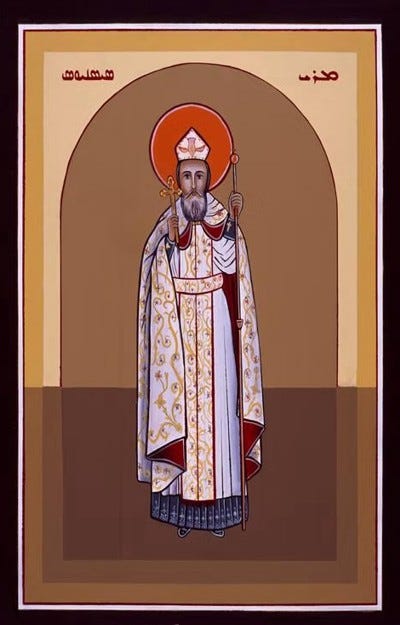
Architecture and Setting
The light filters in softly, the sense of space invites reflection, the voices of the congregation rise gently in prayer. The church’s position on the village square makes it simultaneously part of the daily village rhythm and set aside for the sacred.
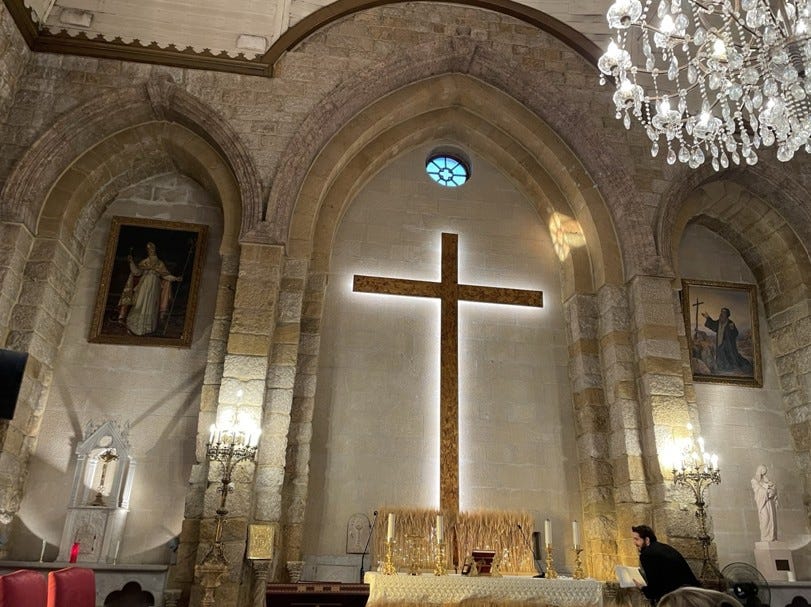
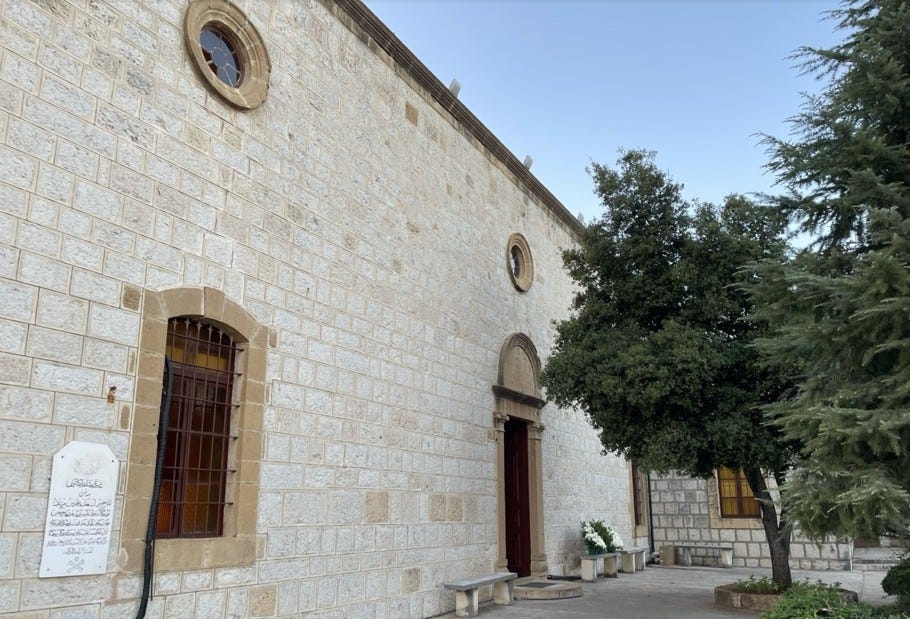
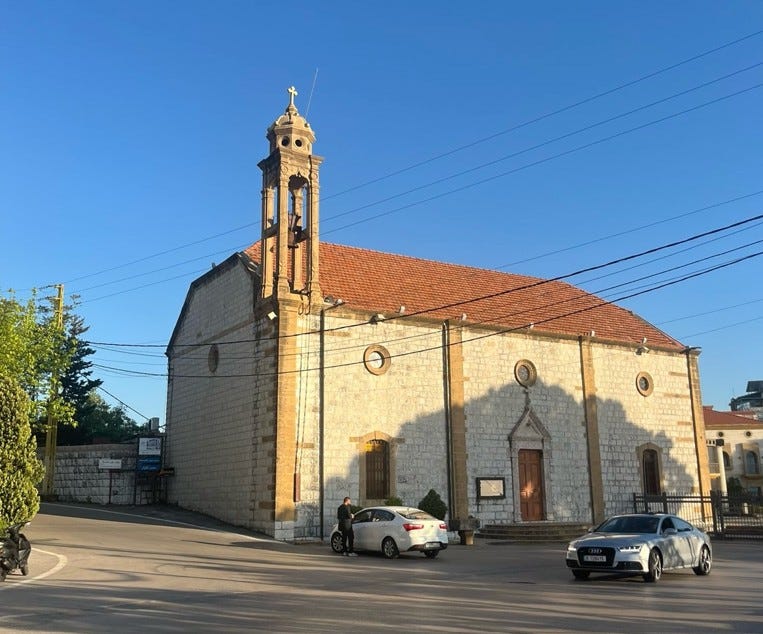
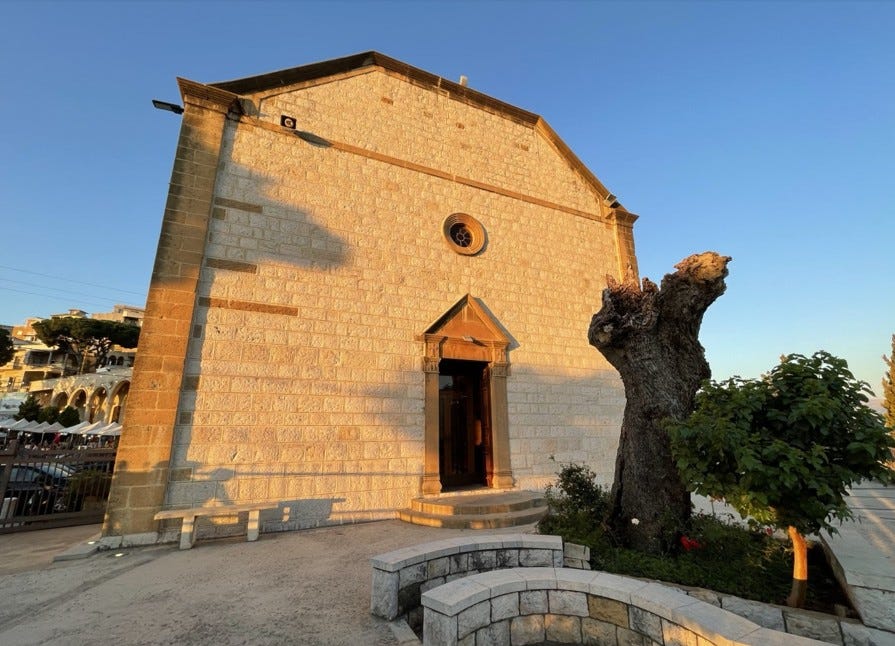
The church is built of local limestone, its warm tones of white and pale yellow blending into the sun‑lit slopes of the village. Rather than decoration for decoration’s sake, the design emphasises endurance and devotion: plain limestone walls, simple arched windows, a pitched roof, not trying to dominate, but to belong. Inside, the layout follows traditional Eastern Christian forms: a main altar devoted to the Eucharist, flanked by two smaller altars — one dedicated to the Virgin Mary, the other keeping the Holy Sacrament.
Festivals, Families, and Village Life
Around the church steps and on its plaza, life unfolds. Each year the feast of Saint Sassine becomes a mini‑festival: after the liturgy a procession winds through the village, families gather for shared meals under pine trees, children run between adults, old friends greet each other and newcomers are welcomed. The parish grounds also host fairs, vintage‑markets, and craft gatherings.
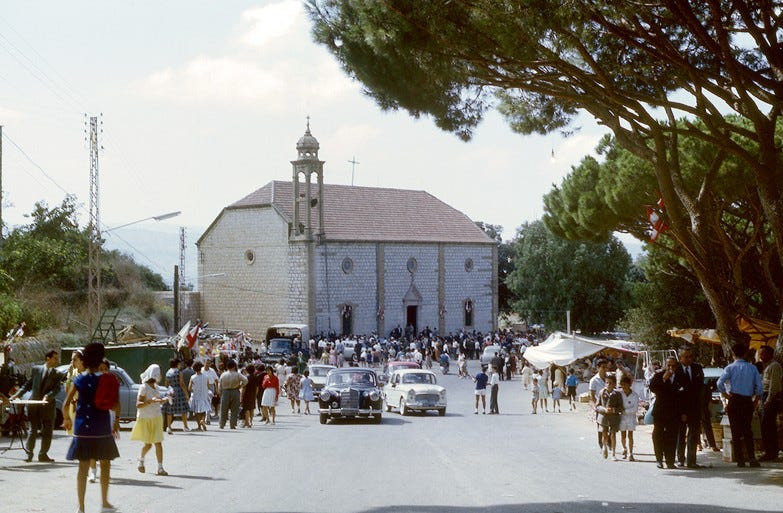
The Church Today
In a country where so much is uncertain, the church of Mar Sassine still stands today as an anchor to its community. It exemplifies the mountain‑church tradition of community — resilient, modest, and rooted in place. It draws together villagers and visitors, faithful and curious alike, as a model of living, breathing tradition.